How Two Members of SEVENTEEN Just Shattered a Record That Took Years to Set
CxM's HYPE VIBES, 887K first-week sales, and the genius of SEVENTEEN's subunit strategy
 By Park Chulwon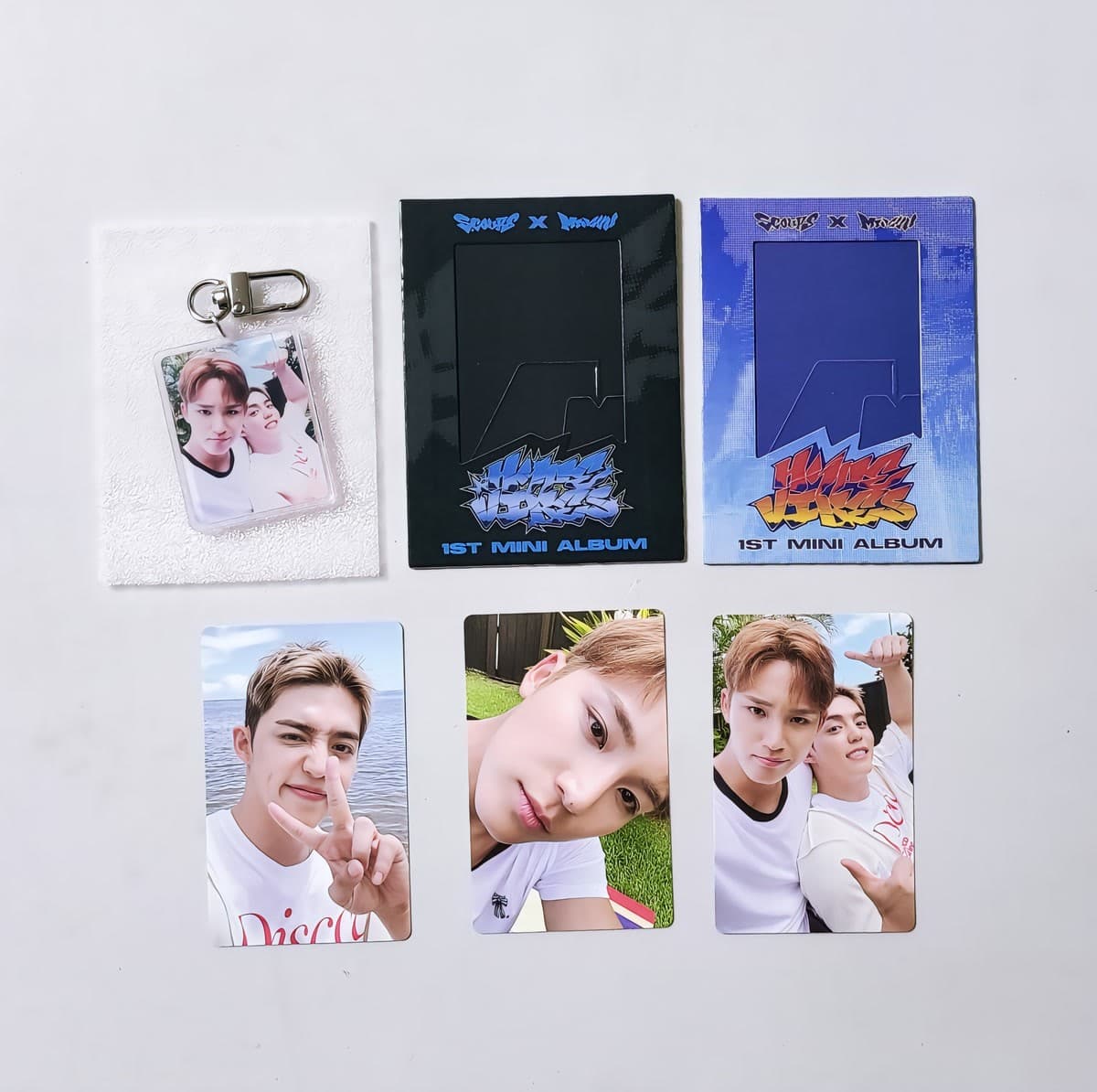
On the first day of their commercial availability, September 29, 2025, S.Coups and Mingyu's debut unit album Hype Vibes sold 605,755 copies through the Hanteo chart — setting a new record for the highest single-day sales ever recorded by a K-pop sub-unit album. By the end of the first week, the number reached 887,581, placing it above every unit album in the history of Korean popular music by a margin that left the previous record — itself set by a SEVENTEEN subunit — looking modest by comparison.
The record-setting numbers generated the expected attention. But understanding what they actually represent requires moving past the surface metrics into the structural logic that produced them. CxM's Hype Vibes was not simply a well-marketed product by a popular group. It was the product of a specific strategy — SEVENTEEN's deliberate, methodical approach to building subunit commercial activity that serves multiple functions simultaneously — and its success illustrates why that strategy has become one of the more studied models in the K-pop industry.
SEVENTEEN's Subunit Architecture
SEVENTEEN is, by institutional design, a machine for sustained activity. The group comprises thirteen members organized into three functional units — Hip-Hop Team, Vocal Team, and Performance Team — each with distinct creative responsibilities within the group's overall production model. Since at least 2021, the label and group have developed a systematic approach to deploying these sub-configurations as standalone commercial entities, with dedicated promotional cycles that run parallel to and between full-group releases.
Before CxM, the established subunit commercial record-holder was Jeonghan and Wonwoo (JxW), whose unit activity had produced the previous highest first-week unit album sales. Before them, BSS (Boo Seungkwan, The8, and Seungkwan) had established the template with their solo promotions and unit work. Hoshi X Woozi represented the Performance and Vocal Team collaboration format. CxM completed the Hip-Hop Team contribution to the subunit commercial portfolio.
The progression was not coincidental. Each successive SEVENTEEN subunit release has operated with a more developed understanding of what the CARAT fandom — SEVENTEEN's dedicated fanbase — expects from these projects, and a more refined capacity to deliver it. By the time CxM launched, the subunit concept had been tested across multiple configurations, and the commercial infrastructure for unit album activation was mature.
S.Coups himself noted that Hype Vibes was the first unit mini-album in SEVENTEEN subunit history with more than the standard four tracks — six tracks total, representing an expanded scope that acknowledged the commercial significance of the moment. The framing within the group's promotional context was deliberate: this was not a brief interlude between full-group activities, but a substantive artistic statement deserving a full promotional commitment.
The Military Context: Why CxM and Why Now
The timing of CxM's emergence was not arbitrary. In September 2025, SEVENTEEN was navigating the logistics of Korean mandatory military service, which had begun affecting the group's composition and scheduling. Hoshi and Woozi were scheduled to enlist in mid-September 2025. The enlistments of other members were distributed across the year. S.Coups had a service exemption due to a prior knee injury. Mingyu's enlistment was expected in 2026.
The combination of S.Coups's exemption and Mingyu's available window created a specific opportunity: two of SEVENTEEN's most commercially prominent members — the group's leader and one of its most visible public faces — were simultaneously available for an extended promotional period when other members were stepping back from active promotion. The subunit launch was, among other things, a mechanism for maintaining SEVENTEEN's commercial momentum during a transitional period that military schedules had imposed on the full group.
This is not a unique challenge for K-pop groups operating with large rosters. Managing the staggered military enlistments of multi-member groups requires creative scheduling solutions — solo projects, subunit activations, and domestic versus international promotion divisions that allow different configurations of the group to remain active while members complete military obligations. SEVENTEEN's approach to this challenge was to treat it as a creative opportunity rather than a scheduling problem, producing full-scale unit releases rather than maintaining a lower-profile holding pattern.
The strategy reflected a maturity that comes from being a thirteen-member group that has now operated as a commercial entity for a decade. By 2025, SEVENTEEN understood their own structural mechanics — which configurations generated which kinds of audience response — well enough to deploy them deliberately. CxM was not improvised in response to circumstances; it was planned as a quality commercial release timed to serve multiple strategic purposes simultaneously.
S.Coups and Mingyu: A Specific Chemistry
The question that any subunit launch must answer is why these two members, why now, and what do they bring together that neither brings alone. For CxM, the answer was grounded in both creative logic and audience familiarity.
S.Coups and Mingyu are the two most prominent members of SEVENTEEN's Hip-Hop Team in terms of public visibility — S.Coups as the group's overall leader and primary rap voice, Mingyu as one of the group's most recognizable visual presences with a developed solo following built through variety program appearances, fashion brand work, and individual social media activity. Their pairing as a unit brought together the group's leadership authority and its most commercially versatile individual member in a configuration that SEVENTEEN fans had been requesting for years.
The dynamic S.Coups noted in promotional contexts — that within CxM, he deferred to Mingyu's leadership instinct rather than defaulting to his own leadership role within SEVENTEEN — was received as one of the more humanizing details of the unit's formation narrative. The reversal of hierarchy, however informal, signaled that CxM was genuinely a new entity rather than simply S.Coups's project with Mingyu as a featured collaborator. Both members had artistic investment in the unit's direction.
Their participation in the production of all six tracks on the album reinforced that investment. SEVENTEEN members have a long-established tradition of active participation in their group's music production — the group's composition team, known internally as WOOZI's production unit, has historically included member contributions across the roster. For CxM, the production involvement extended to full creative ownership: the tracks on Hype Vibes were not commissioned material but self-directed work that reflected the specific aesthetic sensibilities of S.Coups and Mingyu as individual artists.
The Title Track: Lay Bankz and the Western Crossover Signal
The lead single "5, 4, 3 (Pretty Woman)" featured Lay Bankz, an American rapper whose commercial profile had risen significantly in 2024–25 through streaming success and major festival appearances. The collaboration was the album's most explicit statement of Western market intent — and it produced measurable results.
"5, 4, 3 (Pretty Woman)" charted on iTunes Top Songs in sixteen regions simultaneously, including Spain, Indonesia, the Philippines, and Egypt — a geographic spread that reflected both SEVENTEEN's existing international audience and the incremental discovery sampling that Lay Bankz's American audience provided. The track's groove-based production, which differed from the harder hip-hop orientation of some of SEVENTEEN's earlier domestic releases, was calibrated for the kind of crossover accessibility that English-language features can amplify.
The Hypebeast Magazine cover story that followed in December 2025 — placing CxM on the cover of one of the most globally distributed streetwear and culture publications — extended the Western cultural penetration that the Lay Bankz collaboration had signaled. The Hypebeast coverage positioned S.Coups and Mingyu not primarily as K-pop idols promoting a Korean release, but as artists in a global creative conversation whose work happened to emerge from a K-pop context. The framing was commercially significant: it expanded the potential discovery audience for CxM content beyond the existing CARAT fandom into streetwear-adjacent culture communities with their own consumption patterns.
The Record in Context: Why Unit Albums Break Records
The mechanisms that produced Hype Vibes's record-breaking sales numbers are worth understanding structurally, because they reveal something about how the K-pop commercial ecosystem distributes its purchasing activity across different release configurations.
Unit album sales records among K-pop subunits are, by definition, records set within a subcategory of a larger commercial ecosystem. The CARAT fandom that purchases SEVENTEEN full-group releases also purchases subunit releases, but with purchasing patterns that differ in one important respect: unit albums carry a specificity premium. Fans who are particularly attached to S.Coups or Mingyu — or to their combination — treat the unit release as a rarer, more exclusive object than a full-group album, and purchase accordingly. The multiple physical version releases (seven versions for Hype Vibes) provide additional purchasing motivation for collectors within the fandom.
The first-week total of 887,581 copies therefore reflects not just the size of the CARAT fandom — which, measured by full-group release purchases, is substantially larger — but the depth of that fandom's attachment to specific member configurations. CxM activated the segment of CARAT whose investment in S.Coups and Mingyu specifically was strong enough to motivate multi-copy purchasing behavior for a unit album on the same scale as their full-group album purchasing behavior.
The Billboard 200 debut at number 71 reflected the structural reality of international streaming metrics that, for subunit releases, typically underperform album chart numbers relative to full-group releases. The domestic and physical purchase numbers were exceptional; the streaming and digital numbers were strong but reflected a more focused purchasing audience rather than the broader discovery sampling that full-group releases generate through algorithm-driven exposure.
SEVENTEEN's Sustained Commercial Architecture
Placing CxM's Hype Vibes within SEVENTEEN's broader 2025 commercial picture illuminates the strategy that produced it. The group had released their fifth studio album Happy Burstday earlier in the year, which had generated substantial full-group commercial performance. The CxM unit activation extended the commercial year beyond what the full-group release cycle could sustain alone, maintaining chart presence and retail activity through Q3 in ways that maintained SEVENTEEN's label and streaming commercial performance during the period when military enlistments were reducing full-group promotional capacity.
This sustained commercial architecture — full-group release, solo projects, unit activations, and full-group touring operating as a coordinated system rather than independent events — is perhaps SEVENTEEN's most significant structural achievement as a commercial entity. Few K-pop groups of any generation have managed to operate at the commercial scale SEVENTEEN reached in 2025 while simultaneously managing the personnel complexity of military service schedules across a thirteen-member roster.
CxM's record-breaking debut was the most visible single achievement of this system in September 2025. But the record existed within a larger commercial logic that produced it — the accumulated trust, creative investment, and institutional knowledge of a group that had spent a decade learning how to be SEVENTEEN, in all its configurations, at the highest possible level.
Verdict: The Sub-Unit That Redefined the Ceiling
The 605,755 first-day sales. The 887,581 first-week total. The Circle Chart number one. The Oricon double crown. The Hypebeast Magazine cover. The Lay Bankz collaboration and sixteen-country iTunes charting. These numbers and achievements will define how Hype Vibes is remembered commercially. But what they represent is the output of a specific creative partnership — two members of SEVENTEEN, given the space and resources to make something authentically their own, doing exactly that with the skill that a decade of professional performance at the highest level provides.
CxM set the unit album commercial record for a reason that is both simple and structural: they made a genuinely good album, in a commercially mature ecosystem, at precisely the moment when their audience was ready to reward them for it. In K-pop, those three conditions aligning simultaneously is rarer than any single commercial record can capture.
The Fan Economy Behind the Numbers: How CARATS Drive Unit Sales
The commercial mechanism behind CxM's record requires examination of K-pop's unique fan purchasing culture, which operates on principles that mainstream music industry analysis routinely underestimates. The 887,581 copies sold in the first week of Hype Vibes were not purchased primarily for the purpose of listening — or rather, the purpose of purchasing extends well beyond streaming access to music that is available digitally for a fraction of the physical album's price.
Physical album purchasing in K-pop functions as a form of fan participation. The physical object — typically designed with high production values, including photo cards, booklets, postcards, and member-specific variant content — represents tangible connection to the artists. Multiple physical versions of the same album provide different content configurations, creating incentive for multiple purchases by fans who want comprehensive coverage of their preferred members' photo card variants. For a unit album featuring only two members, each available in their own dedicated version alongside a combined version, the collecting motivation is concentrated rather than dispersed.
SEVENTEEN's seven-version physical release for Hype Vibes — Combi, Buddy, three Compact versions (S.Coups, Mingyu, and CxM), KiT, and Weverse Album — was calibrated to this dynamic. Each version contained distinct visual content, and the member-specific Compact versions gave fans attached specifically to S.Coups or Mingyu a targeted purchase option that full-group releases cannot provide with the same specificity. The result was a purchasing campaign whose aggregate volume reflected not just how many fans supported CxM, but how many purchases per fan the content configuration motivated.
The listening party Meta collaboration, held in Hannam-dong Seoul the week before release, extended this engagement. Previewing all six tracks for fans before commercial release created investment in the specific songs before they were publicly available, converting casual awareness into active anticipation. By release day, the fans who purchased in the first 24 hours were not sampling an unfamiliar product — they were confirming an emotional investment that had been building through weeks of pre-release content and community discussion.
What the Billboard 200 Entry Meant for SEVENTEEN
CxM's Hype Vibes debut at number 71 on the Billboard 200 was described in some coverage as modest relative to full SEVENTEEN releases, which had charted higher. The characterization missed the structural context. A unit album, by definition, draws on a subset of the full group's commercial infrastructure. The fact that a two-member unit from SEVENTEEN charted at all on the Billboard 200 — reaching a position accessible to only the most globally commercial music acts — was itself an achievement that no K-pop subunit had matched in the same chart cycle.
The Billboard 200 entry also broke a thirteen-year record for the highest-charting K-pop unit on that chart, surpassing the previous record set in 2012. The comparison point was deliberately historical: K-pop's American chart penetration had been building incrementally since PSY's "Gangnam Style" created mass awareness of Korean music in that market, and each new benchmark in the Billboard 200's K-pop unit category was a data point in that longer story.
For SEVENTEEN's label and management, the chart position confirmed that the subunit commercial strategy generated American market visibility independently from full-group releases — that CxM's results were not simply SEVENTEEN's full-group audience directed at a different product, but a genuine unit-specific commercial identity that created incremental American reach. The Circle Chart number one performance domestically, and the Oricon double crown in Japan, completed a commercial picture that covered the three markets — Korea, Japan, and the United States — that define commercial legitimacy for a K-pop act operating at SEVENTEEN's tier.
The SEVENTEEN Legacy: One of K-Pop's Most Durable Commercial Structures
By September 2025, SEVENTEEN had been commercially active as a group for a decade, across a period that had seen the K-pop industry transform from a primarily Asian phenomenon into a genuinely global commercial force. They had sustained relevance through generational shifts in the market — the transition from third-generation dominance to fourth-generation competition, the disruption of COVID on live activity, the streaming platform expansion that changed how Korean music reached international audiences.
The subunit strategy that produced Hype Vibes was one of the mechanisms that had sustained that decade of relevance. By systematically developing the commercial identities of their member configurations — not just the full group but BSS, JxW, SVT Hip-Hop, and now CxM — SEVENTEEN had built a commercial ecosystem in which the sum of parts generated more sustained commercial activity than a full-group-only strategy could produce. Each subunit activation brought a concentrated focus on specific members that rewarded their dedicated fans while maintaining the group's overall commercial presence between full-group album cycles.
The record set by Hype Vibes will likely be broken — by another SEVENTEEN subunit, by a unit from a different group that learns from and extends SEVENTEEN's model, or by commercial structures not yet fully visible in September 2025. Commercial records exist to be exceeded. What Hype Vibes demonstrated was that the infrastructure for exceeding them — the deep fan investment, the quality creative work, the strategic commercial deployment — was something SEVENTEEN had spent years constructing with deliberate intent. In that sense, the record was not a ceiling. It was a measurement of how high the floor had risen.
How do you feel about this article?
저작권자 © KEnterHub 무단전재 및 재배포 금지
Entertainment Journalist · KEnterHub
Entertainment journalist focused on Korean music, film, and the global K-Wave. Reports on industry trends, celebrity profiles, and the intersection of Korean pop culture and international audiences.
Comments
Please log in to comment