Hwang Garam's I Am a Firefly Review: Why 100M Streams Still Matter
The remake ballad became a two-platform streaming milestone and a karaoke habit.
 By Im Garam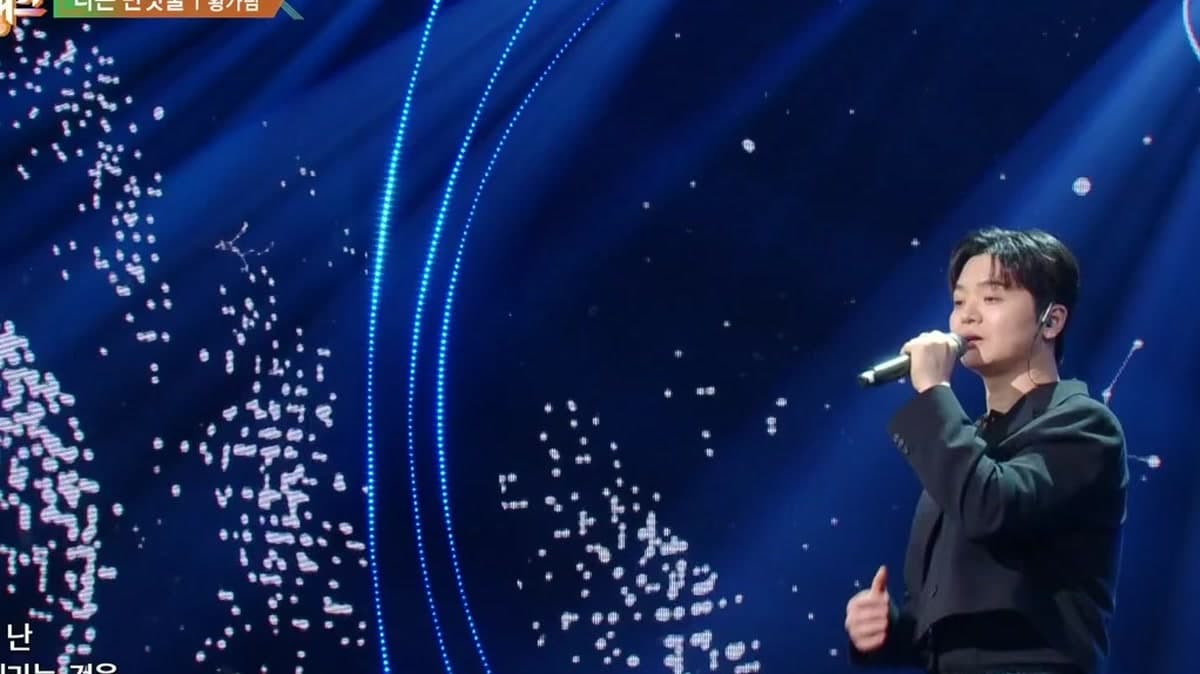
Hwang Garam's ballad has become a rare cross-platform endurance hit.
I Am a Firefly, released in October 2024, passed 100 million cumulative plays on YouTube Music as of August 10, 2026, according to reports citing YouTube Music data. The number arrived after the song had already crossed 100 million cumulative streams on Melon as of January 1, 2026. This review looks at why one remake ballad kept expanding for nearly two years, and what its chart path says about Korea's current demand for songs that listeners do not merely stream once but return to, sing, and share.
The angle is direct: Hwang Garam turned I Am a Firefly into a long-tail comfort song by connecting three behaviors that usually live apart: private streaming, public live-video watching, and karaoke repetition.
A Slow Hit With Hard Numbers
The song's latest milestone is not a sudden viral accident. On August 10, 2026, I Am a Firefly surpassed 100 million cumulative plays on YouTube Music, about one year and ten months after its October 2024 release. That came after the track reached 100 million cumulative streams on Melon on January 1, 2026, giving the song two separate 100-million markers on Korea's most influential audio and video-adjacent listening platforms.
Those milestones matter because ballads often peak through emotional familiarity rather than fandom mobilization. A dance single can spike through choreography, challenges, and comeback-week traffic. A remake ballad has to do something slower. It has to become useful to listeners across ordinary days.
Hwang's version did that by making the original song's message feel conversational. The performance is controlled rather than theatrical, which leaves room for listeners to project their own fatigue, loneliness, or recovery onto the lyric. That is why the 100-million YouTube Music mark feels like evidence of repeat use, not just discovery.
The song also avoided the fate of many viral ballads that collapse once the first emotional clip has circulated. Its data continued to spread across platforms, suggesting that the hit moved from recommendation feeds into routine behavior.
The Platform Spread
The strongest evidence is the spread of rankings. In 2025 cumulative Circle Chart digital comprehensive data for January 1 through November 30, I Am a Firefly ranked No. 4. On the 2025 Melon annual Top 100, Hwang placed the song at No. 4 as well, while another Hwang track, I Miss You So Much, reportedly entered at No. 59. That gave him both a defining hit and proof that listeners were not treating him as a one-song curiosity.
The karaoke data shows a different kind of attachment. TJ Karaoke listed I Am a Firefly at No. 2 on its 2025 most-sung songs ranking, while KY Entertainment's 2025 year-end karaoke chart placed the track at No. 1. These are not passive metrics. Karaoke rankings measure a willingness to inhabit the song, not just leave it on in the background.
Chart showing I Am a Firefly reaching 100 million Melon streams on January 1, 2026, 100 million YouTube Music plays on August 10, 2026, and top rankings on 2025 karaoke and Circle digital charts. From streaming milestone to sing-along endurance Selected verified checkpoints for I Am a Firefly 0 50M 100M Melon Jan. 1, 2026 YouTube Music Aug. 10, 2026 Circle Digital No. 4, 2025 100M 100M No. 4 Sources: YouTube Music-cited reports, Melon/JMG reports, Circle Chart cumulative 2025 data.
The time sequence is the key comparison. Melon reached 100 million streams on January 1, 2026; YouTube Music reached 100 million plays on August 10, 2026. Seven months later, the same song was still adding a second platform milestone, which means the audience was not simply migrating away from audio. It was layering new forms of consumption on top of the original hit.
That layered behavior is why the song reads bigger than a chart statistic. Circle Chart's No. 4 digital ranking captured broad domestic usage; karaoke No. 1 and No. 2 placements captured participatory use; the two 100-million streaming markers captured repetition over time. Together, they describe a song that moved through listening rooms, video platforms, and actual singing spaces.
Why The Remake Resonated
I Am a Firefly works because it does not over-explain its comfort. Hwang's vocal tone is firm but unforced, and the arrangement keeps enough open space for the lyric to land. In a market crowded with power ballads, that restraint becomes a strength.
The remake factor also helps. A familiar melody lowers the barrier to entry, but it does not guarantee longevity. The difference here is that Hwang's recording feels lived-in. He does not perform the song as a nostalgia object; he performs it as a present-tense confession.
That makes the song unusually flexible. It can function as a late-night streaming choice, a broadcast live clip, a karaoke selection, or a social-media recommendation for someone who needs a line of reassurance. Few songs hold across all four contexts for this long.
There is a limitation. The song's success is so strongly tied to emotional sincerity that Hwang's next releases must be careful not to imitate the formula too directly. But the Melon annual chart result, including a second song at No. 59, suggests he already has room to build beyond one signature remake.
Impact And Reactions
The public reaction has been unusually democratic. This is not a hit driven mainly by a concentrated idol fandom, a drama tie-in, or a heavily staged comeback campaign. Its strength lies in repeat encounters: a listener hears it on Melon, watches a live clip, then later chooses it in a karaoke room.
That loop explains why the karaoke numbers are so important. A No. 1 position on KY's 2025 year-end chart and No. 2 on TJ's 2025 ranking mean the song became something people wanted to voice themselves. In Korean ballad culture, that is often the final proof of mainstream absorption.
Industry observers should pay attention to the production lesson. Mid-tempo emotional songs still need platform strategy, but the winning sequence is not always immediate chart domination. For I Am a Firefly, the more valuable pattern was durability: a January Melon milestone, a full-year karaoke footprint, and an August YouTube Music milestone.
What The Rankings Reveal
The most revealing point is that each chart captures a different kind of commitment. Melon and YouTube Music show repeated listening, but they do not tell us whether people want to perform the song themselves. Karaoke charts answer that question. When KY Entertainment put I Am a Firefly at No. 1 on its 2025 year-end karaoke chart, and TJ Karaoke placed it at No. 2 for the same year, the song crossed from personal comfort into shared ritual.
That distinction matters in Korea, where karaoke remains one of the clearest signs that a ballad has entered the public bloodstream. A listener may stream a song privately because an algorithm surfaced it. Choosing it in a room with friends or colleagues requires a different confidence. It means the melody is familiar enough, the emotional pitch is legible enough, and the chorus is memorable enough to carry outside the headphones.
The Circle Chart result adds another layer. A No. 4 position in 2025 cumulative digital comprehensive data, measured across January 1 through November 30, points to broad domestic utility rather than a single-platform anomaly. It places the song among the year's most-used digital tracks, which is especially meaningful for a remake ballad competing against idol comebacks, drama soundtracks, and seasonal hits.
That is why the numbers should be read together. One 100-million milestone can be a platform story. Two 100-million milestones, plus No. 1 and No. 2 karaoke placements and a No. 4 Circle digital ranking, become a behavioral story. The audience did not only discover I Am a Firefly; it found different reasons to keep using it.
The Long-Tail Ballad Model
Hwang Garam's case also shows how the Korean ballad market has changed. In the past, a singer often needed broadcast rotation, drama exposure, or a visible competition-show narrative to push a sentimental song into the mainstream. Those routes still matter, but I Am a Firefly demonstrates a more distributed model. The song built weight through platform accumulation.
That model rewards songs with emotional clarity. The lyric does not require a complicated backstory, and the arrangement does not demand that the listener focus on production novelty. Instead, the track offers a clean emotional function: it gives people language for endurance. In a fragmented streaming environment, that kind of usefulness can travel farther than a more elaborate concept.
The seven-month gap between Melon's 100-million marker on January 1, 2026 and YouTube Music's 100-million marker on August 10, 2026 is therefore not a sign of delay. It is evidence of staggered adoption. Audio listeners validated the song first; video-adjacent and live-performance consumption kept adding weight later. For a ballad, that is an ideal curve because it extends the song's commercial life beyond the usual chart peak.
There is also a catalog benefit. Once one song becomes a long-tail standard, listeners are more likely to search for the singer's other material, which helps explain why I Miss You So Much could appear at No. 59 on Melon's 2025 annual Top 100. That secondary ranking is smaller, but strategically important. It suggests the audience was beginning to recognize Hwang Garam as more than the voice of one remake.
Why The Data Is More Convincing Than The Label
The phrase "national comfort song" is easy to overuse. Many ballads receive that label in promotional copy long before the public has supplied enough evidence. Here, the stronger argument comes from the data. A song that reaches 100 million on Melon, reaches 100 million on YouTube Music, ranks No. 4 on Circle's cumulative digital chart, and lands at the top of major karaoke lists has earned a more concrete description: it has become functional pop.
Functional pop is music people return to for a specific emotional job. The job can be release, reassurance, memory, or performance. I Am a Firefly appears to satisfy all four. That is why the song can live in a playlist, a broadcast clip, a karaoke queue, and a year-end chart without feeling out of place.
For labels and producers, the lesson is not simply to remake older songs. Remakes fail when they rely on familiarity alone. The lesson is to match the singer's vocal identity with a song whose emotional promise can survive repetition. Hwang's tone gives the track patience. He does not rush the listener toward catharsis, and that patience is exactly what keeps the song replayable.
The market signal is subtle but valuable. Korea's digital charts remain fast, but they still leave room for songs that grow through trust. In that environment, I Am a Firefly is not an exception to current listening behavior. It is a reminder that slow songs can still scale when every platform confirms a different piece of the same attachment.
Future Outlook
Hwang Garam's next challenge is conversion from song loyalty to artist loyalty. The data gives him a strong base, but listeners who love one ballad do not automatically follow every release. The task is to keep the emotional directness while showing enough musical range to avoid being boxed in.
The remaining question is whether Hwang can turn this long-tail trust into a repeatable release pattern. The safest path is not to chase a louder arrangement, but to keep building songs that listeners can carry into ordinary settings. If future singles preserve that emotional accessibility while adding a slightly broader musical palette, the audience created by I Am a Firefly can become a durable base rather than a nostalgic spike. That is the real test after any cross-platform breakout: whether comfort can become continuity across charts, videos, karaoke rooms, and future releases consistently.
Still, I Am a Firefly has already done the hard part. It turned a remake into a multi-platform habit. In 2026, that may be one of the most valuable forms of pop success Korea can produce.
How do you feel about this article?
저작권자 © KEnterHub 무단전재 및 재배포 금지
Music Charts & Data Analyst · KEnterHub
Music data analyst turned journalist. Im Garam covers K-pop through the numbers — chart performance, album sales, streaming milestones and touring economics — and writes the deep-dive reviews and industry analyses that put those numbers in context.
Comments
Please log in to comment