I.O.I Are Back — And Their Reunion Is Rewriting K-Pop's Rules
Nine years after disbanding, the Produce 101 pioneers return with LOOP — and signal a permanent shift in how K-pop manages its greatest IPs
 By Jang Hojin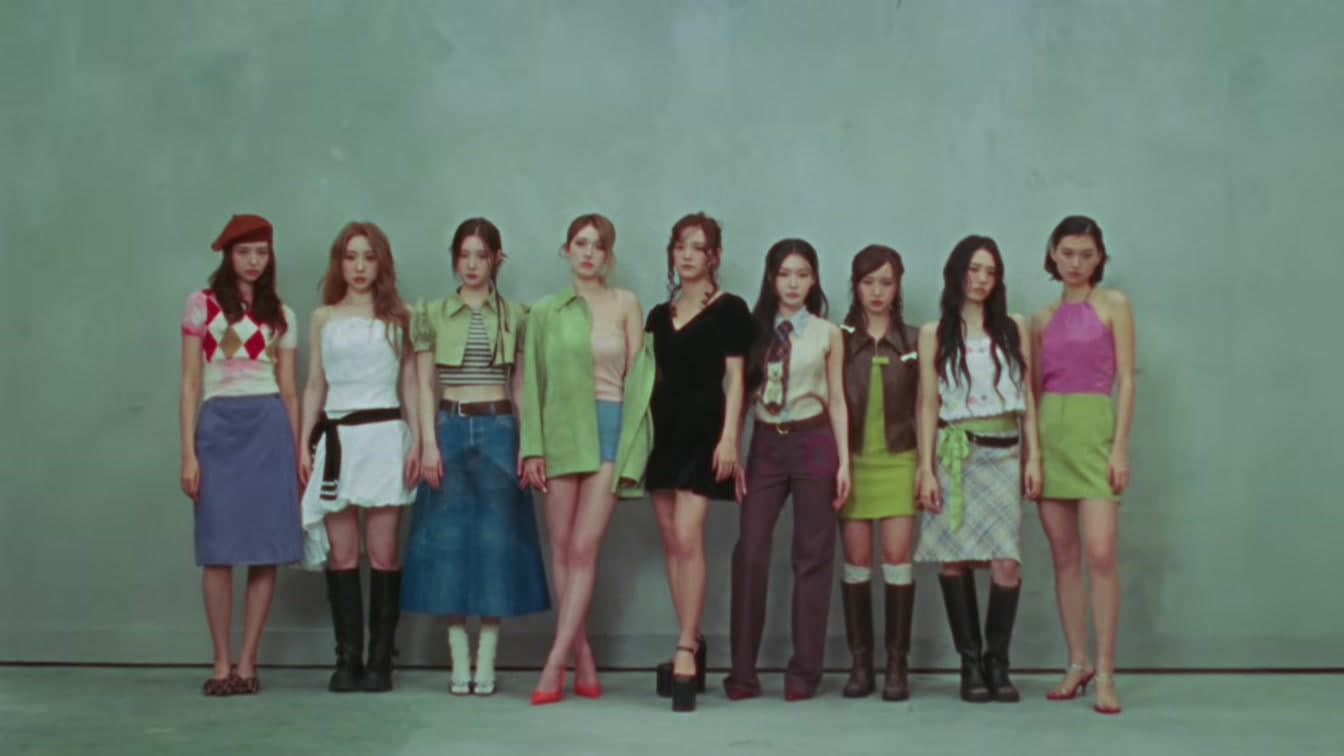
Nine years after their final performance, I.O.I have returned — and not quietly. The group born from Mnet's landmark reality competition Produce 101 confirmed a full-scale reunion with the May 19, 2026 release of their third mini-album "I.O.I: LOOP," a pre-release single on May 4, and a three-night concert run at Seoul's Jamsil Indoor Stadium beginning May 29. The tour then moves to Bangkok and Hong Kong, confirming that the appetite for this comeback extends well beyond Korea's borders.
Nine of the original eleven members are participating — Jeon Somi, Kim Sejeong, Choi Yoojung, Kim Chungha, Kim Sohye, Jung Chaeyeon, Kim Doyeon, Lim Nayoung, and Yoo Yeonjung. That lineup now reads like a hall of fame rather than a group roster: each of them built careers that outlasted, and often outshone, the acts that came after. Their return signals something deeper than nostalgia. It signals that K-pop has matured enough for its most beloved disbanded groups to become permanent fixtures in the cultural landscape — not relics, but evergreen IPs with the commercial pull to rival active acts.
From 'Pick Me' to Permanent: The Produce 101 Legacy
I.O.I debuted in May 2016 as the product of an unprecedented experiment: a nationally televised competition in which the Korean public voted to select 11 finalists from 101 female trainees representing various entertainment agencies. For an industry that had long controlled idol creation through tightly managed agency programs, it was a radical transfer of power — and it worked spectacularly. The group's debut singles, including the irresistible voting anthem "Pick Me," became instant cultural landmarks.
But the experiment came with a built-in deadline. I.O.I's contracts were structured as a one-year project, and the group officially disbanded on January 31, 2017 — less than twelve months after their debut. At the time, many wondered whether a group with such limited activity could sustain lasting relevance. The answer, as it turned out, was yes — emphatically. The members went on to become some of Korea's most versatile entertainers. Kim Chungha became a certified solo powerhouse. Kim Sejeong built a dual career as an acclaimed actress. Jeon Somi emerged as a generation-defining pop artist. Yoo Yeonjung joined WJSN. Far from extinguishing the I.O.I flame, the disbandment preserved it.
The album title LOOP was chosen to represent "continuity, reconnection, and a story starting again" — a framing that positions the reunion not as a nostalgic cash-in, but as an ongoing chapter in a longer narrative. That reframing matters, because it redefines what disbanded means in K-pop: not an ending, but a pause with an open return date.
The 2026 Revival Wave — and What It Really Means for K-Pop
I.O.I's comeback arrives at the center of an unmistakable industry trend. BIGBANG, celebrating their 20th anniversary, re-emerged at the Coachella Valley Music and Arts Festival in April 2026 — a global stage that demonstrated how K-pop's second-generation legacy acts can still command international prestige. Wanna One, the male Produce 101 counterpart formed the year after I.O.I, confirmed their own full-group reunion with the reality show "WANNA ONE GO: Back to Base," which premiered on Mnet Plus on April 28, 2026, reportedly drawing 4.5 million views within its first 24 hours across social platforms.
But the convergence of these reunions is not accidental, and not simply commercial. Pop culture analyst Kim Heon-sik, speaking to YTN, argued that the old "seventh-year syndrome" — an industry belief that K-pop groups lose commercial viability after seven years of activity — has effectively dissolved. "Fans of idol groups are now building lifelong connections," he said, "which means the audience that supported these groups isn't going anywhere." What was once a relationship with an expiration date has transformed into something closer to the model seen with legacy acts in Western music: loyal communities that sustain across decades, not just contracts.
There is, however, a more cautious reading of this moment. The same YTN analysis raised the question of whether the wave of proven-IP revivals signals a weakening of K-pop's next generation rather than a sign of industry strength. While fifth-generation acts like ILLIT and BABYMONSTER have built strong momentum, they are now competing for audience attention in a landscape where the most powerful nostalgia engines in Korean pop are simultaneously active. Whether that competition crowds out emerging voices — or simply expands the overall market — remains a question the industry has not yet resolved.
Nine Members, Infinite Anticipation
Fan response to the LOOP announcement was swift and genuinely global. The 10th anniversary social media accounts, operating under the handle "ioi_10th," accumulated hundreds of thousands of followers within days across Instagram, TikTok, and X. The group's appearance on SBS variety show "Isn't This True Though?" on May 4 — their first full-group broadcast appearance in years — delivered the kind of emotionally charged television that reunion content does best.
Choi Yoojung's confession that she had practiced dancing as a trainee by watching EXO's Kai's performance videos gave fans the warmth they had been waiting for. Jeon Somi's candid remark — "There's something about being on stage with everyone. You just can't help being drawn toward the center" — became one of the most-shared quotes of the comeback cycle. Kang Mina and Zhou Jieqiong, who are not participating due to scheduling conflicts, each expressed public support for the reunion, keeping the narrative around LOOP positive rather than fractured.
A Blueprint for K-Pop's Most Valuable Franchises
The most consequential question surrounding I.O.I's return is not whether the comeback will succeed — the appetite is clearly there. The more significant question is what it means for how the industry manages its greatest IPs going forward. If LOOP performs well commercially and the three-continent tour demonstrates that a fanbase can hold for nine years and still fill arenas, it won't just be a celebration. It will be a proof of concept.
A successful reunion would provide evidence that disbanded project groups retain lasting asset value — that managed reunions can be timed like product launches and marketed like franchise returns. For every agency holding the rights to a beloved disbanded group, that proof would be impossible to ignore. I.O.I didn't just come back. They may be writing the rules for every group that disbands after them.
How do you feel about this article?
저작권자 © KEnterHub 무단전재 및 재배포 금지
Entertainment Journalist · KEnterHub
Entertainment journalist specializing in K-Pop, K-Drama, and Korean celebrity news. Covers artist comebacks, drama premieres, award shows, and fan culture with in-depth reporting and analysis.
Comments
Please log in to comment