Isasha: 'Korean Culture Has Always Existed Within Me'
The 4th-generation Koryo-saram singer from Uzbekistan whose Korean identity was never learned — it was inherited
 By Jang Hojin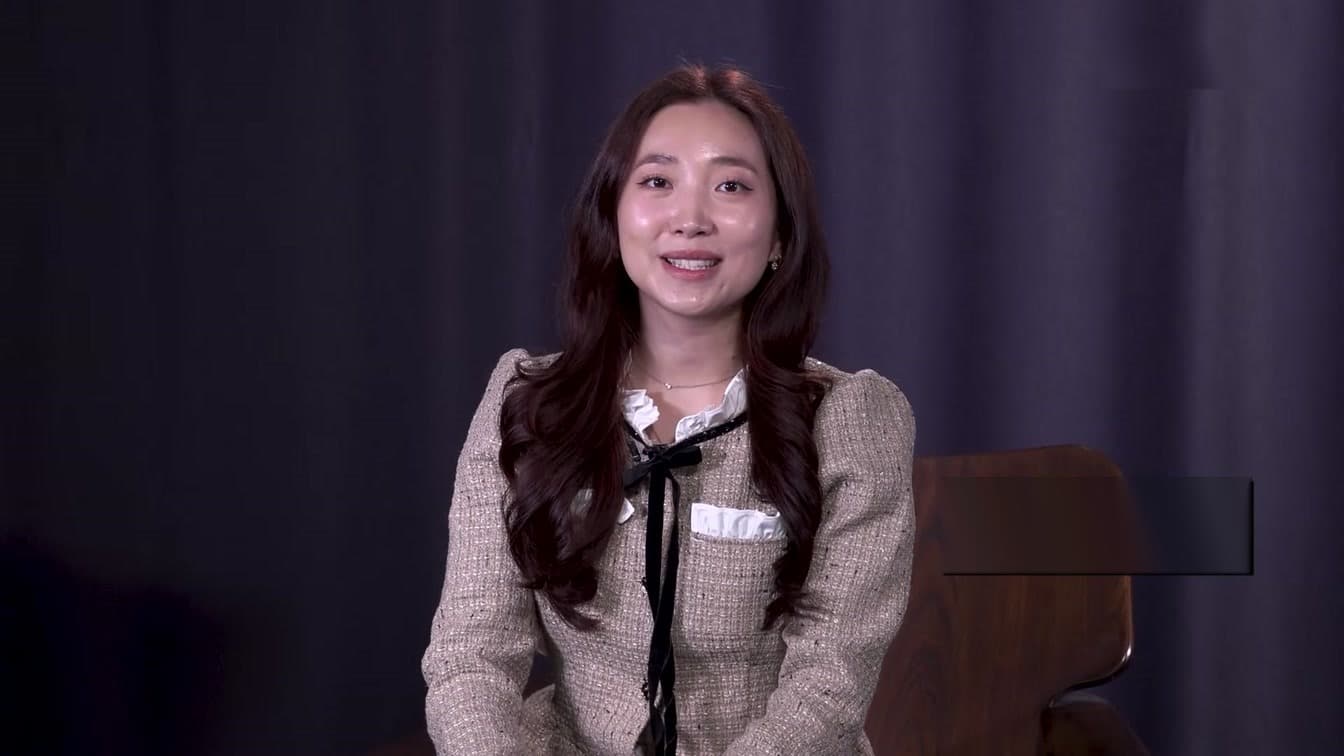
Isasha (이사샤), a 4th-generation Koryo-saram entertainer from Uzbekistan, sat down with iMBC Entertainment at MBC's Sangam headquarters recently — and what she said about Korean culture stopped the room. "Korean culture," she explained, "has already existed within me." Seven words that carry the weight of nearly a century of history, displacement, and identity.
The interview was filmed as part of the Over Border (오버보더) series, produced by the Overseas Koreans Agency and featured on the official YouTube channel DongpoON (동포ON) alongside iMBC Entertainment. The series spotlights overseas Koreans making an impact in their respective fields internationally — and Isasha is, without question, one of the most compelling stories it has found.
Born in Uzbekistan, Isasha is an ethnic Korean whose roots trace back to the mass deportation of 1937, when Soviet leader Joseph Stalin forcibly relocated approximately 172,000 ethnic Koreans from the Soviet Far East to Central Asia. These descendants — known as the Koryo-saram — have maintained their Korean cultural identity across four generations, often in countries where they are simultaneously insider and outsider, Korean and Central Asian, from somewhere else and entirely at home.
From Tashkent to Seoul: A Journey Written in the Bones
Isasha has lived in South Korea for approximately seven years. In that time, she has built a career that spans singing, vocal coaching, acting, and hosting — a creative range that reflects both her formal training and her cultural versatility. She holds a Master of Fine Arts in Acting from the Korea National University of Arts (K-ARTS), one of the most competitive performing arts institutions in the country.
But her connection to Korea did not begin when she landed in Seoul. It goes much deeper. The Koryo-saram, spread across Uzbekistan, Kazakhstan, Kyrgyzstan, and Russia, have preserved Korean language, food, music, and customs for generations — often against significant odds. For Isasha, that inheritance was not a burden to carry but a foundation to build on.
Her first major exposure to South Korean audiences came in 2010, when she appeared on the popular SBS variety program Starking (놀라운 대회 스타킹) at around 17 years old. She showcased a vocal ability that left the audience stunned — and she performed alongside 2PM members Nichkhun and Wooyoung, two of K-pop's brightest stars at the time. It was an early signal that Isasha was not simply a cultural curiosity but a genuine performer.
In 2022, she served as MC and vocalist at the Korea-Uzbekistan 30th Anniversary commemorative concert in Gwangju, featuring the Koryo Dance Troupe. The program included performances of traditional Korean songs alongside Uzbek folk music — a microcosm of the dual identity Isasha navigates every day. Speaking at the time, she said of one particular Korean song: "It's the first Korean song I memorized. This song keeps following me, and I get many chances to perform it — it is very meaningful to me."
What the Korean Wave Looks Like From the Inside
The Korean Wave — Hallyu — is typically discussed from the outside looking in. How many streams did a K-pop group rack up in Brazil? How many viewers tuned in to a K-drama in France? The conversation is almost always about how Korean culture travels outward and lands in places it was never expected.
Isasha's story flips that narrative. For her, Korean culture was not something that arrived via streaming platform or social media algorithm. It was inherited. It was in the language her grandparents spoke, in the food her family cooked, in the songs that were passed down across four generations of a community that refused to let go of who they were.
The Koryo-saram community across Central Asia and Russia numbers approximately 500,000 people. They are ethnic Koreans who have lived outside the Korean peninsula for generations, shaped by Soviet policies, local cultures, and the complex experience of being a diaspora without a direct return route. Many speak Korean as a second or third language. Many have never visited Korea. And yet, as Isasha put it, the culture is already there — it does not need to be imported.
This is what makes her Over Border interview land with particular force. She is not describing cultural appropriation or fascination. She is describing cultural inheritance — the quiet, stubborn way identity survives across displacement and time.
A Multihyphenate Career in One of the World's Most Competitive Scenes
South Korean entertainment is not an easy industry to break into for anyone, let alone someone who grew up in Uzbekistan. The competition is fierce, the standards are high, and the industry has historically been insular. Isasha has navigated all of that while carrying additional weight: the need to prove that her Korean-ness is authentic, that her voice belongs in this space.
The evidence suggests she has made a compelling case. Her music catalog includes contemporary pop releases in both Korean and Russian, reflecting the bilingual, bicultural space she occupies. Her work as a vocal coach has put her in rooms with some of the industry's emerging talents. Her hosting and acting work has given her a footprint across multiple entertainment formats.
Her Instagram presence — under the handle @sashaleemusic — gives fans a window into a life that moves fluidly between Seoul and the broader world. The content is warm, grounded, and occasionally surprising: a performance here, a behind-the-scenes moment there, a glimpse of the cultural richness she carries from both sides of her identity.
The Over Border series exists precisely because stories like Isasha's deserve to be told at length. The Overseas Koreans Agency, which manages the DongpoON YouTube channel, has made it a priority to document the lives of Koreans abroad who are doing extraordinary things — not as a curiosity, but as evidence of the reach and resilience of Korean identity in the world.
Isasha's segment in the series is not a story about overcoming cultural distance. It is a story about recognizing that the distance was never quite as large as it looked from the outside. Korean culture, she says, was already there — and for the fans and viewers discovering her for the first time through this interview, that realization carries its own quiet power.
The full interview is available on the DongpoON YouTube channel and iMBC Entertainment's YouTube channel. For fans of K-entertainment looking for a story that goes beyond the chart positions and comeback schedules, Isasha's conversation with Over Border is essential viewing.
How do you feel about this article?
저작권자 © KEnterHub 무단전재 및 재배포 금지
Entertainment Journalist · KEnterHub
Entertainment journalist specializing in K-Pop, K-Drama, and Korean celebrity news. Covers artist comebacks, drama premieres, award shows, and fan culture with in-depth reporting and analysis.
Comments
Please log in to comment