IU's $6 Million Giving Record Just Got Bigger. Here's What Drives It.
How K-pop's Angel Built an 18-Year Philanthropy Legacy No One Saw Coming
 By Jang Hojin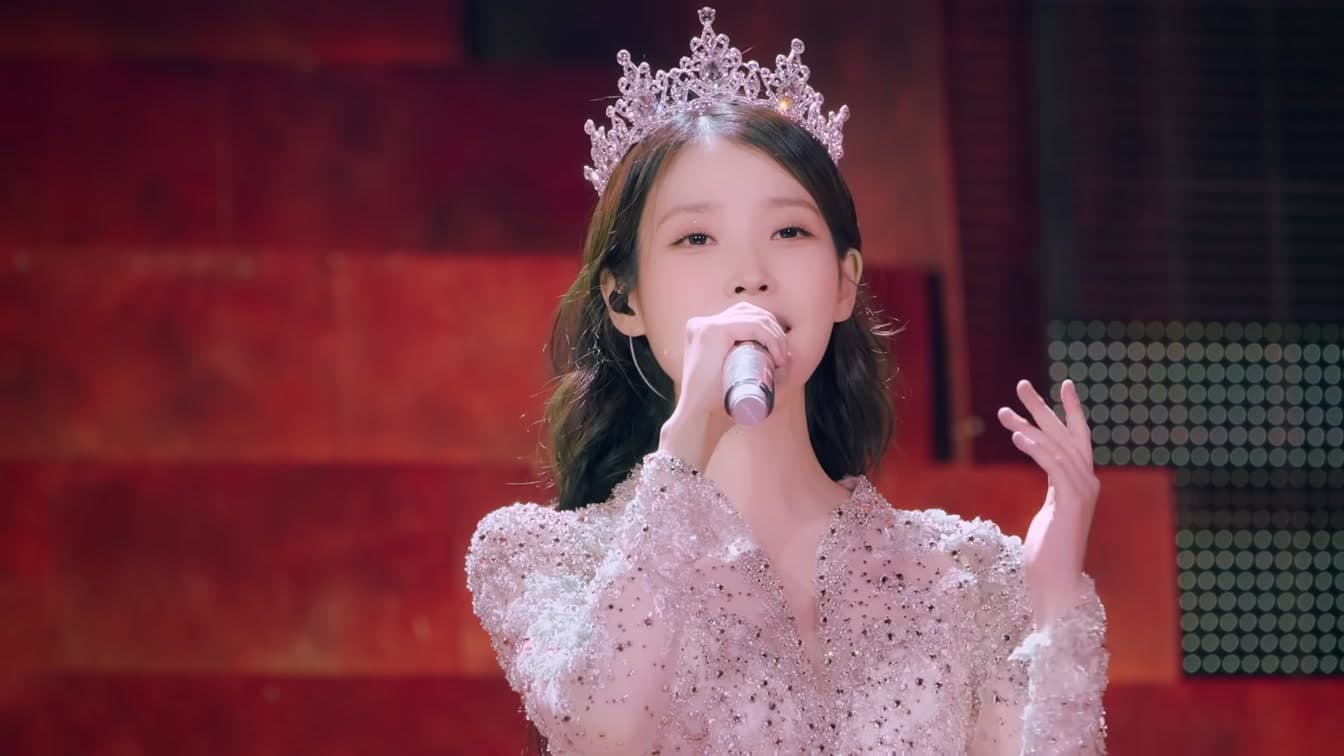
On Children's Day 2026, IU made headlines again — not for a new album or drama, but for a donation. The singer-actress quietly contributed 50 million Korean won to the Korean Child Welfare Association, under the combined name "IU애나," a portmanteau blending her own name with her fandom, UAENA. By her own standards, it was a modest gesture. Yet it was also the latest chapter in an 18-year pattern of giving that has made IU the most prolific philanthropist in South Korean entertainment history — one whose lifetime donations now exceed 8 billion won, roughly $6.2 million USD.
A Career Built on More Than Music
IU, born Lee Ji-eun, debuted on September 18, 2008, at the age of fifteen. Within months of releasing her first single, she had already begun donating. By the time she entered her twenties, what started as small gestures had evolved into a systematic, multi-cause giving operation. The "IU Scholarship" program provides full university tuition annually to up to four financially disadvantaged students. In 2019, Forbes named her one of its "Asia Philanthropy Heroes" — the youngest K-pop star to appear on that list at the time.
Her reputation as "Angel IU," or in Korean fan shorthand "천사유," had cemented itself long before the Forbes recognition. What followed was the emergence of "아또기" — a playful fan abbreviation meaning "Also-Did-Donate IU" — born from fans who joked that they could barely announce one donation before another appeared. Behind the humor was a real pattern: IU gives on her birthday, on her debut anniversary, at the new year, and on national occasions. Fans have built a crowd-sourced archive of every recorded contribution, updated in near real time.
The Scale of Recent Giving
The 2024 to 2026 period represents the most concentrated philanthropic output of IU's career. In January 2024 alone, she directed 200 million won to four organizations simultaneously: senior welfare centers, a child welfare association, an unwed mothers' families support group, and an association for persons with disabilities. By December 2024, she had added another 500 million won — contributed specifically to underprivileged households struggling to cover winter heating costs, a targeted intervention reflecting her attentiveness to economic conditions in South Korea.
In March 2025, she donated 200 million won for wildfire relief in North and South Gyeongsang Province. That same year, 150 million won went to self-reliant youth programs and support for children with disabilities. The May 2026 Children's Day contribution added 50 million won more. Across these recorded transactions alone — not counting earlier years — IU contributed over 1.1 billion won in approximately two and a half years.
Her cumulative total reached 8 billion won by December 2025, representing roughly 13 percent of her estimated $45 million net worth. That ratio — maintained across the arc of an entire career — puts her in a category of giving more typically associated with foundations than individuals.
Why the Method Matters
IU does not rely on charity galas or one-time campaigns to sustain her record. Her giving is quiet, regular, and cause-specific. She did not publicize the January 2024 donations herself — they surfaced through acknowledgment statements from the receiving organizations. The Children's Day 2026 contribution followed the same pattern: no press release from her camp, just a report from the institution. This consistency is precisely what separates her from celebrities who give conspicuously.
The fan response has become a cultural phenomenon in its own right. Korean celebrity fandom has a long tradition of collective giving in an idol's name on significant dates. With IU, that tradition runs in both directions. Her donations frequently trigger fan-matching campaigns. On her 2025 debut anniversary, fan clubs from Japan, China, and Southeast Asia collectively raised an additional 30 million won for causes IU had previously supported. The "아또기" culture has made philanthropy a shared identity among her followers — one that sets UAENA apart from fan communities organized primarily around streaming tallies and album sales figures.
What This Means for Korean Entertainment
Among industry observers, IU's record has begun to set informal benchmarks. Multiple younger artists and their agencies have cited her model when rolling out their own giving programs — particularly her practice of linking donations to personal milestones rather than treating charity as a reactive PR strategy. The pattern is both visible and replicable: give consistently, give quietly, and anchor the giving to the natural rhythms of your career.
IU is currently starring in the MBC drama "21세기 대군부인" alongside actor Byeon Woo-seok, a high-profile production expected to expand her international audience further. That broader reach means each new donation arrives in front of fans across language and national boundaries, multiplying the normative effect of what she models. At her current pace, IU could cross 10 billion won in lifetime contributions within the next two years — cementing her position not just as K-pop's most generous star, but as one of the most consistent individual philanthropists in Korean public life.
How do you feel about this article?
저작권자 © KEnterHub 무단전재 및 재배포 금지
Entertainment Journalist · KEnterHub
Entertainment journalist specializing in K-Pop, K-Drama, and Korean celebrity news. Covers artist comebacks, drama premieres, award shows, and fan culture with in-depth reporting and analysis.
Comments
Please log in to comment