IU's 'Never Ending Story' and the Kkot-Galpi Series: How Korea's Biggest Solo Star Curates Musical Memory
Three installments, three decades of Korean pop history, and an eight-year interval that reveals as much about IU's artistic intent as the music itself
 By Jang Hojin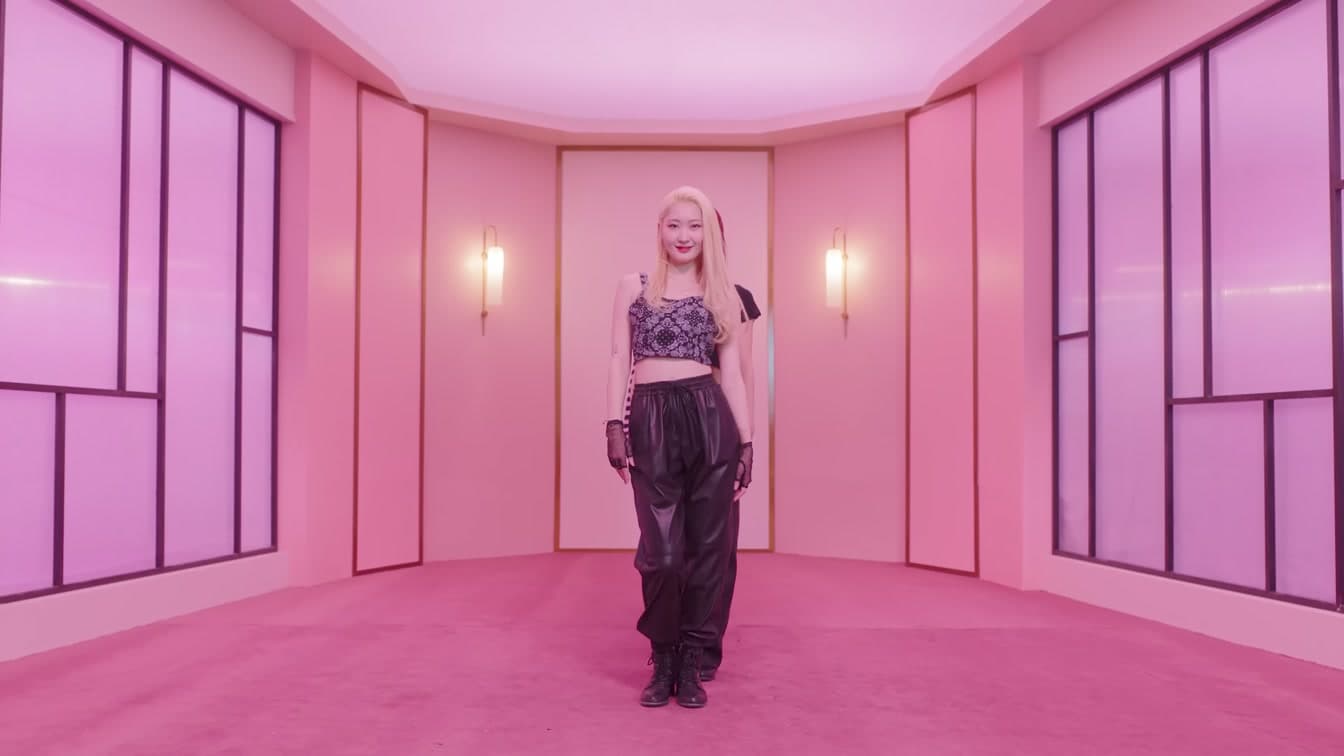
IU's "Never Ending Story" reached number one on Melon, Genie, and Bugs within an hour of its May 27 release — a response that was fast, even by IU's standards. The remake of Boohwal's 1988 rock ballad was released as part of A Flower Bookmark, Pt. 3, her third installment in the Kkot-Galpi series. The speed of the chart response tells part of the story. What the song and the EP around it say about IU's career at seventeen years and counting is the more interesting part.
What the Kkot-Galpi Series Is and Why It Matters
The Kkot-Galpi series is IU's ongoing project of reviving overlooked or underheard songs from Korean popular music history, presenting them with updated production while preserving what made the originals resonant. The first installment arrived in 2009, a year after IU's debut, when she was twenty-six tracks into a career that hadn't yet defined itself. The second arrived in 2017, by which point IU had become one of Korea's most commercially dominant solo artists. The third arrives in 2025, eight years after the second — the same interval, almost to the year, suggesting a rhythm that IU treats as intentional rather than incidental.
Each Kkot-Galpi release functions simultaneously as a musical act and a curatorial statement. IU selects the songs, adapts the arrangements, and presents them as a coherent EP rather than a scattershot collection of covers. A Flower Bookmark, Pt. 3 contains six tracks, and the fact that all six charted simultaneously on major Korean streaming platforms in the hours following release reflects both the series' established reputation and IU's current commercial position — which is, by any measure, without peer among Korean solo female artists.
The Boohwal Original and What IU Does With It
Boohwal's "Never Ending Story" is a 1988 Korean rock ballad — a piece of music that sits at a particular intersection of the country's pop history, when rock arrangements and orchestral balladry coexisted in ways that the industry's subsequent segmentation would make less common. The original is not an obscure selection: Boohwal is among the most recognized rock acts of that era, and "Never Ending Story" is considered one of the defining romantic ballads of its period. IU's choice is therefore not an act of excavation so much as a particular kind of reframing — taking a song that audiences of a certain generation carry as personal memory and presenting it to an audience for whom it exists only as cultural inheritance.
The production approach IU applies to Kkot-Galpi selections tends toward fidelity rather than reinvention. The arrangement on "Never Ending Story" preserves the emotional register of the original while adapting its sonic palette to contemporary recording standards. What changes is the voice doing the work — and IU's voice, which has a specific quality of seeming both technically controlled and emotionally unguarded simultaneously, is one that operates differently from Boohwal's original rock-adjacent delivery. The tension between those two performance modes is part of what makes the remake work as a listening experience rather than simply as a tribute.
The music video for "Never Ending Story" is structured as a homage to the 1998 Korean film Christmas in August, starring Heo Nam Jun — a film considered a landmark of Korean cinema's quieter emotional register, one that predates the international recognition Korean film would achieve in subsequent decades. The choice to embed a film reference within a music video that is itself a remake positions the release as a meditation on Korean cultural memory rather than a simple chart entry. The video accumulated more than one million YouTube views within its first seven hours, which suggests that the nostalgic framing landed with audiences across generational lines.
What the Chart Response Reveals
The triple number-one sweep on Melon, Genie, and Bugs within the first hour of release is, for IU, closer to an expectation than a surprise. She has occupied the upper echelon of Korean music streaming charts for long enough that her releases carry an automatic initial audience. What is more instructive about the "Never Ending Story" response is that all six tracks from A Flower Bookmark, Pt. 3 charted simultaneously — which reflects a listener behavior pattern where fans engage with the full EP rather than gravitating exclusively toward the lead single. That pattern tends to occur when an artist has built the kind of long-term relationship with their audience that makes the curation of an EP feel like a complete statement rather than a delivery mechanism for one promoted track.
The Soompi K-Pop Music Chart number-one position for the June third week confirms that the release held its initial impact across the subsequent chart cycle, rather than spiking and retreating in the way that some chart-topping releases do when their initial momentum isn't sustained by ongoing streaming. For a track built around a 37-year-old original and presented as part of a heritage series rather than as a contemporary pop statement, that sustained chart presence is a data point worth noting. It suggests that the Kkot-Galpi framing carries its own audience-retention logic — that listeners return to it for reasons that go beyond the initial nostalgia trigger.
The Broader Significance for IU's Career Trajectory
The Kkot-Galpi series has always functioned as a kind of counterweight to IU's primary commercial output. Her studio albums and major singles demonstrate her capacity to work within and often define contemporary Korean pop trends; the Kkot-Galpi installments demonstrate her investment in the history that precedes and contextualizes those trends. At seventeen years into a career that could have calcified into formula at any point along the way, the decision to return to the series — and to return on the same eight-year schedule that characterized its previous rhythm — reads as a deliberate statement about the kind of artist IU intends to remain.
What "Never Ending Story" and A Flower Bookmark, Pt. 3 achieve, taken together, is a demonstration that durability in Korean pop does not require the constant reinvention that the industry's short album cycles and intensive comeback culture often seem to demand. IU's version of longevity involves knowing which parts of Korean music history are worth recovering, understanding how to present that recovery in a form that reaches audiences who never encountered the originals, and doing so at intervals spaced widely enough that each installment feels like an event rather than a routine. The chart numbers confirm the commercial dimension of that strategy. The artistic dimension will be assessed over time, as the series accumulates and its curation becomes clearer in retrospect.
How do you feel about this article?
저작권자 © KEnterHub 무단전재 및 재배포 금지
Entertainment Journalist · KEnterHub
Entertainment journalist specializing in K-Pop, K-Drama, and Korean celebrity news. Covers artist comebacks, drama premieres, award shows, and fan culture with in-depth reporting and analysis.
Comments
Please log in to comment