j-hope Makes History at BMO Stadium: Inside the First BTS Solo Stadium Show in America
Selling out 22,000 seats two nights running in Los Angeles, j-hope has become the first BTS member to headline a solo stadium concert in the United States
 By Park Chulwon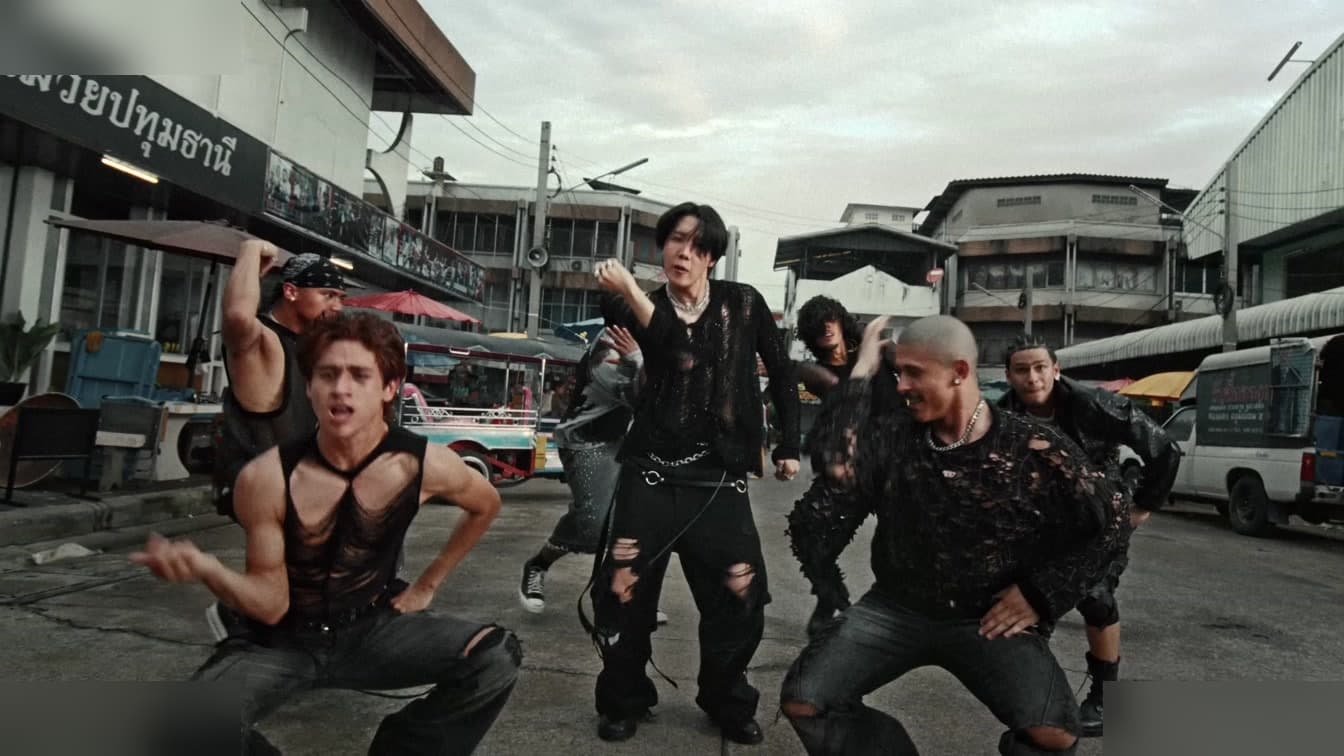
J-Hope headlined BMO Stadium in Los Angeles on April 4, 2025 — his first of two nights there. The show made him the first BTS member to headline a solo stadium show in the United States, a milestone with implications that extend beyond personal achievement. The concert drew approximately 22,000 attendees — a floor-and-seats configuration at a venue more commonly associated with rock or pop artists whose individual draw no longer requires a group frame. That J-Hope can now fill it alone, on the back of a solo discography less than three years old, is a statement about both the artist and the structural transformation of how BTS generates cultural weight in a period when the group is officially on pause.
The Stadium Threshold: What It Means in Practice
There is a meaningful difference between an arena show and a stadium show, and it is not merely scale. Arenas — 15,000 to 20,000 capacity — are the standard deployment for established solo K-pop acts in the Western market. Stadiums require a level of individual draw that, until recently, only BTS as a group could reliably command in the United States. When J-Hope's management announced BMO Stadium dates in Los Angeles, it represented a bet that his solo fanbase had grown dense enough and geographically concentrated enough to fill the additional capacity.
The sell-out — both April 4 and April 6 — validated that bet. The North American leg of "Hope on the Stage" had already produced sold-out shows in Brooklyn, Chicago, and Oakland before arriving in Los Angeles. By the time J-Hope reached BMO Stadium, the tour had confirmed what his streaming numbers and album performance had suggested but not definitively proven: that his solo career functions independently, not merely as an extension of BTS's collective gravity.
The Music: 'Mona Lisa' and What j-hope Brings Solo
The set drew from J-Hope's three solo releases — Jack in the Box (2022), Hope on the Street Vol. 1 (2024), and the March 2025 single "Mona Lisa" — constructing a live argument that his solo discography has genuine range. Jack in the Box's harder-edged hip-hop tracks provided momentum and crowd interaction; Hope on the Street Vol. 1's dance-forward material demonstrated the performance capability that made him one of BTS's most visually distinctive performers. "Mona Lisa," the most recent single, served as a showcase for the sonic direction he is currently exploring — more experimental, more producer-collaborative than the group framework typically allows.
What J-Hope does well in a solo context that he cannot fully demonstrate within BTS is control of a set's rhythm from start to finish on his own terms. BTS concerts are collaborative constructions; individual members cede significant creative control to the group's collective presentation. A solo show allows him to sequence, to take risks that might not serve a seven-member group narrative, to perform slower or stranger material that a stadium K-pop crowd would not typically sit still for. The BMO Stadium shows indicated he understands this latitude and is choosing to use it.
BTS's Solo Era: What j-hope's Stadium Shows Signal
J-Hope and Jin are the only two BTS members to have completed their mandatory military service by April 2025. With the remaining five members — RM, Jimin, Jungkook, V, and Suga — still in various stages of service, the group's solo era has become the primary mode through which BTS maintains cultural presence in the interim. Jin released his first full album, Happy, in late 2024. J-Hope launched "Hope on the Stage" as a 31-date world tour spanning the United States, Mexico, Japan, Indonesia, and Singapore. Both are operating, in essence, as solo artists who happen to share a group identity that remains dormant until the last discharge is complete.
The stadium threshold that J-Hope's LA shows clear matters for what comes after. When BTS reconvenes — with their group comeback expected in 2026 — they will reconvene with members who have individually demonstrated the capacity to generate significant cultural and commercial activity on their own. J-Hope's "Hope on the Stage" is evidence that the interim period has not been a waiting room for BTS fans. It has been something more like parallel careers, developing concurrently, that will eventually remerge. That the solo era has produced this level of commercial evidence suggests that BTS's group return will arrive with a broader individual audience base than the group possessed when it paused — each member having added followers through their solo work who may never have engaged with the group context originally.
The Second Night and What Comes Next
The second Los Angeles show takes place tonight, April 6. Following the North American leg, J-Hope continues to Asia, with the tour running through June 2025. The finale is expected to bring additional BTS members onstage as the group's reunion approaches — a tradition in K-pop tours where solo acts use their final concerts to signal what is coming collectively.
For now, what April 4 definitively established is that J-Hope can fill a stadium alone in the United States. That is not a minor thing. It is the kind of proof point that changes how the industry thinks about solo K-pop acts at scale, and it positions him — and by extension BTS — for a group return that arrives not with question marks about whether the fanbase has endured the hiatus but with evidence that it has grown during it.
How do you feel about this article?
저작권자 © KEnterHub 무단전재 및 재배포 금지
Entertainment Journalist · KEnterHub
Entertainment journalist focused on Korean music, film, and the global K-Wave. Reports on industry trends, celebrity profiles, and the intersection of Korean pop culture and international audiences.
Comments
Please log in to comment