JENNIE's Seven-Music-Video 'Ruby' Campaign Exposes K-pop's Visual Content Revolution
 By Jang Hojin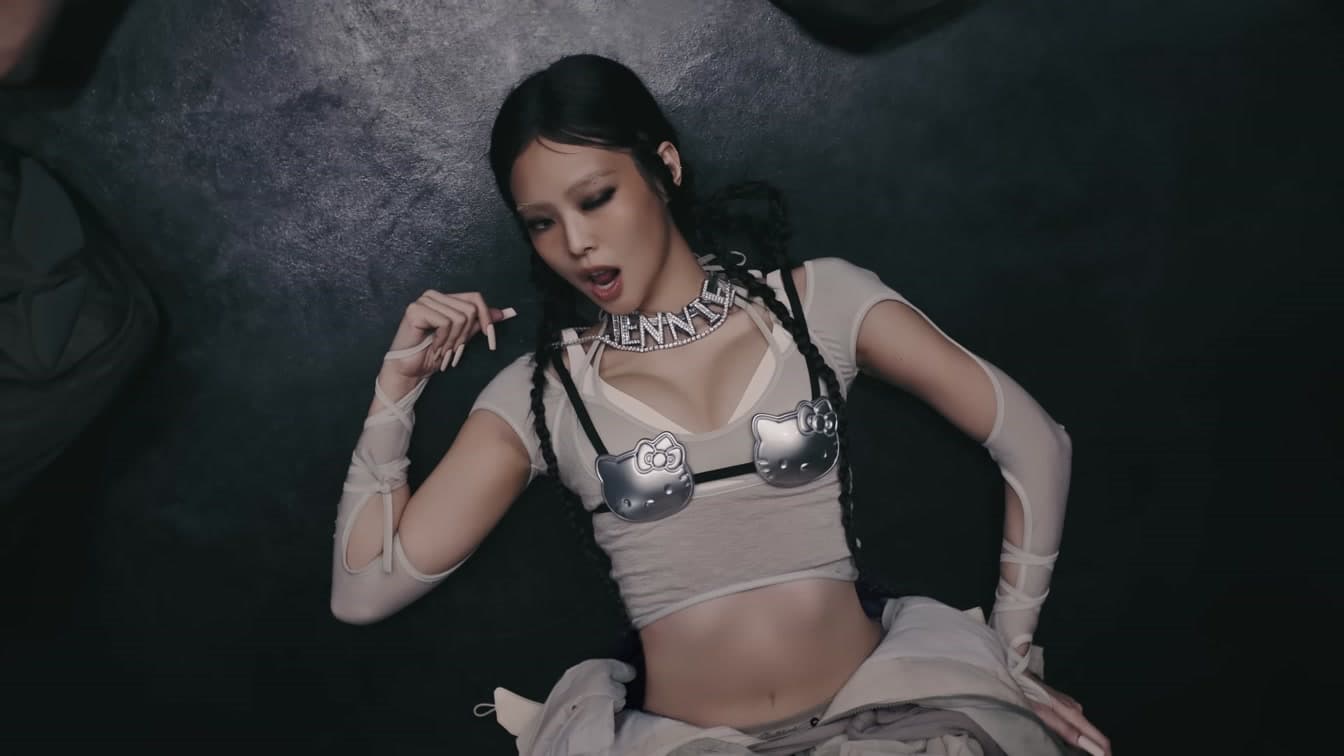
JENNIE's debut solo album "Ruby" had generated seven music videos by April 2025 — an unprecedented visual campaign that revealed how creative independence reshapes K-pop's content production logic.
Released on March 7, 2025 through OA Entertainment (ODDATELIER) in partnership with Columbia Records, "Ruby" marked JENNIE's first full solo album following years of building one of K-pop's most anticipatory pre-release profiles. The decision to accompany it with an unprecedented visual content campaign — seven music videos across multiple tracks, produced with the budget and ambition of a cinematic rollout rather than a standard album promotional cycle — reflected the creative autonomy that JENNIE had built her independent label specifically to exercise.
The Ruby Album and Its Visual Strategy
The seven-video campaign for "Ruby" represented a departure from every conventional K-pop promotional model. Standard practice for major K-pop releases involves a single title track music video, occasionally supplemented by a performance video or a dance practice clip. Even the most ambitious K-pop visual rollouts rarely exceed two or three concept videos accompanying a full album release. JENNIE's "Ruby" campaign produced at least seven distinct visual productions — each functioning as a standalone artistic statement rather than a promotional adjunct to the music.
The title track "like JENNIE" anchored the campaign, its music video deploying an eclectic visual vocabulary that drew from early 2000s fashion, experimental choreography concepts, and production design that foregrounded JENNIE's fashion-forward personal aesthetic — the "JENNIE" necklace, the editorial styling, the willingness to create images that functioned simultaneously as music video and fashion content. The scale of the visual production across all seven videos signaled that "Ruby" was being positioned not merely as a K-pop album but as a cultural artifact with the visual ambition of a major Western pop release.
This strategy was made possible by JENNIE's decision to establish OA Entertainment in 2023, departing from YG Entertainment after BLACKPINK's contract completion to build an infrastructure specifically designed to give her full creative and commercial control. The seven-video "Ruby" campaign was the clearest demonstration of what that control enabled: a budget allocation to visual content that YG's standard operating procedures for solo artist releases would not have supported, and a creative vision for each video that required JENNIE to be the final decision-maker rather than one voice within a large corporate content production system.
The Market Context: Solo Artists, Streaming Economics, and Visual Content
JENNIE's seven-video approach for "Ruby" arrived at a moment when the relationship between K-pop music releases and visual content was undergoing its most significant structural shift since the establishment of YouTube as K-pop's primary promotional platform. The streaming economy's logic favors sustained engagement over release-moment impact: an artist who releases seven distinct music videos across six to eight weeks generates algorithmic attention and playlist inclusion opportunities that a single release cannot match. Each video becomes a separate content event, a separate social media cycle, and a separate opportunity for fans to generate the short-form video content that streaming platforms' discovery algorithms amplify.
The economics matter in a context where K-pop's global streaming numbers had established a clear ceiling for what album release moments could deliver without sustained post-release visual content. JENNIE's global audience — built through BLACKPINK's decade of establishing one of K-pop's largest international fan communities — needed multiple touchpoints across the "Ruby" release window to maintain the engagement level that streaming chart performance requires. Seven music videos provided those touchpoints at a cadence that kept "Ruby" in active cultural conversation from March through the post-album concert period that followed.
Creative Independence and the Post-YG Trajectory
The "Ruby" visual campaign cannot be understood without accounting for what JENNIE's departure from YG Entertainment represented in the context of K-pop's evolving artist-label dynamics. YG's system, like those of all the major K-pop entertainment companies, concentrates creative control at the company level: music production, visual concept, MV direction, and promotional strategy are handled by internal teams whose decisions flow from the company's broader strategic priorities rather than from the artist's individual creative vision. Artists within that system can express preferences and contribute ideas, but the final product reflects institutional imperatives as much as artistic ones.
OA Entertainment changed that calculus fundamentally for JENNIE. The "Ruby" album was produced under a creative framework in which JENNIE's preferences determined the music's direction, the visual concept, the video directors, and the sequencing of the seven-video campaign. Rolling Stone's subsequent designation of "Ruby" as one of the best albums of 2025 — making it the only K-pop entry on that list — validated the bet that creative independence would produce work that crossed the boundary between K-pop's category-specific critical reception and the broader global music criticism that typically ignores K-pop releases.
The concert "The Ruby Experience," held at Incheon's Inspire Arena in April 2025, extended the album's visual ambition into live performance, with production design that reflected the same aesthetic coherence that the seven-video campaign had established. The combination — a critically acclaimed debut album, a seven-video visual campaign unprecedented in K-pop, and a solo concert infrastructure built entirely around JENNIE's own creative vision — represented the most complete demonstration yet of what K-pop's most established artists could achieve when they built the institutional structures to exercise full creative control.
What the Seven-Video Model Signals for K-pop's Future
JENNIE's seven-video "Ruby" campaign established a benchmark that will be difficult for other K-pop artists to replicate without the combination of factors that made it possible: an independently controlled label with the financial capacity to absorb the production costs, a global fan base large enough to make the streaming returns justify that cost, and the creative experience to maintain artistic coherence across a visual campaign of that scale. Those conditions are currently met by a small number of K-pop artists — all of them in the generation of performers whose global audience was built during K-pop's 2018-2022 international expansion.
The broader signal, however, is about what the visual-first approach to music releases will require from the K-pop industry's next generation of major artists. The standard title-track-plus-performance-video promotional model that has governed K-pop releases since YouTube established the platform's primacy is being tested by the streaming economy's demand for sustained multi-week engagement. JENNIE's "Ruby" campaign did not invent the multi-video rollout — it scaled it to a level that made the argument for the model's effectiveness impossible to dismiss. The question for the industry, as of April 2025, was not whether seven music videos were too many, but whether one had ever been enough.
How do you feel about this article?
저작권자 © KEnterHub 무단전재 및 재배포 금지
Entertainment Journalist · KEnterHub
Entertainment journalist specializing in K-Pop, K-Drama, and Korean celebrity news. Covers artist comebacks, drama premieres, award shows, and fan culture with in-depth reporting and analysis.
Comments
Please log in to comment