Jensen Huang Turned You Quiz Into Korea’s AI-Era Talk Stage
The NVIDIA CEO’s ratings lift shows how Korean variety TV is becoming a global platform for technology leaders.
 By Park Chulwon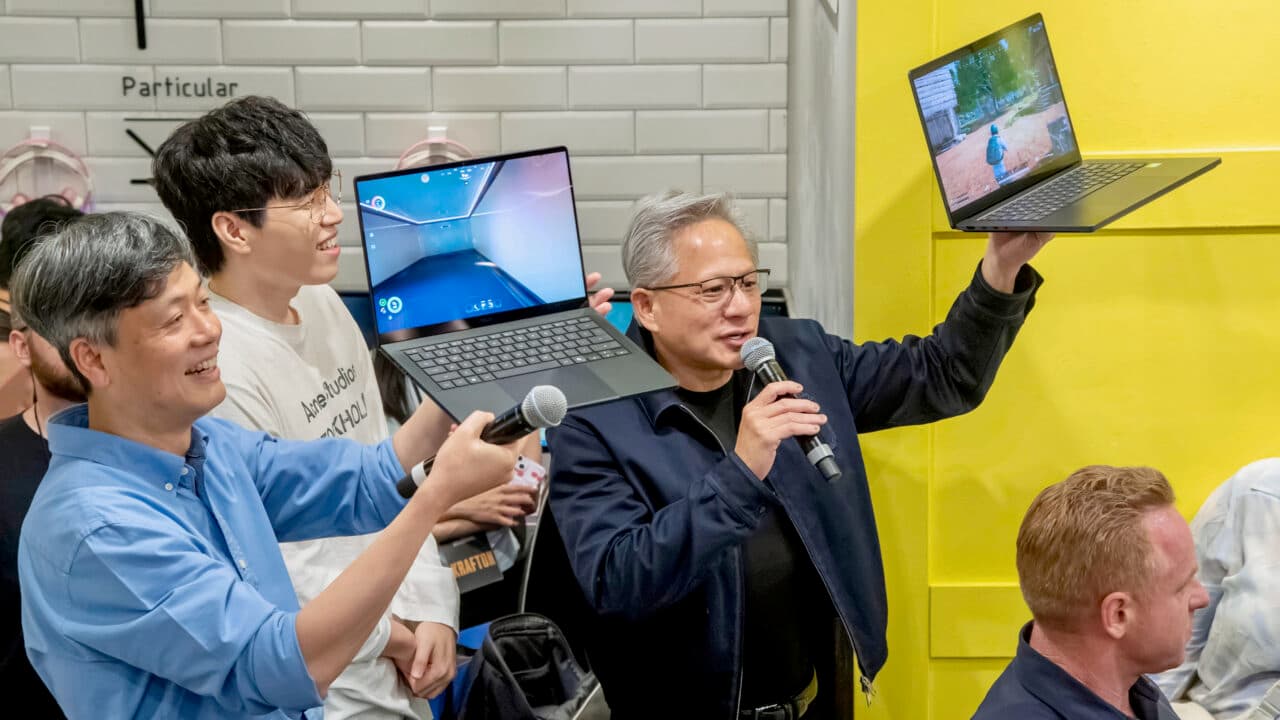
Jensen Huang did more than lift one Korean talk show's ratings.
The NVIDIA founder and CEO appeared on tvN's You Quiz on the Block on June 10, and the episode immediately became the program's strongest ratings story of the year: Nielsen Korea figures cited by multiple Korean outlets put the national household average at 5.7 percent and the peak at 8.3 percent, while the Seoul metropolitan average reached 5.9 percent and peaked at 8.5 percent. The first two facts are simple. The larger meaning is not. Huang's appearance shows how a Korean entertainment format can now function as a cultural gateway for technology leaders, not only actors, idols or film stars.
This article analyzes how Huang's appearance turned a weekly variety interview into a test case for Korea's new global talk-show power: a space where AI, celebrity, business diplomacy and mainstream entertainment meet in front of a general audience.
From Street Quiz To Global Booking Room
The ratings spike matters because You Quiz was not built as a conventional celebrity showcase. The program began in 2018 as a street-interview format, with Yoo Jae-suk and Jo Se-ho meeting ordinary people, asking questions and turning everyday stories into light television. That original structure gave the show an emotional advantage: it treated fame as secondary to biography.
That identity became more important after the pandemic pushed the format indoors. The studio version could book bigger names, but it kept the tone of a personal conversation. Korea Times reporting before Huang's episode noted that the guest list had already moved beyond entertainment, with Hollywood stars and Bill Gates helping turn the show into a broader global booking platform. So Huang did not arrive in isolation. He arrived after the program had spent years training viewers to accept a wider definition of public figure.
That shift changes what a variety show can sell. Instead of only offering jokes, games or confession-style moments, You Quiz offers translation: it turns distant global figures into legible stories for Korean prime-time viewers. For Huang, that meant the familiar arc from immigrant childhood and early work to AI-era leadership. For tvN, it meant proving that a Korean talk show can host a conversation usually reserved for business media, conferences or keynote stages.
Why The Numbers Point Beyond A One-Night Hit
But prestige booking alone does not explain the performance. The episode's numbers show a wider curiosity around technology as culture. Nationally, the broadcast averaged 5.7 percent and peaked at 8.3 percent. In the Seoul metropolitan area, it averaged 5.9 percent and peaked at 8.5 percent. tvN's target 20-49 demographic also produced reported peaks of 3.5 percent in the metropolitan area and 3.7 percent nationwide.
Those figures are not blockbuster drama numbers, and they should not be exaggerated as a national phenomenon. Their significance is narrower and more useful: they show that a business leader can become appointment television when the surrounding narrative is strong enough. Huang was not marketed only as a CEO. He was framed as a founder, immigrant, engineer, gamer, Korea partner and unusually visible symbol of the AI boom. That mix gave the episode several entry points for viewers who might not follow semiconductor news.
The comparison also clarifies why You Quiz has become valuable to global guests. A keynote reaches specialists. A financial interview reaches investors. A variety talk show reaches families, students and casual viewers who may never watch either. That is the show's strategic advantage.
Korea Was Part Of The Story, Not Just The Venue
The episode also landed during a broader Korea-focused NVIDIA visit, which made the booking feel less like a publicity detour. NVIDIA's own Seoul trip coverage emphasized Huang's meetings with Korean AI builders, sovereign infrastructure partners and gaming communities. It also highlighted Korea's place in gaming, manufacturing, robotics and AI infrastructure. That context matters because it gave the entertainment appearance a real-world business backdrop.
Huang's Korea narrative has unusual entertainment value because it connects technology history to local memory. PC bangs, esports, Yongsan electronics culture and Korean hardware giants are not abstract references for Korean audiences. They are familiar parts of the country's digital modernization story. When Huang speaks about gaming as an early foundation for NVIDIA's growth, the point does not sound imported. It sounds locally anchored.
That is why the appearance worked better than a standard executive interview might have. It allowed Korean viewers to see themselves inside a global AI story. In entertainment terms, that is powerful. In industry terms, it is useful soft power: Korea is not only consuming a global tech narrative but appearing as one of its formative stages.
Audience Reaction And The New Celebrity Category
The reaction around the broadcast suggests that Korean viewers are increasingly comfortable treating founders and technology executives as pop-cultural figures, at least when their public image is strong. Huang's leather-jacket persona, gamer-friendly stops and direct comments about Korean companies made him easier to package than a more guarded corporate guest. The show did not need to turn him into an idol. It only needed to reveal enough character to make his influence feel human.
That creates a new category for Korean variety programming: the global systems celebrity. This person may not act, sing or compete, but their decisions shape platforms, markets and everyday technology. Bill Gates opened one version of that lane for You Quiz; Huang sharpened it for the AI era. The result is not a replacement for traditional entertainment guests. It is an expansion of who can carry an episode.
For fans of Korean content, the development is also a sign of format confidence. A show that can move from actors to CEOs without losing its emotional grammar has more exportable value than one dependent on local star familiarity alone. That is the deeper reason the ratings matter.
What Comes Next For Korean Talk IP
The next test is whether You Quiz can turn these bookings into a repeatable editorial lane rather than occasional prestige events. The risk is obvious: too many high-status guests can make the show feel promotional. The opportunity is larger. If producers keep choosing guests whose stories intersect with Korea's cultural, technological or creative identity, the format can remain intimate while becoming more globally consequential.
Huang's episode points toward that balance. It gave tvN a ratings win, NVIDIA a softer public narrative and Korean viewers a way to place AI leadership inside a familiar entertainment frame. That is why the broadcast should be read as more than a successful guest appearance. It was a marker of how Korean variety television is learning to host the people shaping the systems around entertainment itself.
How do you feel about this article?
저작권자 © KEnterHub 무단전재 및 재배포 금지
Entertainment Journalist · KEnterHub
Entertainment journalist focused on Korean music, film, and the global K-Wave. Reports on industry trends, celebrity profiles, and the intersection of Korean pop culture and international audiences.
Comments
Please log in to comment