JTBC Revisits Viral Triple Kiss Moment
The official highlight explains how a football crowd scene in Mexico became a fast-spreading variety-show story.
 By Jang Hojin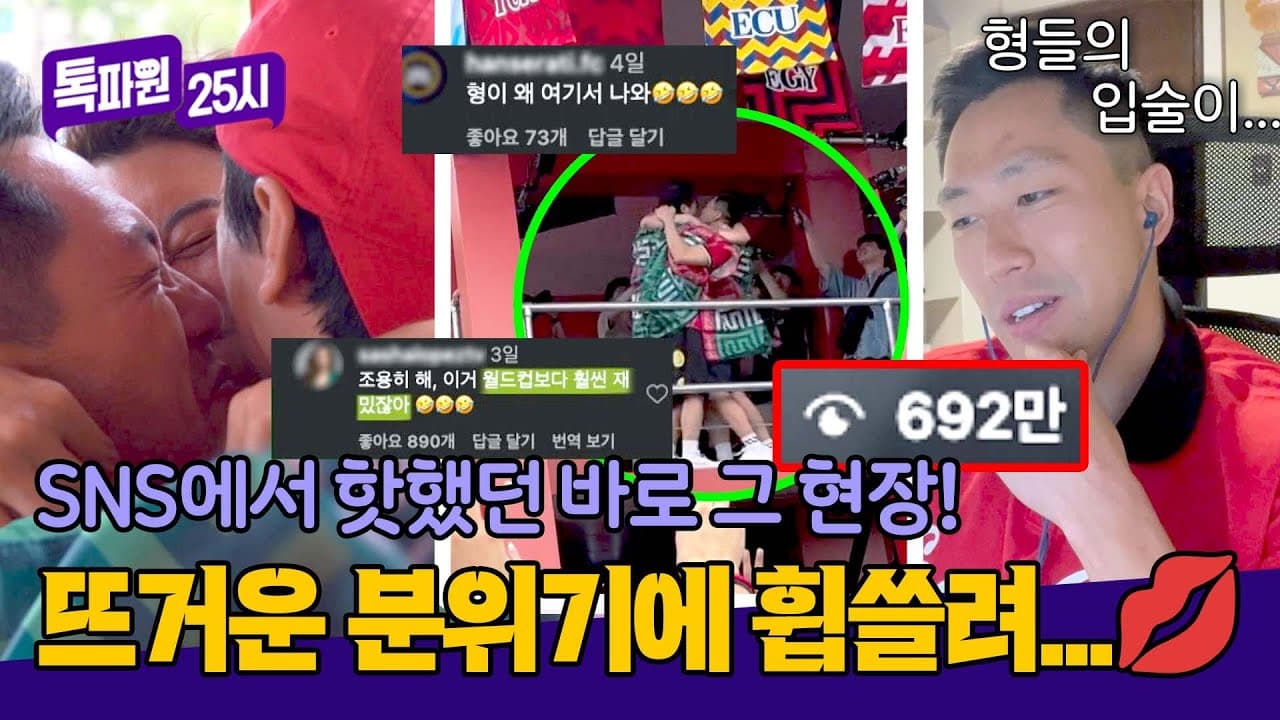
JTBC Entertainment's latest official YouTube highlight revisits a variety-show moment that had already gained unusual attention before the full broadcast reached viewers: a chaotic "triple kiss" scene that turned a football crowd interaction into a viral comedy beat. The clip, uploaded on June 23, uses Korean captions from a broadcast segment to unpack how the cast experienced the moment, why the crowd response became so intense, and how the aftermath followed them even after the event ended.
The video is not a music release or a scripted drama teaser, but it fits a familiar pattern in Korean entertainment: a spontaneous overseas scene becomes memorable because the cast members are pushed by the surrounding atmosphere, then the studio segment turns the memory into a second wave of comedy. According to JTBC Entertainment's official YouTube channel, the highlight focuses on the full story behind a triple-kiss moment that caused a stir before the episode aired, and the captions show the cast reflecting on the crowd, the surprise, and the embarrassment that followed.
At the center of the segment is a Korea-supporting football crowd in Mexico, where the cast members were swept into the energy of the venue. The captions describe cheers, chants, and the feeling that football culture can become a festival long before a match begins. One participant recalls learning how different a World Cup-style atmosphere can feel when experienced from the street and stands rather than through pressure or professional responsibility.
A Crowd Moment Becomes A Comedy Story
The triple-kiss scene appears to have started with the surrounding crowd urging the Korean visitors to kiss for the camera or for the crowd's amusement. The cast members initially sound confused and reluctant in the captions, but the mood around them grows louder and more playful. That escalation is what gives the story its variety-show rhythm: nobody presents the moment as carefully planned, yet everyone understands that the energy of the crowd made it hard to ignore.
The studio discussion turns that memory into a sequence of reactions. Cast members laugh about how quickly the situation became unavoidable, how overwhelming the cheers felt, and how strange it was to realize that a short public interaction had become a clip people were sharing. Instead of treating the moment as scandalous, the broadcast frames it as an awkward, funny, and slightly unbelievable travel memory that only makes sense inside the charged atmosphere of a packed sporting event.
That distinction is important. Korean variety programs often rely on controlled embarrassment, but the best moments feel as if the cast members are genuinely reacting faster than they can manage their public image. The JTBC clip works because the embarrassment is communal. The crowd is excited, the cast is caught off guard, and the later studio conversation lets viewers replay the confusion from a safe distance.
The captions also show the cast comparing the scene's energy with major K-pop-level excitement, a joke that underlines how surreal the response felt in the moment. It is not a literal comparison of fame. It is a way of saying that, for a few seconds, the group felt the kind of explosive crowd attention usually reserved for global stars.
The Viral Afterlife Of A Short Clip
The most concrete measure of the moment's spread comes from the segment's mention of a Mexican social media clip reaching about 6.92 million views. That number gives the story a sharper reason to exist as a standalone highlight. The scene was not simply funny to the people in the stadium; it traveled across platforms and became a recognizable piece of Korean-variety content for viewers who may not have watched the full program.
The broadcast also includes an anecdote about recognition after the event. One cast member recalls taking an Uber in Guadalajara and noticing that the driver seemed to recognize him from the previous day's fan-zone scene. The driver reportedly referred to a funny video from the event, creating the uncomfortable but amusing realization that the viral moment had already escaped the boundaries of the filming schedule.
That kind of afterlife is increasingly central to entertainment programming. A variety episode may air on television, but its cultural impact is often built through fragments: a 30-second crowd scene, a reaction shot, a comment replayed in captions, or a highlight uploaded by an official channel. The JTBC clip shows how broadcast teams now package those fragments for viewers who encounter the show through YouTube first.
The story also demonstrates why overseas location segments remain valuable for Korean variety. When a program leaves the studio, it gains unpredictable public interaction, local color, and the possibility of moments that cannot be manufactured with the same ease indoors. The Mexico setting matters because the crowd's response, the stadium food zone, and the broader football-festival mood all feed the comedy of the segment.
Why The Segment Works For Global Viewers
Even for viewers who do not know every cast member, the emotional arc is easy to follow. A group arrives at a sports event, the crowd becomes loud, a playful demand takes over, the participants give in, and the clip becomes a running joke. That is a universally understandable comedy structure. The Korean captions add detail, but the body language and crowd reaction do much of the storytelling.
The highlight then expands beyond the kiss itself by showing the group moving toward the stadium and exploring the food zone. The captions shift into excited reactions to Mexican food, including large hot dogs, sauces, onions, jalapenos, and the pleasure of customizing stadium snacks. That food sequence gives the segment a broader travel-show texture and keeps the episode from relying only on one viral gag.
For JTBC, that blend is useful. The clip can attract viewers through the sensational headline of a triple-kiss moment, but it can retain them with travel atmosphere, cultural curiosity, and the cast's continued banter. This is the structure of many successful entertainment highlights: a clickable incident at the front, followed by enough context to make the episode feel like more than a single joke.
The broadcaster's official upload also keeps the content inside a legitimate viewing route. That matters because viral variety clips often circulate in short, unofficial edits that strip away program context. By publishing the highlight through JTBC Entertainment's channel, the broadcaster can preserve the comedic framing, provide a direct video source, and encourage viewers to move from the viral fragment back to the show.
A Small Moment With A Long Tail
The triple-kiss story is ultimately a reminder of how Korean variety builds value from reaction. The scene itself is brief, but the aftermath gives it durability: the cast remembers the pressure of the crowd, the studio panel laughs through the details, social media turns it into a high-view clip, and the official YouTube highlight gives the full explanation a second life.
It also shows how global settings can change the rhythm of familiar television personalities. Away from a controlled studio, the cast becomes part of a public celebration where local fans, sports culture, food, and language all create new possibilities. The result can be awkward, but that awkwardness is often exactly what variety viewers want to see.
As Korean entertainment continues to depend on YouTube highlights for discovery, segments like this are likely to remain valuable. They are easy to understand, visually immediate, and built around a moment that viewers can describe in a single sentence. JTBC's latest clip may have started with an unexpected crowd chant, but its real story is how quickly a small joke can turn into a cross-platform entertainment memory.
How do you feel about this article?
저작권자 © KEnterHub 무단전재 및 재배포 금지
Entertainment Journalist · KEnterHub
Entertainment journalist specializing in K-Pop, K-Drama, and Korean celebrity news. Covers artist comebacks, drama premieres, award shows, and fan culture with in-depth reporting and analysis.
Comments
Please log in to comment