K-Pop Live Entertainment Diverges: Premium Experiences vs. Accessible Pricing Models
AKMU and tripleS reveal two competing answers to the same ticket-price problem.
 By Im Garam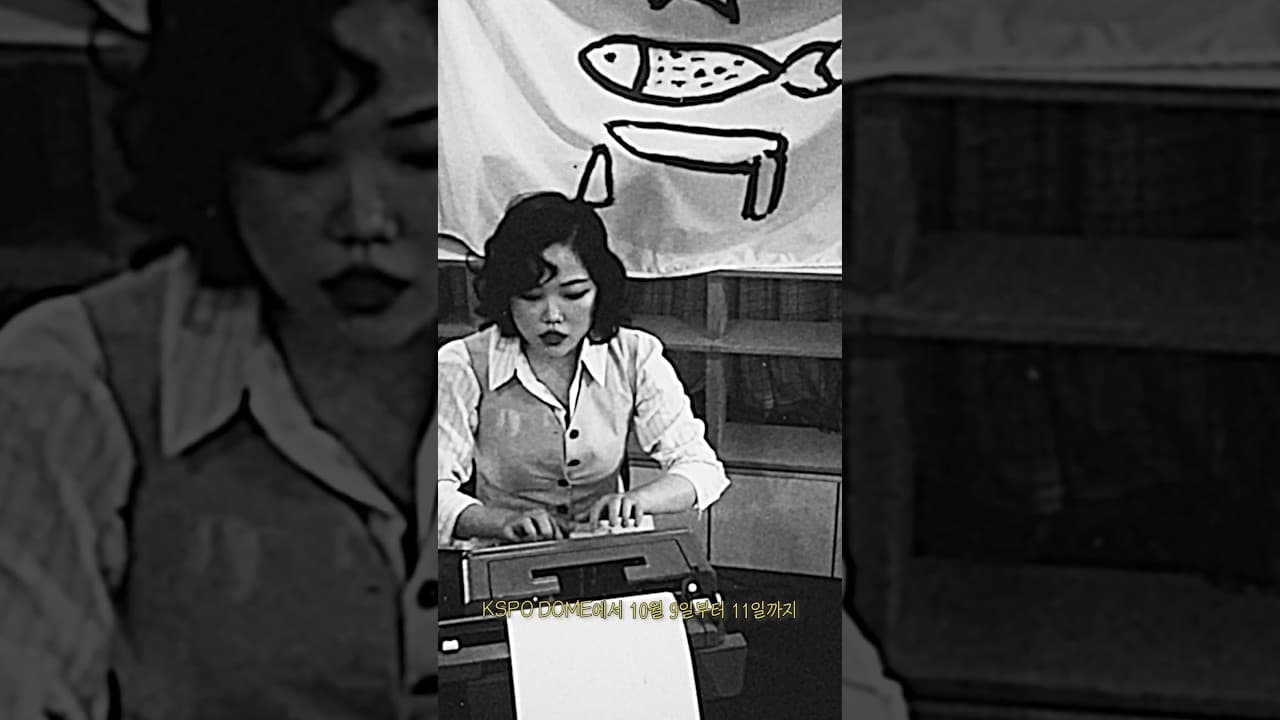
K-pop’s live market is no longer arguing over one question—how much a ticket should cost. It is testing two different answers. AKMU’s three-night Paradise of Rumors concert, held at Seoul’s KSPO Dome from October 9 to 11, 2026, sold the idea of a complete experience, while tripleS’s Seoul dates used a 30,000-won entry price to make attendance itself the headline. Together, the cases show an industry splitting between premium value and deliberate accessibility.
That split matters because the concert is becoming the most direct place where fans judge an artist’s relationship with money. A high price can be accepted when the event feels unusually complete. A low price can become a strategic statement when it invites people who would otherwise stay outside the venue. The competition is therefore moving beyond celebrity power: it is becoming a contest over what fans believe a live performance is worth.
Two Seoul Concerts, Two Definitions of Value
AKMU’s scale was substantial. According to Sports Donga’s October 12 report, the duo drew about 30,000 people across three KSPO Dome dates. The same report describes a 150-minute performance built around 30 songs, with the set moving from the duo’s early identity to the more mature material on their album Hwae. Those figures do not prove that every attendee considered the ticket fairly priced, but they explain why the production was framed as an extended, full-evening experience rather than a short promotional appearance.
The details around the set were part of that proposition. AKMU prepared busking before the concert, gave audiences free knuckle goods that functioned as light sticks, and dressed staff in hiking-themed outfits to protect the show’s visual world. The reporting also records praise for a performance that appeared to match its admission price. In other words, the product was not only the duo’s songs; it was the sequence of waiting, entering, watching and remembering.
That model makes a premium ticket easier to defend, but it also raises expectations. Once fans pay for a carefully designed environment, they are evaluating every part of the journey. The cost is no longer compared only with another singer’s ticket. It is compared with the total amount of time, care and access the event appears to provide.
The Premium Benchmark Keeps Moving
The wider market shows why that comparison has become urgent. The Korea Times reported in February 2026 that ENHYPEN’s 2025 finale tickets were priced at 220,000 won for Sound Check, 253,000 won for Meet & Greet and 165,000 won for general admission. The report said the M&G price was 27 percent higher than in 2024, while Sound Check and general admission rose by about 11 percent. The direction is clear even where the article does not publish every earlier won figure: 2024’s baseline moved upward into a 2025 premium tier.
That is a meaningful time-series signal. ENHYPEN’s M&G moved from its 2024 benchmark to 253,000 won in 2025, a reported 27 percent increase; Sound Check and general admission followed the same 2024-to-2025 upward path at roughly 11 percent. This is not simply a single expensive show. It is a pricing ladder becoming more aggressive across successive editions, which changes the reference point for fans deciding what counts as normal.
The same report placed BTS’s 2026 ground seats at 260,000 won and general admission at 198,000 won. Against those figures, tripleS’s 30,000-won seat is not a small discount. It is a fundamentally different invitation to participate. The contrast is especially sharp because the Donga report describes 200,000-won-range tickets as increasingly common across the concert market.
Bar chart comparing tripleS at 30,000 won, ENHYPEN general admission at 165,000 won, ENHYPEN Sound Check at 220,000 won, ENHYPEN Meet and Greet at 253,000 won, BTS general admission at 198,000 won, and BTS ground seats at 260,000 won. 0 65k 130k 195k 260k 30,000 165,000 220,000 253,000 198,000 260,000 tripleS ENH G ENH SC ENH M&G BTS G BTS Ground
Accessibility Is Becoming a Strategy
tripleS’s approach is more than a low-price promotion. For the group’s ANDLESS Seoul concerts on October 10 and 11, MODHAUS set some seats at 30,000 won and said the purpose was to lower the barrier to cultural participation. The company also announced a future experiment in which audiences would choose how much to pay after a performance: the final show of Haseul’s four-date Seoul solo run is scheduled to use a pay-what-you-want model.
That logic treats attendance as a growth tool. A lower seat price can bring in curious listeners, younger fans or people who cannot justify a 200,000-won purchase. It can also create a different kind of goodwill: the company appears to be asking how many people can join, not only how much the most devoted fans will spend. The trade-off is obvious. A 30,000-won seat leaves less room to absorb production costs, so the model may depend on scale, merchandise, repeat attendance or a deliberate investment in fandom.
KOPIS figures provide useful context without proving that any one artist’s pricing will work. A first-half 2026 insight report summarized by public.ai.kr put average revenue per ticket at 55,402 won across venue sizes and 85,911 won in venues with at least 1,000 seats. Both figures were lower year on year by 3,900 won and 8,673 won respectively. That combination—higher headline prices in premium K-pop tiers but lower average revenue in the broader performing-arts data—suggests a market with uneven demand, not a simple story of everyone paying more.
What Fans Are Actually Buying
AKMU and tripleS therefore represent different answers to the same pressure. AKMU builds value horizontally, adding time, atmosphere and small acts of hospitality around a 30-song performance. tripleS builds value vertically, making the first step into the venue dramatically cheaper. Neither approach guarantees a stronger artistic result. They do, however, make the exchange easier for fans to understand.
Premium pricing is most vulnerable when the experience feels generic. If the production is memorable, a higher price can be interpreted as payment for craft. If it relies mainly on scarcity, fans may instead see it as a test of loyalty. Accessibility pricing faces the opposite challenge: it must prove that affordability does not mean disposable quality. The audience still wants a concert, not merely admission to a room.
The response around AKMU’s concert and tripleS’s pricing shows why the distinction has become an industry conversation. One event is praised for delivering a rich, carefully themed night; the other attracts attention by challenging the assumption that K-pop tickets must begin in the six-figure range. Both are trying to make the price feel meaningful rather than arbitrary.
The Next Test for K-pop’s Live Economy
The next phase will likely be less about choosing premium or cheap in the abstract and more about designing a credible range between them. A concert can offer an accessible base ticket, clearly explained premium benefits and enough production quality to make both audiences feel respected. Transparent tiers would also help fans distinguish payment for a seat from payment for sound check, greetings or collectibles.
For now, AKMU’s 30,000-person, 150-minute, 30-song event and tripleS’s 30,000-won experiment point in opposite directions—but they are solving the same problem. K-pop must keep live performance financially viable without making fandom feel like a luxury product. The acts that explain what fans are paying for, then deliver on that promise, will shape the market’s next benchmark.
How do you feel about this article?
저작권자 © KEnterHub 무단전재 및 재배포 금지
Music Charts & Data Analyst · KEnterHub
Music data analyst turned journalist. Im Garam covers K-pop through the numbers — chart performance, album sales, streaming milestones and touring economics — and writes the deep-dive reviews and industry analyses that put those numbers in context.
Comments
Please log in to comment