Kim Dae-myung Brings Misaeng OST Back To KBS
 By Ricky Joo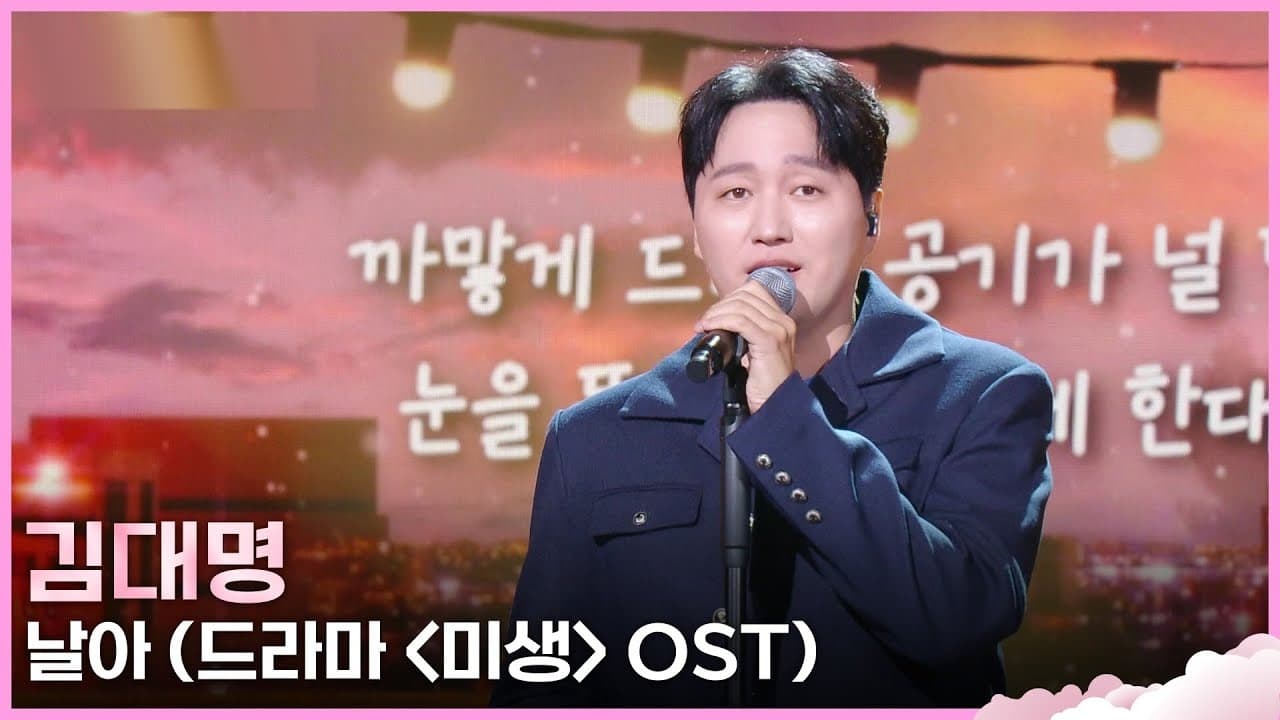
Kim Dae-myung's official KBS Kpop performance of Fly, the OST from Misaeng, brings one of Korean drama's most enduring workplace memories back into a live-music setting. The clip comes from the July 10 broadcast of The Seasons: Sung Si-kyung's Eardrum Boyfriend, and its appeal rests on the direct connection between performer and source. Kim is not simply covering a drama song. He is revisiting music attached to a series that remains central to how many viewers remember him.
KBS Kpop identifies the video as Kim performing Fly from Misaeng, and the same episode also included other stages from Choi Yuri, Lee Seung-chul, Lee San, LUCY, and Kim's separate Christmas in August performance. Within that lineup, Fly functions as the drama-memory anchor.
For international K-drama fans, the stage has immediate utility. Viewers who know Kim from later work can trace him back to one of Korea's defining office dramas. Viewers who already value Misaeng receive a fresh official performance that confirms the series' emotional afterlife is still active.
Why Misaeng Still Resonates
Misaeng lasted because it treated ordinary pressure as serious drama. Its conflicts came from hierarchy, contracts, office politics, social expectation, and the private fear of not being enough. The show understood that a meeting room can feel as tense as a battlefield when a person's dignity is at stake.
That is why an OST such as Fly still carries weight. The title suggests release, but inside the emotional world of Misaeng, release is never easy. It is something people imagine while still pushing through fatigue, repetition, and the uncertainty of whether effort will be recognized.
Kim's performance activates that memory without needing heavy explanation. His association with the drama gives the song a built-in frame. The audience can hear the melody as a reminder of characters who wanted to move forward even when the workplace made every step difficult.
The clip also works for viewers who have not seen the series. Kim's delivery is direct and grounded, and that lets the song communicate a broader feeling of endurance. A good OST stage should not require homework. It should reward context while still functioning as music.
A Current Stage For An Older Story
The strongest choice here is that The Seasons does not package the moment as a formal anniversary tribute. The song appears inside a current live-music broadcast, which makes the nostalgia feel active rather than sealed away. The program lets an older drama breathe in present tense.
Sung Si-kyung's season is a good setting for that approach. His identity as a vocalist and host makes the room friendly to reflective song choices, and the program's format allows guests to bring music with personal or cultural meaning. Kim's Fly stage fits because it is built on emotional clarity rather than spectacle.
The official YouTube upload gives the performance a second function. It becomes a reference point for fans, writers, and viewers who want to cite or revisit the moment without relying on unstable reposts. In the current entertainment environment, that reliability is not a minor detail.
It also broadens KBS Kpop's channel identity. The channel is not only a place for idol choreography or comeback stages. It is also an archive of broadcaster-curated Korean music moments, including OST memories and actor performances that speak to the wider entertainment field.
Kim Dae-myung's Role In The Memory
Kim Dae-myung has built much of his career through ensemble credibility. He often strengthens the emotional reality around him rather than dominating the frame. That is one reason Misaeng fans continue to associate him with the drama's grounded human texture.
Singing Fly allows him to meet that association directly. The song is connected to a work that shaped how audiences understand him, so the stage has narrative logic. It is not a variety stunt. It is a performer returning to a piece of music that belongs to his screen history.
For global audiences, the performance can renew interest in both Kim and Misaeng. A viewer may arrive because of the actor, stay for the song, and leave curious about the drama. Another viewer may arrive because of the drama and appreciate seeing one of its actors handle the OST in a live setting.
OST Culture And Discovery
There is a programming lesson in that. Not every valuable YouTube release needs the scale of a comeback trailer or a high-budget music video. Sometimes the stronger asset is a well-framed performance that reconnects viewers with a story they already carry.
The stage also underlines the unique strength of Korean OST culture. Songs are not detached add-ons; they become emotional shorthand for characters, scenes, and periods in viewers' lives. When an actor linked to that original story performs the song again, the shorthand becomes newly visible.
Because the upload is official, that shorthand can keep moving through search, embeds, and recommendations. A performance that lasted only minutes on television can keep introducing people to the drama long after the broadcast night, especially when the title and performer are clearly labeled.
The outlook is clear: Kim Dae-myung's Fly performance will likely circulate quietly, but it has durable value. It keeps Misaeng present, gives Kim's fans a direct musical moment, and shows why The Seasons remains useful as a bridge between Korean television history and current digital discovery.
That digital path is especially important for older dramas whose reputation grows through recommendation rather than current scheduling. A viewer might encounter the stage first, then search for the original series, then connect Kim's performance to the larger story of Korean workplace drama. The clip therefore works as both music content and discovery infrastructure.
It also gives Kim a form of fan communication that is quieter than interviews or variety banter. By choosing a song with a direct connection to his screen history, he lets the audience understand what the drama still means without turning the moment into a speech. That restraint is what makes the performance feel consistent with his public image.
How do you feel about this article?
저작권자 © KEnterHub 무단전재 및 재배포 금지
New Music & Comebacks Reporter · KEnterHub
New-music reporter covering K-pop comebacks as they drop. Ricky Joo tracks official channel premieres, music video releases and debut showcases, breaking down what each comeback signals about an artist's next chapter — often within hours of release.
Comments
Please log in to comment