Kim Dae-myung Revisits Christmas In August
 By Ricky Joo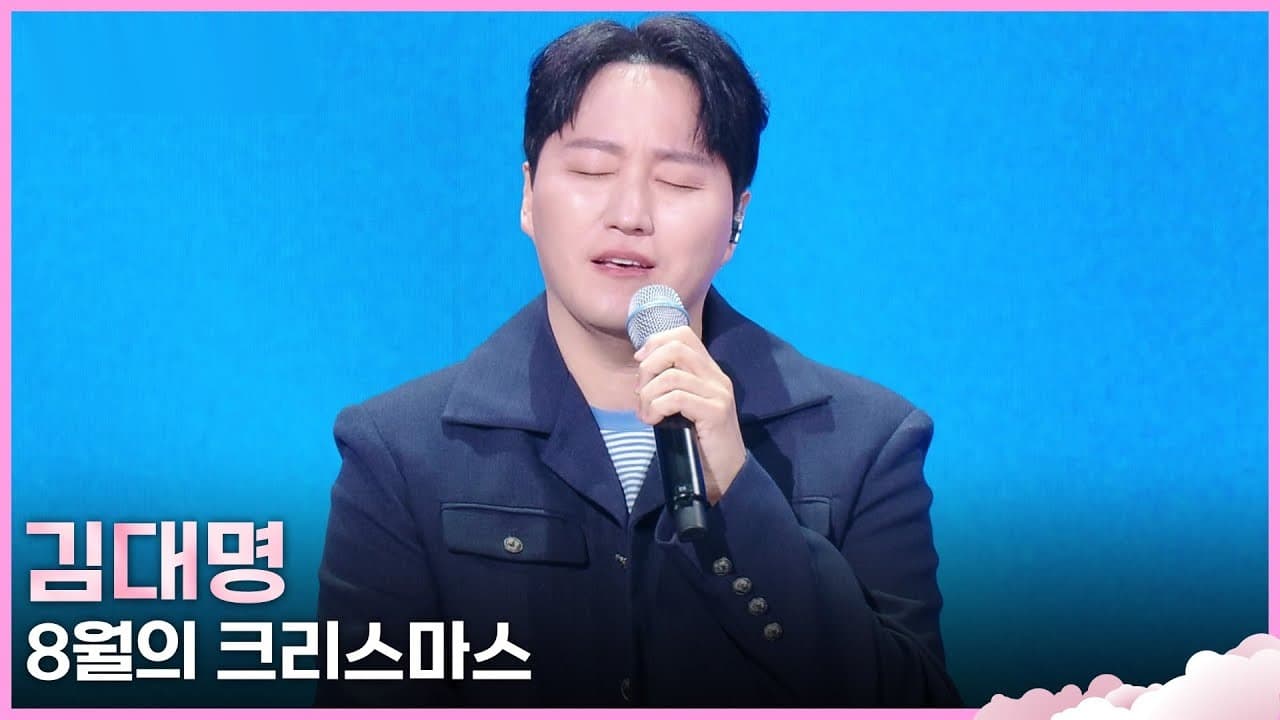
Kim Dae-myung's official KBS Kpop performance of Christmas in August turns a familiar title from Korean screen memory into a personal live-music statement. The video was uploaded from the July 10 broadcast of The Seasons: Sung Si-kyung's Eardrum Boyfriend, and the surrounding context gives the song more weight than a routine guest cover. Korean reporting on the episode said Kim connected the song to the dream that first led him toward acting, which makes the stage feel like an origin note rather than a promotional aside.
That source context is important. The clip comes through KBS Kpop's official channel, with the program name, broadcast date, and episode identity attached. It is not a fan edit, a fancam, or a short-form repost stripped of context. For audiences following Korean entertainment from outside the broadcast window, the upload provides a stable way to understand what happened on stage and why it matters.
Kim is widely recognized as an actor whose screen presence depends on sincerity. Whether viewers know him from Misaeng, Hospital Playlist, theater work, or film roles, his strongest performances rarely rely on force. He tends to create emotional trust through timing, stillness, and a sense of ordinary humanity. Those qualities also shape how this song lands.
A Film Memory In A Music Program
Christmas in August carries a specific resonance in Korean culture because the title immediately recalls the 1998 film remembered for its quiet treatment of love, time, and mortality. Even when the song is encountered apart from the movie, the phrase suggests a reflective mood. Kim's stage uses that association rather than trying to overpower it.
The performance is therefore less about vocal display than about selection. A guest can choose any familiar song for a music program, but this choice points back to the emotional world that helped form Kim's artistic imagination. When an actor publicly returns to a piece connected to his early dream, the audience is invited to read the stage as memory.
That reading gives the clip a second life. Fans are not only hearing a well-known title. They are watching a performer place his present career beside the earlier feeling that made the career imaginable. The video works because it compresses that story into a few minutes without requiring a long monologue.
Kim's delivery supports the idea. He keeps the performance measured, warm, and controlled. The restraint is not a weakness; it is what makes the song credible in his voice. He sounds like an actor speaking through music, not like a celebrity attempting to borrow another profession for one night.
Why The Seasons Fits This Stage
The Seasons has become valuable because it can hold different kinds of musical storytelling. It is not limited to idol comeback cycles or chart promotion. The rotating KBS format gives room to veteran singers, indie musicians, bands, actors, and guests who arrive with personal reasons for a song.
Sung Si-kyung's current season is especially suited to this kind of performance. The program's identity is built around close listening, and Sung's own reputation as a ballad singer gives the room a natural respect for phrasing and mood. A song such as Christmas in August benefits from that atmosphere.
The episode lineup also makes Kim's appearance feel less isolated. With Choi Yuri, Lee Seung-chul, Lee San, LUCY, and other music-centered guests connected to the broadcast, the actor's stage becomes part of a broader conversation about performance across generations and professions.
For KBS Kpop, the YouTube upload extends the broadcast into an archive. A television performance can disappear after its time slot, but an official clip remains searchable for actor fans, Korean film fans, and viewers who follow The Seasons through digital recommendations.
The Actor Behind The Song
The most interesting part of the performance is that Kim does not try to erase his acting identity. He brings it with him. His phrasing feels connected to character, memory, and interior rhythm. That makes the song less polished in a studio-pop sense but more meaningful in a television-performance sense.
Korean entertainment has long allowed actors and music to overlap through OSTs, musical theater, variety appearances, and special stages. Kim's appearance belongs to that tradition, but it works because the connection is narratively clear. The song is not a random challenge; it is tied to the way he once imagined acting.
That clarity matters for international audiences. Many global fans discover Korean actors through one drama, then move sideways into older projects, variety appearances, and music clips. A stage like this gives them a compact map of Kim's artistic identity: actor, listener, fan of Korean cinema, and performer willing to share the source of a dream.
Digital Afterlife And Fan Value
The official upload also shows why broadcaster clips remain useful in the global K-content ecosystem. They preserve attribution, reduce confusion around source material, and give viewers a cleaner path from a single song to the full program identity. That matters when music-program moments often circulate as disconnected fragments.
For Kim Dae-myung, the stage adds another layer to a career built on trust. It suggests that the same sensitivity audiences respond to in his acting also shapes how he chooses music, remembers films, and meets viewers outside scripted roles. The performance does not announce a new musical era, but it deepens the way fans understand his artistic temperament.
The clip's long-tail value is likely to come from several directions at once: fans of the actor, viewers curious about Korean film memory, and audiences who follow Sung Si-kyung's season for intimate vocal stages. That mixed audience is exactly what The Seasons can serve well.
The outlook is modest but durable. This will not be measured like a comeback single, and it does not need to be. Its value is in emotional circulation: fans can revisit the clip, connect it to Kim's career, and understand The Seasons as a place where a song choice can become a story.
How do you feel about this article?
저작권자 © KEnterHub 무단전재 및 재배포 금지
New Music & Comebacks Reporter · KEnterHub
New-music reporter covering K-pop comebacks as they drop. Ricky Joo tracks official channel premieres, music video releases and debut showcases, breaking down what each comeback signals about an artist's next chapter — often within hours of release.
Comments
Please log in to comment