Kim Junsu's First Fan Concert Explains Gugak's New Live Path
The July fan concert shows how a traditional Korean vocalist can turn TV visibility into lasting fandom.
 By Jang Hojin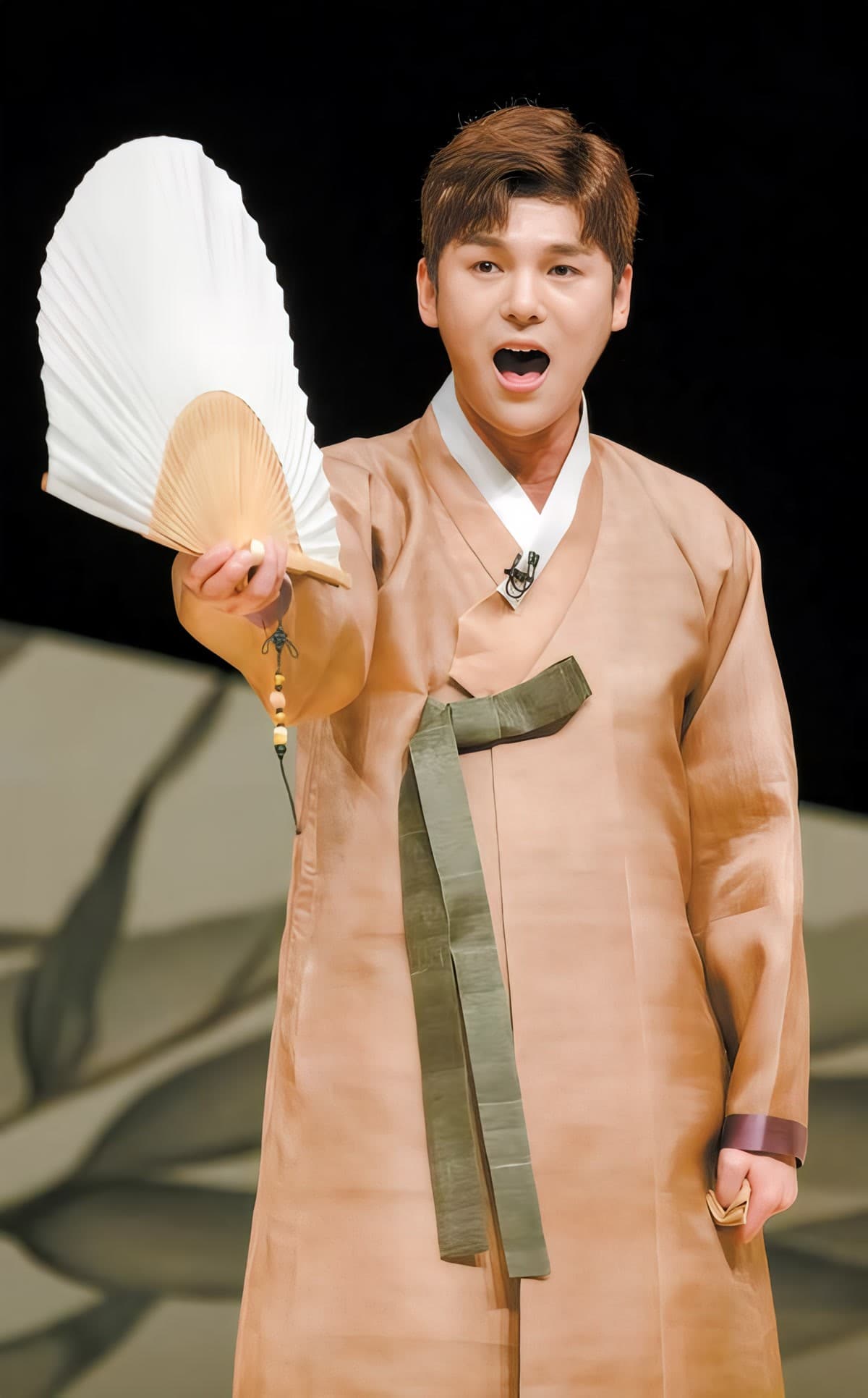
Kim Junsu's first solo fan concert is more than a date on a ticketing calendar.
The gugak vocalist and changgeuk performer will hold Kim Junsu 1st Fan Concert <Junsuhan Pan> on July 4, 2026, at Ewha Womans University's ECC Samsung Hall, with two shows scheduled at 1 p.m. and 6 p.m. Korean outlets including Sports Donga, Sports Kyunghyang, MHN Sports and Top Star News reported the event on May 26, framing it as his first dedicated fan-concert format after a wider public breakthrough through MBN's Active King of Singers 2. The important point is not simply that Junsu is meeting fans. It is that a performer rooted in traditional Korean vocal art is using the grammar of contemporary fandom to turn television attention into a live, repeatable relationship.
That shift matters because gugak has often been treated as either heritage programming or specialist theater. Junsu's fan concert suggests another route: intimate, personality-led live events that borrow from idol and trot fandom while keeping the musical identity of pansori, changgeuk and Korean narrative song at the center.
So the question is not only what happens at one July concert. It is whether this format can help traditional performers build a market that survives after a competition show's spotlight moves on.
From Stage Specialist To Fan-Facing Performer
The fan-concert announcement lands at a useful point in Junsu's public arc. Top Star News noted that the singer joined the National Changgeuk Company of Korea in 2013, while Korean reports describe him as a performer active across changgeuk, musicals, concerts and broadcast programs. That mix already made him more flexible than the old stereotype of a traditional vocalist confined to formal concert halls.
But television changed the scale of recognition. Sports Kyunghyang and MHN Sports both highlighted his final fifth-place result on Active King of Singers 2, a ranking that gave him a broader audience beyond gugak regulars. Rankings alone do not create a durable career. They create a short window in which casual viewers decide whether a performer is worth following beyond the show.
That is why the fan-concert format is strategically important. A standard recital emphasizes repertoire and technique. A fan concert emphasizes memory, access and mutual recognition. For a gugak artist, that does not mean weakening the music. It means giving new listeners a less intimidating entry point into a sound world they may have discovered through television clips.
This is where the event becomes a guide to the wider market. The next phase is not about replacing tradition with celebrity packaging; it is about finding a live format that lets tradition travel through modern fan behavior.
Why A Fan Concert Fits The Gugak Moment
Korean popular music has spent years absorbing traditional sound as texture. K-pop productions have used jangdan, pansori-style delivery and traditional instruments to signal Korean identity in global pop settings. That has helped make gugak sounds more familiar, but it has not always redirected attention back to traditional performers themselves.
Junsu's case works in the opposite direction. He begins with the training and authority of a traditional vocalist, then steps into formats that contemporary audiences already understand: broadcast survival shows, musical theater, concert branding and now a fan-centered event. The move is small in venue size but large in meaning. It treats a gugak performer as someone fans can follow in the same ongoing way they follow idols, trot stars or musical actors.
There is also a live-market reason this matters. Asia Business Daily, citing a 2025 live performance market ticket-sales analysis, reported that South Korea's live performance market reached 1.7326 trillion won in ticket sales in 2025, an all-time high. Large-scale concerts drove much of that growth, but smaller fan events remain crucial because they convert attention into loyalty. They are where audiences buy not just a seat, but a sense of participation.
For traditional performers, that participation can be especially powerful. A fan who attends a gugak-based event may arrive because of a television impression, then leave with a clearer understanding of breath control, storytelling, rhythm and theatrical presence. That is the cultural payoff. The commercial payoff is that the performer becomes a recurring live destination, not a one-season discovery.
But the format only works if intimacy is real, not decorative. That brings the focus back to the details of Junsuhan Pan.
The Event Design Says As Much As The Setlist
The reported structure is modest and precise: two performances on one day, a roughly 100-minute running time according to Top Star News, and ticketing through Ticketlink. Top Star News also listed the ticket price at 121,000 won and an age rating of 8 and older. These are practical details, but they reveal the target experience. This is not a festival-scale spectacle. It is a controlled room built for close attention.
The title, Junsuhan Pan, also does useful work. In Korean, pan can evoke a stage, a gathering, or a full round of performance. The phrase positions the concert as a shared occasion rather than a formal recital. Reports said the program is expected to combine Junsu's vocal stages with interactive corners and moments of conversation, which is exactly the fan-concert grammar: performance first, proximity second, narrative throughout.
That balance is important because Junsu's appeal is not only vocal power. It is the way a trained sound can feel unexpectedly immediate when placed in a contemporary setting. A 100-minute show gives him enough space to demonstrate range without overwhelming newer listeners. Two same-day shows also test whether the fandom has enough depth to support repeated demand.
There is no need to overstate the scale. This is not a national tour announcement. Its value is diagnostic. If the audience responds strongly, it gives agencies and venues a clearer model for how gugak-adjacent artists can move from broadcast buzz to paid live engagement.
That model becomes clearer when compared with the broader trot and crossover wave.
The Trot-Fandom Playbook Is The Hidden Context
Korea JoongAng Daily has described trot's recent revival as a genre movement powered by television visibility, older and intergenerational fandom, and strong concert demand. That context helps explain why Junsu's fan concert feels timely. Active King of Singers 2 placed him near a market where viewers are already comfortable turning broadcast affection into ticket purchases, voting campaigns and live attendance.
Still, Junsu is not simply becoming a trot act. His base is gugak, and that difference matters. Trot fandom often rewards emotional directness and familiar melodic language. Gugak asks many mainstream listeners to adjust their ear to different phrasing, timbre and narrative pacing. The fan-concert format can soften that barrier by letting personality and explanation sit beside performance.
That is the strategic bridge. Fans do not need a musicology lecture before they care. They need a performer who makes the form feel alive, generous and close enough to enter. Once that connection exists, deeper appreciation can follow.
For the industry, this is a useful lesson. The next crossover opportunity may not come from forcing traditional sound into pop tracks. It may come from giving traditional artists the same relationship-building tools that idol and trot markets have refined for years.
There is also a scheduling signal in the July calendar. Top Star News reported that Junsu is appearing in the musical Seopyeonje through July and has a separate Seongnam Artirium morning concert planned for July 22. Placed between those commitments, Junsuhan Pan reads less like an isolated publicity stop and more like a deliberate bridge between theater audiences, broadcast fans and concertgoers. That matters because crossover careers need continuity. One format may introduce the artist, but another has to retain the audience.
The strongest version of this strategy would not ask every new fan to become a gugak specialist overnight. It would let them return through familiar rituals: ticket openings, shared slogans, post-show reactions and repeat performances. Those habits are ordinary in idol fandom, but for traditional music they can become a practical engine of discovery for younger and older listeners alike.
What Comes Next After The First Pan
The immediate measure will be simple: ticket response, fan reaction and whether the July 4 shows create enough momentum for follow-up concerts or regional dates. Yet the more interesting measure is qualitative. Does the event make Junsu feel like a specialist invited into popular culture, or like a popular performer whose specialty happens to be gugak?
If it is the latter, Junsuhan Pan could become a small but meaningful case study in Korean live entertainment. It shows how a traditional vocalist can keep artistic identity intact while adopting the emotional infrastructure of modern fandom. That is not a compromise. It is a distribution strategy for culture.
For fans, the promise is easier to state. They get a closer room, a performer with serious technique, and a format designed around shared memory. For the market, the promise is bigger: gugak does not have to wait for occasional national-pride moments to be visible. It can build its own fan calendar, one carefully staged pan at a time.
How do you feel about this article?
저작권자 © KEnterHub 무단전재 및 재배포 금지
Entertainment Journalist · KEnterHub
Entertainment journalist specializing in K-Pop, K-Drama, and Korean celebrity news. Covers artist comebacks, drama premieres, award shows, and fan culture with in-depth reporting and analysis.
Comments
Please log in to comment