Kim Shin-young Joined I Live Alone and Glass Noodles Sold Out
How Korea's 'Food Dragon' turned a humble ingredient into a national talking point — and rescued a struggling variety show in the process
 By Jang Hojin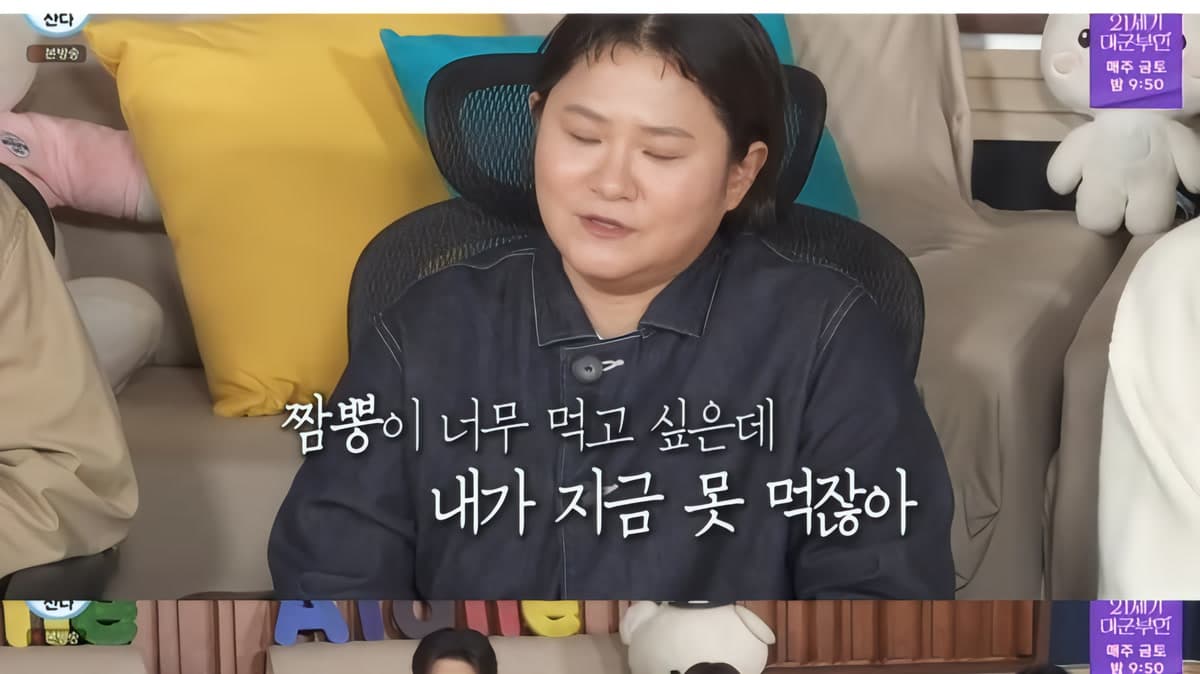
Something unexpected happened after comedian Kim Shin-young appeared on MBC's long-running variety show I Live Alone in April 2026. Viewers didn't just tune in — they bought glass noodles. Lots of them. Within days of her debut episode airing, reports emerged that glass noodles (당면) had gone out of stock across online shopping platforms and convenience stores, a direct ripple effect from watching Kim enthusiastically pile the ingredient into every dish she prepared on screen.
The internet had a name for it almost immediately: the "Food Dragon" effect. When cast member Gi An-84 compared Kim's consumer influence to that of G-Dragon — one of K-pop's most powerful cultural figures — Kim deflected with a sharper punchline: "I'm not G-Dragon. I'm sik-dragon." (食dragon — a pun combining the Chinese character for food with the musician's nickname.) The clip went viral. The noodles stayed sold out.
But behind the jokes and empty shelves lies a more interesting story: how one comedian's uninhibited, joyful relationship with food became exactly what a struggling show — and its audience — needed.
A Show in Search of Its Spark
I Live Alone has been a fixture of Korean Friday-night television since 2013. At its peak, the show offered an intimate, unfiltered window into how Korean celebrities actually live when no one is scripting their days — a concept that resonated deeply in a country where single-person households now account for roughly one-third of all homes. But by early 2026, the show was drifting. Episode 640 pulled just 4.4% nationwide (Nielsen Korea), its lowest rating in five years. Key cast departures — including Park Na-rae in December 2024 — had left the panel with an unfilled seat and a corresponding energy gap.
Producers needed someone who could walk through a door and immediately make the room feel like somewhere you'd want to stay. Kim Shin-young, who had wrapped up her stint hosting KBS's beloved National Singing Contest in March 2024, turned out to be that person.
Her backstory gave her instant credibility with the show's demographic. Over 13 years, Kim had famously lost 44 kilograms — one of the most publicly documented weight loss journeys in Korean entertainment. Then, not long before her I Live Alone debut, she regained the weight. Rather than treating that as a scandal or a failure to hide, Kim arrived on the show with a disarming candor: she talked openly about the yo-yo cycle, about the toll of years of restriction, and — most memorably — about the final piece of advice she received from her late mentor, comedian Jeon Yoo-seong, who told her as he was dying: "Eat whatever you want to eat." The room got very quiet. Then it got very hungry.
The Numbers Behind the Noodle Shortage
What followed Kim's April 10 debut episode wasn't just a warm reception — it was a measurable reversal of the show's fortunes. Ratings climbed from a baseline of 4.5% to 6.1% nationwide, according to Nielsen Korea — the first time I Live Alone had broken the 6% barrier since September 2025. That's a jump of more than one-third in a single episode window, in a television landscape where even a half-percentage point movement registers as significant. The show's producers responded by scheduling additional filming with Kim on April 27, and she became a permanent fixture in the studio panel — though her official status as a fixed member had not been confirmed at time of writing.
The glass noodle shortage fits a pattern that Korean variety television producers know well. When a celebrity is seen genuinely loving something on screen — not in a sponsored segment, not in a scripted taste test, but in the kind of unfiltered, mid-cook moment that makes you lean closer to the screen — the product moves. What made Kim's moment different was its scale and its backstory. Every bowl of glass noodles she made came loaded with emotional permission: eat this because life is short, because a dying friend told you to, because denying yourself for 13 years was long enough.
Why the 'Food Freedom' Angle Hit So Hard
Korean television has long had a complicated relationship with women's bodies and eating habits. Variety programs routinely feature female celebrities either discussing diet regimens or eating daintily to fit an image. Kim Shin-young did neither. She ate enthusiastically, explained exactly how she cooked her glass noodles, and talked about her body's history with the same matter-of-fact directness she'd bring to any other topic. For an audience that includes a growing number of women who've spent years in complicated relationships with food and weight, the message resonated powerfully.
Actor Gu Seong-hwan — himself currently riding a cultural moment around embracing a bulkier physique — put it simply in the studio: "In our world, she's basically our cult leader." His phrasing was tongue-in-cheek, but it captured something real. Kim wasn't just being funny. She was articulating a particular philosophy about the body, pleasure, and self-acceptance that a lot of viewers were quietly waiting to hear said out loud on primetime television.
The "식드래곤" nickname, which spread rapidly on social media following the broadcast, underscored how organically the moment spread. G-Dragon's name carries weight in Korea precisely because his cultural influence is understood to be real and tangible — he shapes what people wear, what they listen to, what they care about. Gi An-84's comparison wasn't just flattery. It was a shorthand for the observation that Kim had moved from entertainer to cultural reference point in the space of a single episode.
What Comes Next for the 'Food Dragon' and Her Show
I Live Alone has seen this kind of cast-driven revival before. The show's longevity — over 640 episodes across more than 13 years — is partly a product of its ability to refresh itself around personalities who bring genuine life to its format. Park Na-rae's departure created a void that had felt difficult to fill. Kim Shin-young doesn't fill it so much as create something new alongside it: a different kind of energy, grounded in different experiences, speaking to a slightly different part of the audience.
Whether she becomes a permanent fixture — and whether the glass noodle effect has lasting legs — will depend on what she brings to the second, third, and tenth appearance. Variety show chemistry has a way of either deepening or deflating with repetition. But for now, the momentum is real. The ratings are climbing. And somewhere in Korea, a supplier is probably restocking their glass noodle inventory and wondering what else Kim Shin-young might decide to cook next week.
How do you feel about this article?
저작권자 © KEnterHub 무단전재 및 재배포 금지
Entertainment Journalist · KEnterHub
Entertainment journalist specializing in K-Pop, K-Drama, and Korean celebrity news. Covers artist comebacks, drama premieres, award shows, and fan culture with in-depth reporting and analysis.
Comments
Please log in to comment