Kim Tae-ri Rewrote the Script — Literally — for Her First Variety Show
The acclaimed actress debuts in tvN's 'After School Tae-ri Teacher,' running a drama club for 7 rural students
 By Jang Hojin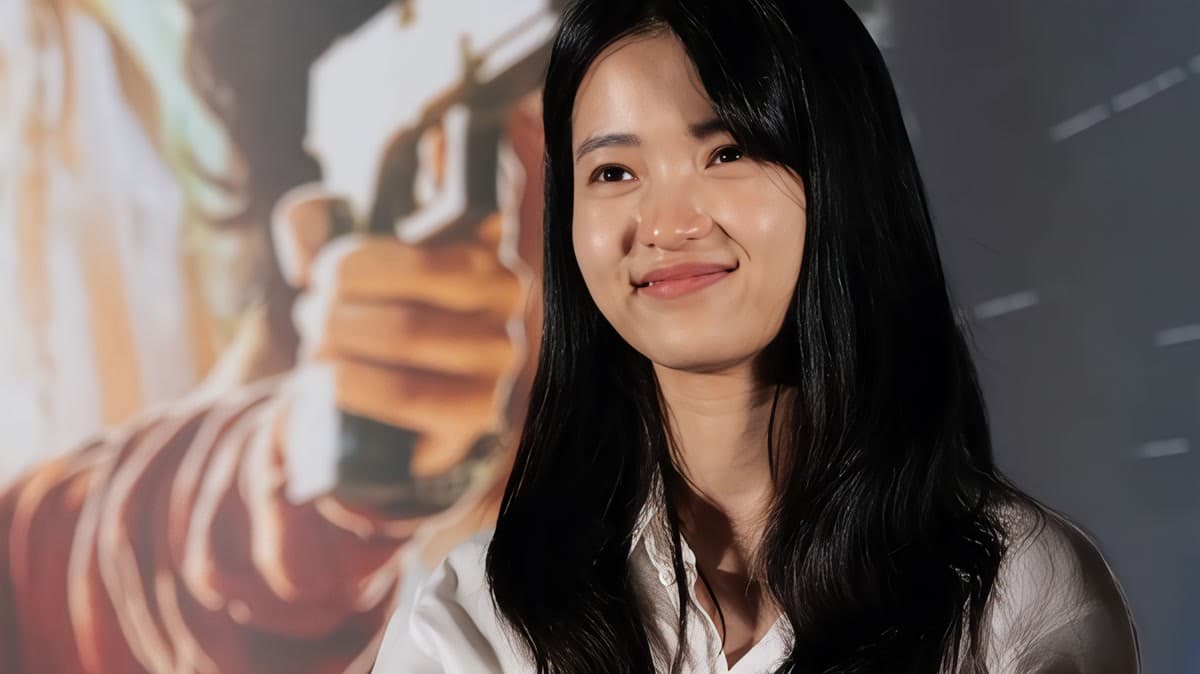
Kim Tae-ri has been one of South Korea's most acclaimed screen actors for a decade. She has worked with some of the country's most demanding directors, embodied characters across multiple genres and eras, and built a reputation for precision and commitment that places her firmly among the finest performers of her generation. She had never done a variety show — until now.
tvN's After School Tae-ri Teacher (방과후 태리쌤) premiered on February 22, 2026, and it represents something genuinely unusual in Korean entertainment: an established dramatic actress stepping into variety territory for the first time, doing it at a rural elementary school facing closure, and taking creative ownership of the project to the point of personally rewriting significant portions of the production's direction mid-run. The show co-stars Choi Hyun-wook, Kang Nam, and Code Kunst, but Kim Tae-ri's name in the title is not just branding — she is the show's center of gravity in every meaningful sense.
The School at the Heart of the Show
Yongheung Elementary School in Mungyeong, North Gyeongsang Province, has 18 students total. For context: most Korean urban elementary schools have 18 students in a single classroom. Seven of those 18 students are participating in the drama club that Kim Tae-ri is running as the show's premise, and the school itself exists in a category of rural Korean educational institutions that face ongoing questions about their viability as population continues to concentrate in major urban centers.
The setting does several things for the show simultaneously. It removes Kim Tae-ri from the metropolitan entertainment context where most Korean celebrity variety content is produced, placing her in an environment where her fame means relatively little to seven elementary school children who simply have a teacher in front of them. It grounds the show's stakes in something real — these kids are actually putting on a performance, with all the anxiety and joy and failure that entails. And it creates the kind of narrative conditions where genuine, unscripted moments become possible, because children are reliably unpredictable in ways that adult variety show participants are not.
The drama club format means the show has a built-in narrative arc: beginners become performers, and along the way something about both teacher and students changes. That arc provides structural coherence for what might otherwise be a looser documentary-style program, and it gives Kim Tae-ri a specific role — not just 'celebrity does variety,' but 'actress teaches drama to children' — that plays directly to her existing skills and public identity.
Why Kim Tae-ri Rewrote the Script
Perhaps the most telling detail about Kim Tae-ri's approach to the show is that she rewrote significant portions of it while it was in production. The specifics of what changed have not been fully detailed publicly, but the fact that she intervened — that she was not content to simply follow the production's original framework — speaks to the same quality that characterizes her dramatic work. She is not an actor who executes what is given to her. She is an actor who engages with material until she understands what it needs to be.
She also contributed to the show's OST, which adds another layer to her creative involvement. The decision to participate in the music rather than simply appearing as a subject suggests someone who thought about the show's overall identity rather than just her own role within it. For a first variety appearance, that level of creative investment is notable.
Her co-star Choi Hyun-wook — known for his dramatic work and his own wide appeal among Korean audiences — brings energy and comic relief to the show's classroom dynamics. Kang Nam and Code Kunst, whose backgrounds are in music and entertainment rather than straight drama, add variety in the literal sense to the teaching team. The ensemble feels constructed rather than assembled randomly, with each member's presence serving a specific purpose in relation to both the children and to Kim Tae-ri's central position.
Ten Years of Drama, Now Variety
Kim Tae-ri made her film debut in 2016 in Park Chan-wook's The Handmaiden, a demanding role in a demanding film that announced her as a significant new talent immediately. The decade since has included Mr. Sunshine, the wildly popular romance-historical drama; 25 21, which generated some of Korean television's most emotionally intense audience responses in recent years; and Little Forest, a quiet, understated film that showcased a completely different side of her range.
Across those projects, certain qualities recur: an unwillingness to settle for the surface reading of a character, a physical commitment to the emotional reality of each scene, and an ability to create interiority that registers on camera without seeming to try. These are qualities that translate surprisingly well to variety content, where the challenge is to remain present and genuine in a format explicitly designed to manage and shape spontaneity.
What variety television requires from its participants is something slightly different from dramatic performance but not entirely unrelated: the ability to be genuinely in the moment, responsive to what is actually happening rather than what was planned, while simultaneously maintaining enough awareness to function within the show's structure. Kim Tae-ri's dramatic training provides strong foundations for that kind of present-tense attention, even if the specific skills of variety comedy and variety timing are things she is developing in real time on this show.
The Ratings and What They Mean
It would be incomplete to discuss the show without acknowledging that its ratings have not reflected its critical warmth. After School Tae-ri Teacher has maintained ratings in the 1% range throughout its run — modest numbers for a cable television program, even in the fragmented current landscape. The show has not broken through to mass mainstream viewership the way that some of Kim Tae-ri's dramatic work has.
There are several ways to understand this. Variety content is not Kim Tae-ri's established territory, and viewers who follow her primarily for her dramatic work may not follow her into a different format with the same loyalty. The rural, slower-paced nature of the show's premise — a genuine opposite of the high-energy variety formats that dominate Korean ratings — is a deliberate creative choice that may limit commercial ceiling while preserving the show's essential character.
What the modest ratings have not diminished is the show's cultural footprint among viewers who are watching. Critical response within Korea has noted the authenticity of the interactions between Kim Tae-ri and the children, the specific quality of attention she brings to her students' development, and the moments of genuine surprise and emotion that the format has generated. A show watched by fewer people who engage deeply is not the same as a show that has failed.
Kim Tae-ri's first variety show appearance is, in the end, an extension of the same creative curiosity that has defined her decade of dramatic work. She did not take a familiar path, she took significant creative ownership, and she chose a premise whose stakes — seven children, a closing school, a real performance at the end — are genuinely meaningful rather than manufactured for entertainment. After School Tae-ri Teacher airs on tvN.
How do you feel about this article?
저작권자 © KEnterHub 무단전재 및 재배포 금지
Entertainment Journalist · KEnterHub
Entertainment journalist specializing in K-Pop, K-Drama, and Korean celebrity news. Covers artist comebacks, drama premieres, award shows, and fan culture with in-depth reporting and analysis.
Comments
Please log in to comment