Kim Tae-won's Tearful Boohwal Memory Moves Fans
 By Seung Jung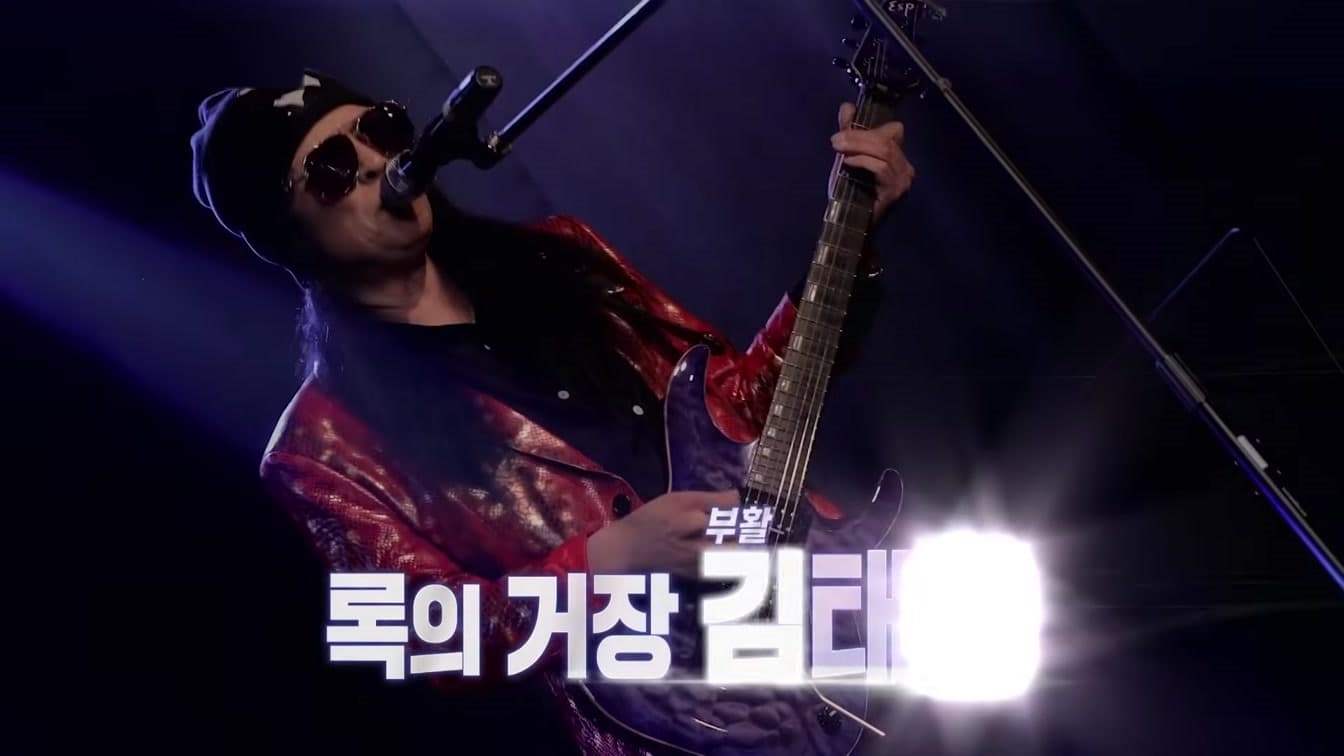
Kim Tae-won turned a television tribute into one of the most emotional K-rock stories of the week. On KBS2's Immortal Songs, the Boohwal leader looked back on the late vocalist Kim Jae-ki as N.Flying members Lee Seung-hyub and Yoo Hwe-seung performed the band's classic "The More I Love."
The moment mattered because the song is not just another famous ballad in Boohwal's catalog. It is tied to a turning point in the band's history, a young singer whose voice helped define its third album, and a loss that Kim Tae-won still describes as one of the deepest wounds of his life.
A Classic Song Returns With A Heavy History
The July 11 episode of Immortal Songs was built around Kim Tae-won, the guitarist, songwriter, and only original member most closely associated with Boohwal's four-decade run. The broadcast brought together younger and veteran singers to reinterpret songs connected to his career, including works that have become part of Korea's rock and pop memory.
Among the performances, Lee Seung-hyub and Yoo Hwe-seung chose "The More I Love," a track from Boohwal's third album. The selection immediately carried extra weight. Kim Jae-ki, who followed Kim Jong-seo and Lee Seung-chul as one of Boohwal's early lead vocalists, recorded the song before his sudden death in a traffic accident in 1993.
Korean reports on the episode noted that Kim Jae-ki had been recording the song when tragedy struck. The third album, which included his temporary recording, went on to become Boohwal's best-selling album, turning an unfinished personal chapter into one of the band's most enduring public memories.
That background made the N.Flying performance feel less like a standard cover and more like a handoff across generations. Lee Seung-hyub and Yoo Hwe-seung had to sing a song that many Korean listeners already associate with grief, longing, and the fragile timing of fame. Their version ultimately won the episode with 421 votes, according to Korean coverage, but the emotional center of the night was Kim Tae-won's reaction.
Kim Tae-won's Memory Of Kim Jae-ki
After watching the stage, Kim Tae-won explained that "The More I Love" remains the Boohwal song to which he feels the strongest attachment. He traced that feeling back to 1991, when Boohwal was struggling after a difficult period and Kim Jae-ki entered his life at exactly the right moment.
Kim recalled being overwhelmed when he first heard Kim Jae-ki sing. Rather than describe him only as a technically strong vocalist, he remembered the force of the voice as something almost physical, the kind of singing that could make a room feel as though it had shifted. For a band trying to recover its direction, that voice sounded like possibility.
Kim Tae-won remembered Kim Jae-ki as a singer whose voice restored hope to Boohwal when the band was searching for its way forward.
He also shared a personal memory that explained why the late vocalist still occupies such a large place in his mind. Kim Jae-ki, he said, once told him that he would help restore Kim Tae-won's honor if Kim Tae-won helped him overcome poverty. The line landed on the broadcast not as a dramatic slogan, but as a glimpse of a young artist who understood both ambition and hardship.
For English-speaking readers who may know K-pop before Korean rock, Boohwal occupies a different but important place in the country's music history. Formed in the mid-1980s, the band helped shape Korean rock balladry through songs such as "Heeya," "Rain and Your Story," "Never Ending Story," and "The More I Love." Its music often blends rock instrumentation with a direct emotional style that Korean audiences still recognize instantly.
That legacy also makes Kim Tae-won's grief more than a private memory. Kim Jae-ki's short time with Boohwal became part of the band's mythology, one of the moments that fans return to when explaining why the group's songs carry such sadness. In the episode, Kim Tae-won said the loss left him feeling as if he had failed as a leader and that living even one more day after his friend's death felt painful.
Why N.Flying's Stage Hit So Hard
Lee Seung-hyub and Yoo Hwe-seung faced a difficult task. A faithful performance risked sounding too cautious, while an overly dramatic remake could have felt disrespectful to a song already marked by tragedy. They told the program that they wanted to feel the soul inside the song and keep the delivery clean, but they also recognized that too little intensity would leave it emotionally flat.
Kim Tae-won's response suggested that the balance worked. He praised the ending of their performance in expansive terms, saying it felt as though the song spread into a larger, almost cosmic space. His reaction gave the stage its final meaning: the performance was not only a contest entry, but a chance for a living songwriter to hear younger artists carry a memory he has protected for decades.
The win also fits N.Flying's identity. The band has often moved between idol-band visibility and live-band credibility, with Lee Seung-hyub and Yoo Hwe-seung recognized for vocal power as well as musicianship. Taking on Boohwal in front of Kim Tae-won required more than range. It required emotional judgment, especially because the song's story was explained to viewers in the same episode.
For Immortal Songs, that is exactly the format's strength. The long-running KBS music program does not simply ask singers to remake older hits. At its best, it puts a song's history in front of a new audience and lets the original artist, the cover performer, and the viewers sit with the distance between then and now.
Boohwal's 40th Year Adds Another Layer
The timing also deepens the story. Boohwal is marking its 40th anniversary period after releasing its 14th studio album project, the band's first full-length studio effort in 14 years. Korean interviews earlier this year framed the album as a reflection on purity, survival, and the question of where the band belongs after decades of lineup changes, personal losses, and shifts in the music market.
Kim Tae-won has remained the constant figure through those changes. Boohwal has featured a long list of vocalists over the years, including Lee Seung-chul, Kim Jae-ki, Kim Jae-hee, Park Wan-kyu, Jung Dong-ha, and others. That revolving history can make the band hard for newer international fans to follow, but it is also the reason its songs feel so connected to specific voices and periods.
Kim Jae-ki's period was brief, yet it left one of the strongest emotional imprints. "The More I Love" became a signature not because of a neatly completed career arc, but because the recording preserved a voice that had almost no time to grow old in public. Every major reinterpretation of the song therefore carries a question: how do younger singers honor a performance that was already haunted by absence?
On this episode, the answer came through restraint, context, and Kim Tae-won's willingness to speak plainly about memory. He did not turn the story into a simple tale of triumph after tragedy. Instead, he allowed viewers to hear how admiration, guilt, grief, and pride can remain mixed together even after more than three decades.
What Comes Next
The immediate result is renewed attention on both Boohwal's catalog and N.Flying's vocal line. Viewers who discovered the story through Immortal Songs are likely to revisit the original "The More I Love," while fans of Lee Seung-hyub and Yoo Hwe-seung can point to the 421-vote win as another example of the band's live-performance strength.
For Kim Tae-won, the larger meaning is continuity. Boohwal's songs have survived because they can move between eras without losing their ache. When younger artists perform them well, they do more than cover an old hit; they keep a complicated chapter of Korean music history audible for listeners who were not there when it happened.
That is why this Immortal Songs stage resonated beyond the weekly competition result. It brought a famous song, a late vocalist, a veteran bandleader, and a new generation of performers into the same frame. For a few minutes, Korean rock history did not feel archived. It felt present, fragile, and still capable of breaking open a room.
How do you feel about this article?
저작권자 © KEnterHub 무단전재 및 재배포 금지
Senior Entertainment Correspondent · KEnterHub
Senior entertainment correspondent with a wide-angle view of Korean show business. Seung Jung covers celebrity news, variety television and award season, and writes the interviews and features that connect individual stories to the larger currents of Korean entertainment.
Comments
Please log in to comment