Korea Invented Esports. Here's How That Changed K-Drama Forever.
From StarCraft broadcasts in 1999 to Squid Game's 265 million views, the feedback loop between Korean gaming culture and K-drama storytelling has become one of entertainment's most powerful forces.
 By Ricky Joo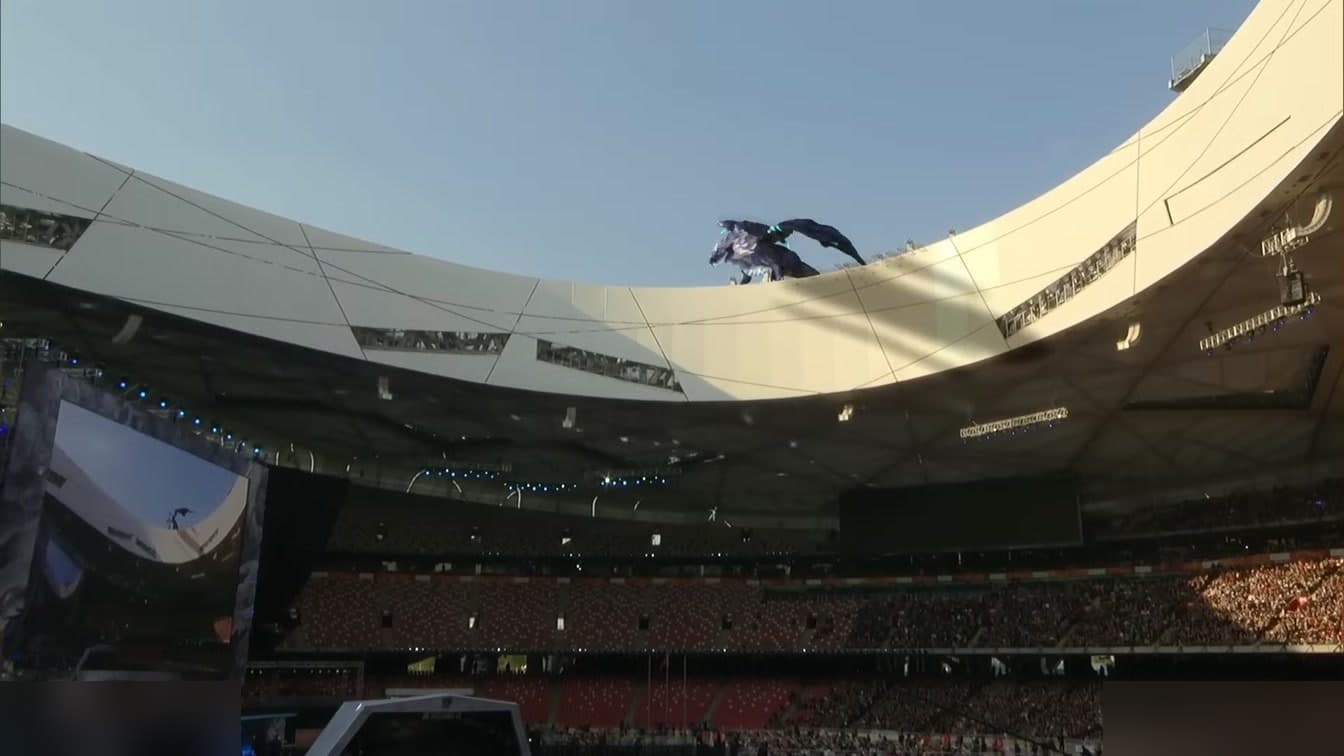
When the 2023 League of Legends World Championship opened at Gocheok Sky Dome in Seoul, a crowd of 50,000 watched an augmented reality dragon crawl over the stadium rim and launch into the sky — an image so spectacular it circled the internet for weeks. For millions of viewers who had never watched a single League of Legends match, the visuals felt more like a cinematic event than a sporting one. That confusion was entirely intentional. South Korea has spent 26 years making esports feel like entertainment, and entertainment feel like esports, and the results are visible everywhere — including on the world's most-watched streaming platform.
K-dramas and Korean gaming culture are not separate phenomena that happen to coexist. They are branches of the same creative ecosystem, one that has its roots in a deliberate national decision to treat interactive competition as a legitimate art form. Understanding that connection is key to understanding why Korean content keeps finding global audiences that no other country's entertainment has managed to reach in the same way.
How Korea Invented Professional Gaming
The story begins in 1998, when StarCraft: Brood War arrived in South Korea at the precise moment that the country's broadband infrastructure was expanding at a pace the rest of the world could barely track. PC bangs — internet cafes that charged by the hour — became the social centers of Korean cities, and StarCraft became their unofficial sport. Teams formed organically. Tournaments emerged. The competition level rose fast enough that by 1999, OnGameNet (OGN) was broadcasting organized StarCraft matches on cable television with professional commentators, studio sets, and production graphics that would not look out of place on ESPN today.
The Korean government recognized what was happening and moved to formalize it. In October 2000, South Korea co-hosted the first World Cyber Games, an international esports competition explicitly modeled on the Olympic Games. That same year, the Korea e-Sports Association (KeSPA) was established under Ministry of Culture oversight, standardizing player contracts, regulating teams, and recognizing competitive gaming as a professional industry. No other country had moved that fast, or that deliberately.
The compounding returns have been remarkable. By 2024, South Korea's gaming sector was generating $5.13 billion in intellectual property exports — a figure that exceeded the combined exports of Korean music, film, television, animation, and advertising combined, according to industry data. South Korea ranks as the world's fourth-largest gaming market, behind only China, the United States, and Japan, with a domestic esports sector valued at $321.3 million in 2025 (Statista). League of Legends alone accounts for 26.1% of Korean esports players' total prize earnings across all competitive titles.
The Gaming DNA Inside K-Drama Storytelling
A country that treats gaming as a national industry inevitably produces storytellers who treat gaming as serious subject matter. Korean dramas began incorporating gaming culture not as quirky shorthand for youth rebellion, but as a central framework for exploring competition, identity, and the psychology of winning and losing — themes that resonate far beyond any specific platform or genre.
The most globally visible example is also the starkest: Squid Game. When writer-director Hwang Dong-hyuk reimagined Korean children's playground games as a deadly survival competition, he borrowed from gaming's fundamental emotional architecture — levels, elimination rounds, the psychological compression of high-stakes competition — and placed it inside a critique of economic desperation that resonated across cultures. For Korean audiences, these structural elements were already deeply familiar. For the 60% of Netflix subscribers who encountered them for the first time, they were viscerally new.
Squid Game Season 1 accumulated 265.2 million views, making it the most-watched series in Netflix history. Its subsequent seasons continued breaking records, with Season 3 setting another viewership milestone in July 2025. But Squid Game was not the beginning of gaming-inflected Korean drama — it was the moment the global mainstream caught up to what Korean storytellers had been doing for years.
W: Two Worlds Apart (2016) built its entire premise around the collapse of the boundary between a webtoon — Korea's dominant digital comics format, which shares visual grammar with mobile games — and physical reality. Pyramid Game (2024) placed its social ranking mechanic, where students score each other for dominance, inside a frame that any player of competitive mobile games would immediately recognize. These are not isolated cases. MyDramaList maintains curated collections of gaming and esports-themed Korean dramas spanning dozens of titles, reflecting how consistently Korean writers reach for competition mechanics when they want to map human psychology.
The Audience That No One Expected to Share
Gaming audiences and K-drama audiences were treated, for most of the 2010s, as completely separate markets. The streaming data from the past five years suggests that boundary was always more porous than anyone assumed.
More than 80% of Netflix members globally have now watched at least one Korean title — a figure that encompasses demographics well beyond the core K-drama fan base. 60% of Netflix's global subscribers have sampled Korean content, and Korean programming now reaches the Top 10 charts in more than 90 countries. The mechanism driving this expansion is, in part, audience bridging: gaming fans who already encountered Korean cultural products through League of Legends esports coverage, K-pop idol sponsorships at gaming events, and Korean soundtracks embedded in mobile games found a natural pathway into K-drama through game-adjacent narratives. Conversely, K-drama fans following the survival game logic of Squid Game found themselves curious about the competitive gaming culture that had generated the aesthetic in the first place.
The result is a crossover audience that neither industry had planned for but both are now actively cultivating. Korean gaming companies sponsor K-drama productions. K-drama actors appear at esports events. Riot Games has collaborated with K-pop groups for League of Legends World Championship anthems, creating content that sits at the precise intersection of both fan cultures and reaches audiences that neither could access alone.
A Feedback Loop That Is Still Accelerating
Korean government agencies have been explicit about treating entertainment as soft power infrastructure, and gaming has recently been absorbed into the broader Hallyu strategy alongside K-pop, K-drama, and K-beauty. The 2026 Asian Games' inclusion of esports as an official medal event — with Korean teams among the most decorated competitors — will bring another wave of mainstream attention to competitive gaming and, by extension, to the culture that produced it.
The more interesting question is creative rather than diplomatic. Interactive storytelling formats — where viewer choices shape story outcomes — are a natural next frontier for a drama industry that already thinks structurally in game logic. Several major Korean studios are reportedly developing projects that push further into this territory, reflecting both creative ambition and a commercial logic that is becoming harder to ignore: in a world where 3.3 billion people play video games, the storytellers who speak that language fluently have access to an audience no traditional drama has ever reached.
South Korea got there first, and it got there by accident — or rather, by taking gaming seriously before anyone else did. The K-dramas that followed were not a strategy. They were a consequence. And the consequence is still unfolding.
How do you feel about this article?
저작권자 © KEnterHub 무단전재 및 재배포 금지
New Music & Comebacks Reporter · KEnterHub
New-music reporter covering K-pop comebacks as they drop. Ricky Joo tracks official channel premieres, music video releases and debut showcases, breaking down what each comeback signals about an artist's next chapter — often within hours of release.
Comments
Please log in to comment