Korean Choreographer Explains Idol Dance Grammar
On MBC Radio Star, a dancer turned performance differences into a sharp lesson on how K-pop bodies are trained for the camera.
 By Jang Hojin
|6 min read0
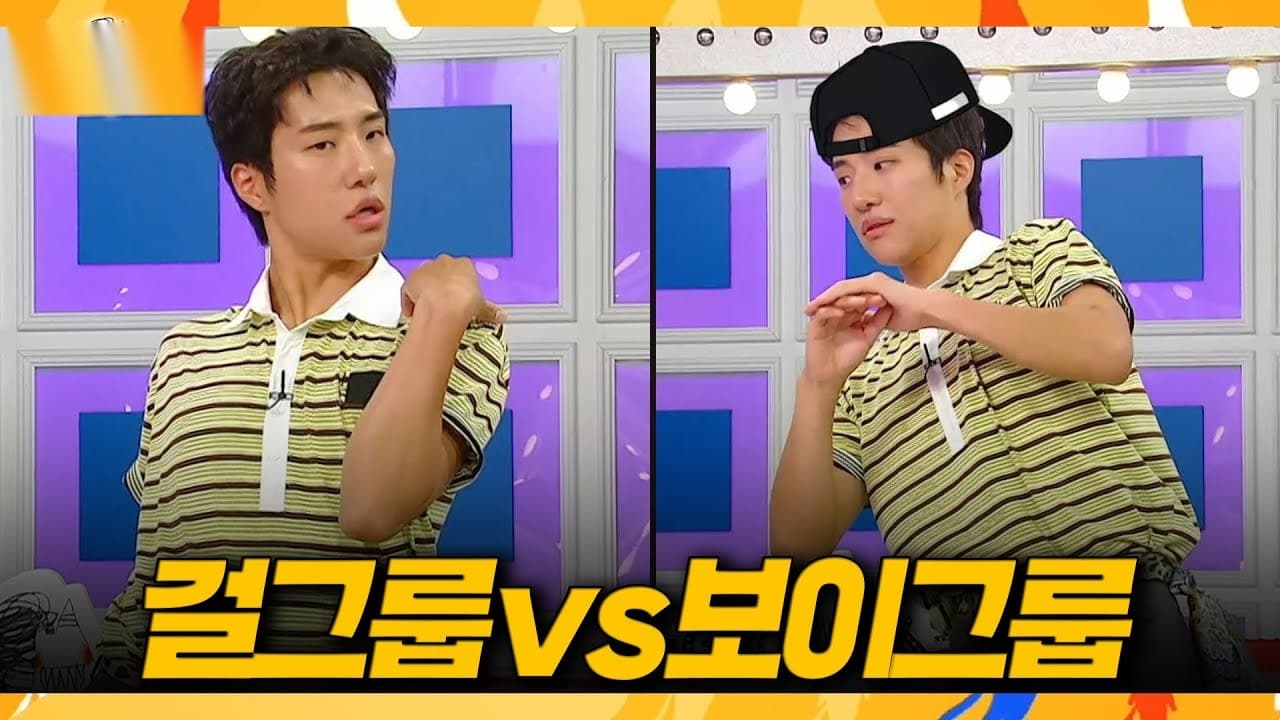
According to MBC Entertainment's official YouTube channel, Korean dancer 킹키 used a Radio Star appearance to explain one of K-pop's most visible but least clearly discussed subjects: why idol choreography looks different across age groups, genders, and performance formats. The June 17, 2026 clip runs like a miniature masterclass. Rather than treating dance as a vague matter of talent or charisma, the guest breaks it down into posture, body line, training habits, and the way performers manage the camera.
That clarity is what makes the segment useful beyond the usual variety-show laugh cycle. He begins by recalling years of teaching broadcast dance and diet dance before his current professional stage work, describing how different students required different teaching methods. Children needed constant attention cues and simplified movements. Older students responded to energy and repetition. Adults and seniors often valued the instructor's presence and enthusiasm as much as the steps themselves. The anecdote is funny, but it also establishes a serious point: dance education changes depending on the body, the room, and the learner's psychology.
From Classrooms to Idol Training Rooms
The strongest part of the clip arrives when the conversation moves from general dance instruction to idol choreography. He explains that girl group and boy group movement are often built from different assumptions. For girl group direction, he emphasizes angled body lines, curved shapes, and the avoidance of a flat front-facing silhouette. The point is not simply to look pretty. It is to create visual rhythm for the camera, so that even a small step or pose carries contour and dimensionality. For boy group performance, he presents nearly the opposite logic. He describes a more squared shoulder line, a grounded hip-hop base, and a tendency to minimize certain hip movements even when covering a girl group challenge. The distinction he draws is not a rigid biological claim; it is a performance grammar developed by the industry. Idol choreography teaches bodies to communicate category, mood, and brand identity in a few seconds. Shoulders, pelvis, neck angle, and gaze become readable signs. This explanation resonates because K-pop audiences already notice these differences, even if they do not always have the vocabulary to describe them. Fans often talk about a dancer's line, tension, groove, or center quality. The segment translates that fan intuition into practical instruction. It shows that the contrast between girl group and boy group choreography is not only about the music track or costume. It is embedded in how the body is trained to face the lens.Why the Demonstration Works on Variety TV
The Radio Star format is especially suited to this kind of explanation. A technical dance lecture could easily become dry, but the studio setting allows the guest to switch between analysis and demonstration. The hosts respond in real time, laughing when the contrast is immediately visible and reacting when a small adjustment changes the entire feel of a move. That live feedback gives the viewer permission to learn without feeling that they are watching a formal class. The clip also highlights how important choreographers and trainers have become in the public understanding of K-pop. A decade ago, mainstream coverage often treated choreography as an accessory to music. Today, performance design is part of the story from the first teaser onward. Challenge clips, dance practices, relay cams, and performance videos have trained fans to look closely. When a choreographer explains the underlying mechanics, the audience is ready for that level of detail. His comments about teaching different age groups add another layer. They show that good dance instruction is not just about giving orders. It requires reading a room, adjusting language, and understanding what motivates each person. That human element is easy to overlook in idol training conversations, which can become abstract discussions of discipline and perfection. The clip reminds viewers that dance is passed from body to body through communication, humor, and trust.The Idol Body as a Camera Language
One reason the segment stands out is that it frames choreography as camera language. Girl group performance, in his explanation, often uses curves, turns, and angled presentation to keep the body from appearing flat. Boy group performance often draws power from width, grounded weight, and a controlled refusal to over-soften certain lines. These choices are not accidental. They are optimized for music shows, short-form challenges, and the split-second judgments viewers make while scrolling. That does not mean the categories are fixed forever. In fact, some of the most interesting contemporary K-pop choreography comes from artists who mix or deliberately disrupt these codes. Boy groups increasingly perform delicate hand detail and fluid torso work, while girl groups often use heavier footwork and sharper power accents. The explanation is valuable precisely because it gives audiences a baseline. Once viewers understand the expected grammar, they can better appreciate when an artist bends it. The clip also helps explain why dance challenges can look so different depending on who performs them. A boy group member covering a girl group chorus may keep the timing but change the body line. A girl group member covering a boy group track may preserve the rhythm while adapting weight and shoulder placement. These micro-adjustments are part of the fun of K-pop's challenge culture. They create new versions of familiar choreography without erasing the original.A Useful Moment for K-Pop Literacy
For international fans, the official YouTube upload functions as a compact lesson in K-pop literacy. Even viewers who do not fully follow the Korean captions can understand the visual demonstration. That is one of the advantages of dance-focused variety clips: the body does much of the translation. MBC's official channel gives the segment a stable platform, and the topic gives it relevance beyond the single episode. The broader significance is that K-pop performance is becoming more openly legible. Fans no longer only ask whether a stage was impressive. They ask why it worked, which member carried the center, how the choreography fits the song, and how the performance reads on camera. This Radio Star appearance feeds that more informed conversation. It turns a variety-show anecdote into a practical framework for watching idol stages with sharper eyes. As choreography continues to drive comeback identity, segments like this will remain valuable. They give credit to the training culture behind the polished three-minute stage and help audiences see the craft inside the spectacle. The explanation is memorable because it is specific, funny, and immediately visible. In a K-pop landscape where every angle can become a clip, understanding those angles is no longer niche knowledge. It is part of how fans read the art form itself.How do you feel about this article?
저작권자 © KEnterHub 무단전재 및 재배포 금지
Jang Hojin
Entertainment Journalist · KEnterHub
Entertainment journalist specializing in K-Pop, K-Drama, and Korean celebrity news. Covers artist comebacks, drama premieres, award shows, and fan culture with in-depth reporting and analysis.
K-PopK-DramaK-MovieKorean CelebritiesAward Shows
Comments
Please log in to comment
Loading...
Discussion
Loading...