LATENCY's K-Band Debut: What 'It Was Love' Signals for Female Bands in 2026
 By Park Chulwon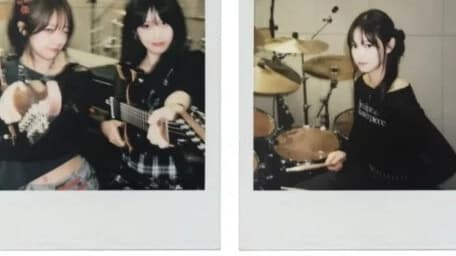
LATENCY debuted on January 8, 2026 with the single "It Was Love." The five-member girl band comprised alumni of dissolved or restructured groups. Its debut drew attention not solely for the music but for the lineup — a self-described delayed arrival by members who had been visible but underserved within K-pop's structural churn, now reassembled into a new identity built around live instruments. The group name encapsulated the concept precisely: voices that were delayed by circumstance, but finally heard.
The group's name was chosen deliberately. Latency — the delay between a signal being sent and received — served as the conceptual anchor: members who had been waiting, whose voices were "a little delayed, but are finally heard." For LOONA's Hyunjin, whose group underwent years of label dispute, contract litigation, and member departure before the remaining members continued under a different formation, the latency metaphor carried specific biographical weight. For the Cignature members who had seen their previous group's commercial ambitions constrained by label resources, it framed the new group as a second chance rather than a consolation project.
The K-Band Context: QWER's Shadow and the Female Band Moment
LATENCY debuted into a K-band landscape that had been notably reshaped by QWER's success in 2023-2024. QWER — a four-member girl band whose online community origins and direct-to-fan aesthetic generated outsized algorithmic reach relative to their label infrastructure — demonstrated that female bands could develop substantial audiences in K-pop's streaming economy without the promotional machinery that major label idol groups deploy. Their success created a reference point for LATENCY: evidence that the market was not simply tolerant of girl bands but actively receptive to them in the post-pandemic live streaming and online-fan-community era.
LATENCY's approach differs meaningfully from QWER's. QWER's appeal is rooted in their origin story and the parasocial intimacy of their fandom relationship; their online community roots are central to their identity. LATENCY's identity, by contrast, draws on the credibility and existing fan equity carried by its members' previous group associations. LOONA's fandom — Orbits — is among the most globally distributed and organizationally sophisticated in the genre, built over years of international community development. Even after LOONA's fractured period, a subset of that fanbase transferred significant attention to Hyunjin's new project.
"It Was Love" as a Debut Statement
The debut single "It Was Love" deployed a guitar-driven, medium-tempo rock sound — described by reviewers as "gentle band sound with pleasant melodies, louder than coffeehouse but without powerful drive." The Bias List critique acknowledged a guitar solo before the final chorus as the track's strongest moment, while noting the song didn't push aggressively into new sonic territory. This is a deliberate debut architecture: establish the band identity and instrumentation credibility, show musical range through the solo section, demonstrate emotional accessibility through the verse-chorus structure. Hard rock or abrasive debut singles tend to limit initial audience reach; gentle rock entry points allow cross-fandom discovery while signaling to instrumental music communities that the band is legitimate.
Within seventy-two hours of release, "It Was Love" passed 500,000 YouTube views — fueled, according to observers, by algorithmic shares from LOONA and Cignature fan communities and the genuine novelty of a female band formed from recognizable K-pop names rather than fresh trainees. The live performance clip reinforced the signal: Heeyeon's guitar work, Hyunjin on drums, the full-band arrangement visible on stage — LATENCY was not an idol group that happened to hold instruments for concept photos but a functioning band with playing credits distributed across the lineup.
What LATENCY Represents for K-Pop's Band Space
LATENCY's debut in January 2026 entered a K-pop market that had experienced the girl band question from multiple angles simultaneously: QWER's streaming momentum, Day6's sustained third-generation band presence, ONEWE's demo album series, CN.BLUE's long commercial history. LATENCY's specific contribution was the member-history model — assembling a band from artists with established fanbases rather than building from pre-debut trainees. That model, if it works commercially, would establish a template for future girl-band formations drawing on K-pop's large pool of former group members with active fan communities.
The months following LATENCY's January debut would clarify whether the cross-fandom activation that drove their initial view counts translated into sustained physical and streaming audience, or whether it represented a one-time curiosity spike. The structural case for sustained success is present: the members have real performance experience, the band identity is differentiated within the idol-dominated girl group market, and the timing coincides with genuine industry and fan interest in female bands as a format. January 2026 gave LATENCY their debut moment. What followed — including whether additional singles, touring, and the band's live performance reputation could compound the initial interest — would determine whether that debut moment was a beginning or a high point. Their early trajectory, with 500K+ YouTube views within days, suggested the former.
How do you feel about this article?
저작권자 © KEnterHub 무단전재 및 재배포 금지
Entertainment Journalist · KEnterHub
Entertainment journalist focused on Korean music, film, and the global K-Wave. Reports on industry trends, celebrity profiles, and the intersection of Korean pop culture and international audiences.
Comments
Please log in to comment