Lee Guk-ju Finally Opens Up About Why She Left Korea for Japan
 By Park Chulwon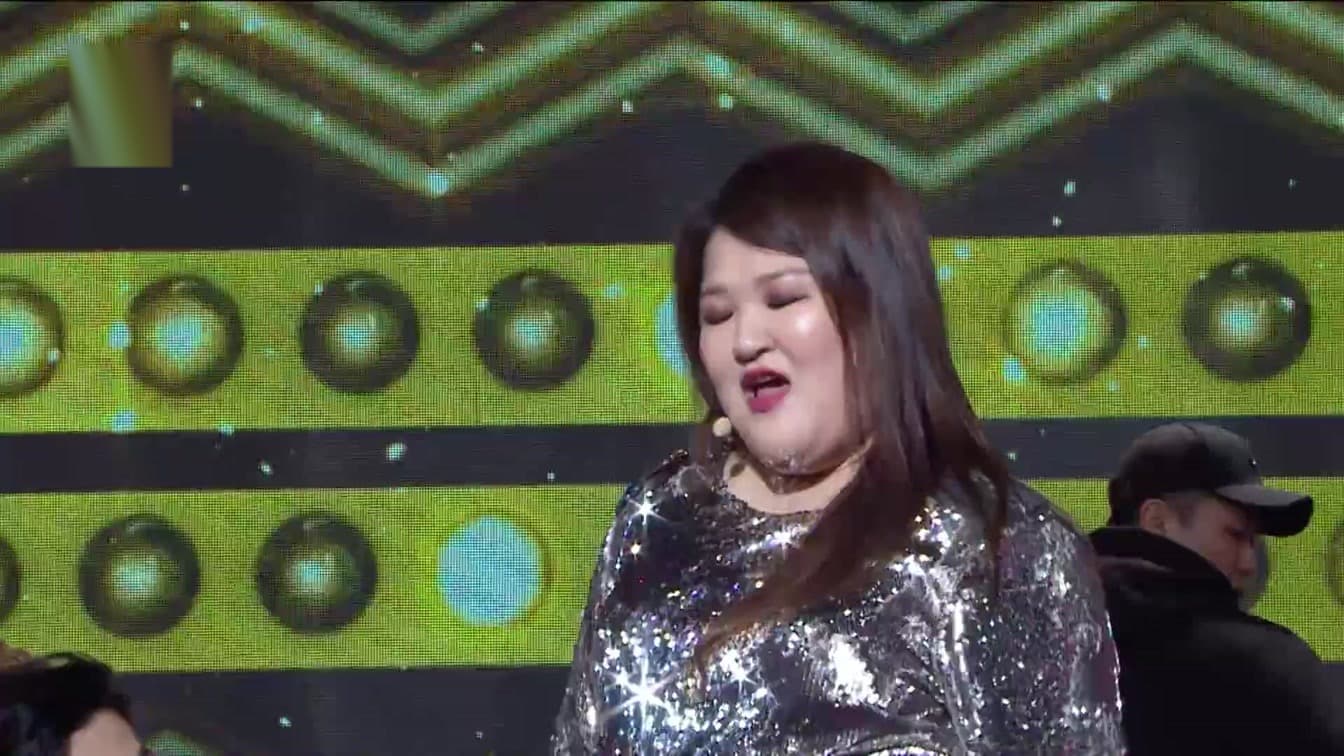
Lee Guk-ju, one of South Korea's most enduringly popular comedians, has broken a silence that fans never knew she was keeping. In a candid YouTube appearance, she admitted openly that she left Korea because work had dried up — and that the humbling experience of rebuilding from a Tokyo studio apartment ended up saving her career.
The comedian, who is now a familiar name in Korean variety television, opened up during a guest appearance on fellow comedian Park Se-mi's YouTube channel "Annyeong Ha-se-mi." In a segment titled "Sseol Ho-ro-rok," she spoke plainly about the period before her Japan chapter began — not with the polished optimism that entertainers typically project, but with the kind of unflinching honesty that makes viewers stop scrolling.
When There Was Nowhere to Go
"Korea was too hard," Lee Guk-ju said simply. "There was nowhere calling for me. But I couldn't just rest." That sentence, coming from a comedian who has spent years making audiences laugh on primetime variety programs, carried an unexpected weight. For viewers accustomed to seeing her as the life of every room she enters, the admission that she had felt professionally invisible landed as a genuine surprise.
She described the specific tension that kept her from resting: she wanted to escape, but mentally couldn't justify it. "I wanted to travel, but I kept asking myself — do I even deserve a trip right now?" she recalled. It's a question that resonates deeply with anyone who has watched their career stall — the particular cruelty of a rest you can't enjoy because you feel you haven't earned it. Rather than collapse under that weight, Lee Guk-ju made an unexpected move. She packed for Tokyo.
"If I'm going to take time off, I might as well make something. So from the very first day I arrived, I started filming content," she explained. It was a classic Lee Guk-ju solution — reframe the situation until the exit becomes the entrance to something else. The 9-pyeong (roughly 30 square meters) studio apartment in Tokyo wasn't a retreat. It was a fresh start with the cameras on.
A New Life in 9 Pyeong
Lee Guk-ju began her Japan chapter in April 2025, documenting her daily life in the modest Tokyo studio on her personal YouTube channel. The content — unglamorous by K-entertainment standards, centered on a room most Koreans would consider impossibly small — found an audience that responded precisely because it felt real. No stylists, no production teams, no pressure of broadcast schedules. Just her, navigating a foreign city with characteristic energy.
What she didn't predict was the professional boomerang effect. "The content I made in Japan started bringing in Korean job offers," she told Park Se-mi. "It works both ways now." The career cycle she had been unable to restart from within Korea found momentum the moment she left. Park Se-mi, listening with visible recognition, summarized it neatly: "So you needed a reason to rest, and work became your justification." Lee Guk-ju laughed — but it was the laugh of someone who had genuinely reckoned with something difficult.
By her own account, she remains constitutionally incapable of doing nothing. Even during the interview, she had been back in Seoul for only three days but already had a schedule packed with filming. "I still can't sit still," she admitted. "Even when my PD tells me we have enough footage, I can't stop. That's just how I'm wired." Park Se-mi, who confessed to sharing a similar compulsion, nodded in recognition — the two comedians bonding over a workaholic streak that turns out to be both their greatest strength and their most exhausting personal trait.
Back as the Host — and a Fortune Teller Goes Quiet
Lee Guk-ju's return to Korean screens arrived in style. On July 20, 2026, she appeared as host on SBS Plus's season two premiere of "Sinpal Talk Show: Gwimyohan Iyagi" (신빨토크쇼 귀묘한 이야기2), a supernatural variety program where celebrities bring their deepest personal questions to professional fortune tellers. The show is built around the premise that some things can't be answered rationally — and in the season opener, that premise was taken to an extreme that even seasoned viewers did not anticipate.
The episode's guest, comedian Im Woo-il, arrived with marriage on his mind. At 45, the question of love and commitment had become increasingly present for him — and he chose the fortune-telling show as the venue to seek some answers. His questions began normally enough, touching on his careful approach to money and whether his frugal habits were preserving or repelling good fortune. The fortune teller's read: his thriftiness wasn't personality, it was a scar from hard times past.
But then something happened that the show had never seen before. The fortune teller stopped mid-reading. Whatever appeared in the reading about Im Woo-il's marriage prospects was, apparently, enough to make the reader pause — an unprecedented moment on a show known for dramatic revelations. The abrupt halt left Im Woo-il and the studio audience in a stunned silence, and viewers who tuned in were left hungry for answers that the episode carefully withheld. It was exactly the kind of moment that will have audiences talking for days — and exactly the kind of show that benefits from a host like Lee Guk-ju, who knows how to hold a room that doesn't know what to feel.
Why Honesty Hits Different
Lee Guk-ju's Japan confession resonated for a reason that goes beyond her personal story. Korean entertainers exist in an industry with very little tolerance for visible struggle. The culture of constant positive projection — the expectation that any career setback will be framed as a growth opportunity rather than a painful reality — means that honest accounts of professional difficulty are rare. When they do surface, they tend to move audiences in ways that polished success stories don't.
That's what happened here. Fan responses across online communities reflected a collective sense of recognition. Comments described feeling seen, understood, and oddly relieved — as if her admission had given others permission to acknowledge their own difficult stretches. For people who have watched Lee Guk-ju project warmth and humor through years of variety appearances, the discovery that there was a harder chapter behind the laughter made them feel closer to her, not more distant.
There was also something specifically resonant about the way she described leaving Korea. She didn't frame it as a grand adventure or a spiritual reset. She said she felt unwanted, that she couldn't find work, and that she solved the problem by refusing to stop moving. That pragmatic, slightly self-deprecating framing — choosing action over despair, not because it was noble but because she simply couldn't do anything else — is fundamentally her. And it's part of why her audiences never left.
Looking Ahead
As of July 2026, Lee Guk-ju's schedule reflects the equilibrium she's built. She continues to split her time between Tokyo and Seoul, creating content in Japan while taking on Korean broadcast commitments when they come in. The fortune-telling show role fits her well — she's a host who can manage tonal whiplash between comedy and genuine unease, and the season's opening episode gave her both to work with.
"I'll be in Korea for a while longer this time," she said near the end of her interview with Park Se-mi. She said it simply, without sentimentality, the way someone describes a logistics update rather than a major life chapter. But for fans who have followed her through the quiet years and watched her rebuild in a foreign city, it carries meaning. She's home. The work is flowing again. And she's still, as she always was, unable to sit still.
That relentlessness, once the engine of her self-doubt, has become the engine of her recovery. In a Korean entertainment landscape that rarely makes room for this kind of honest story, Lee Guk-ju told one anyway — and found that honesty, like a tiny Tokyo apartment, can hold more than you expect.
How do you feel about this article?
저작권자 © KEnterHub 무단전재 및 재배포 금지
Entertainment Journalist · KEnterHub
Entertainment journalist focused on Korean music, film, and the global K-Wave. Reports on industry trends, celebrity profiles, and the intersection of Korean pop culture and international audiences.
Comments
Please log in to comment