Lee Ju-seung's Director's Arena Upset Changes the Finale
 By Park Chulwon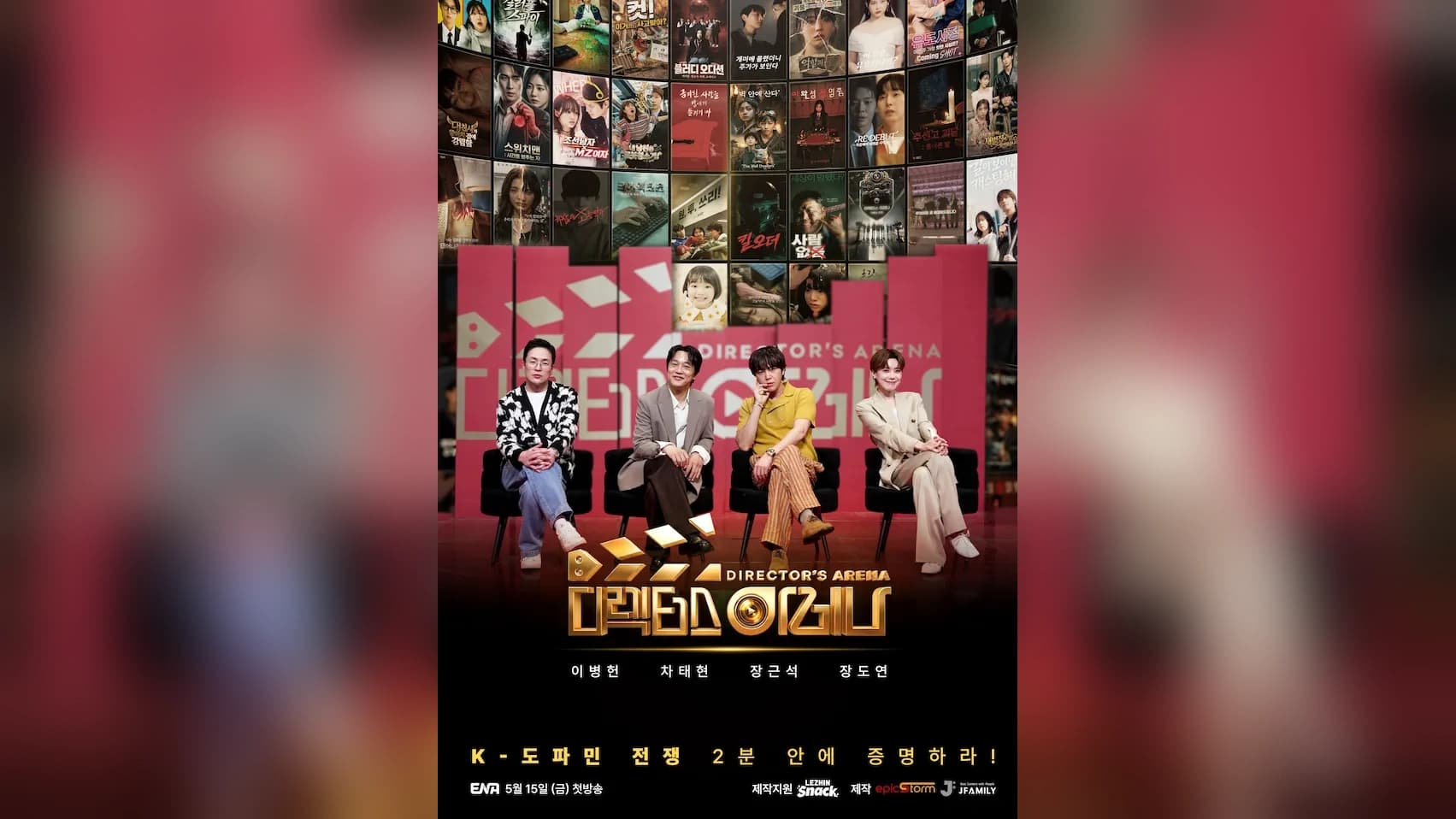
Director's Arena has reached the point where one short drama can change the entire competition, and Lee Ju-seung just became the clearest example. The actor-turned-director defeated a heavily watched rival in the show's one-on-one death match, while Jang Keun-suk's sharp judging helped frame why the result felt like more than a routine survival-program twist.
The June 26 episode of the ENA and Lifetime short-form drama survival series confirmed the final seven directors who will move into the last round. The episode drew attention for several reasons: Shin Ye-eun and Yoon So-yi appeared in rival short dramas, Lee Ju-seung pulled off an upset against Han Su-ji, and another match between Lee Yu-jin and Go Hyun-guk was reportedly decided by a single vote. Together, those results gave the show the kind of clean narrative that survival programs depend on: favorites under pressure, underdogs taking their shot and judges having to explain difficult calls in real time.
Lee Ju-seung's upset changes the final-round mood
The most eye-catching match paired Han Su-ji against Lee Ju-seung. Han had been described in Korean coverage as a strong contender, while Lee entered the project with public recognition as an actor but still had something to prove as a director. That contrast made the match easy to follow even for viewers who had not tracked every previous round: one side carried the weight of expectation, and the other had the opportunity to redefine his place in the competition.
Han's short drama, Snakes and Ladders, featured actress Shin Ye-eun, whose web-drama background and emotional control gave the piece a clear acting draw. Lee answered with a thriller led by Yoon So-yi, using her presence, face and movement to build tension. Korean reports said Lee's work ultimately won the match, turning what had been framed as a difficult challenge into a breakthrough moment for him as a director.
The result matters because Director's Arena is built around a specific question: can creators make audiences stay with a story in an extremely short format? The show evaluates directors through short dramas that run around 90 to 120 seconds, placing pressure on pacing, hook, structure and emotional payoff. In that format, famous casting can help, but it cannot replace clarity. A short drama has very little room to recover if the first turn fails.
Lee's victory therefore reads as more than a celebrity contestant advancing. It suggests that his instincts for genre tension and audience attention translated into the show's compact storytelling rules. For viewers who know him mainly from acting roles and variety appearances, the win gives a clearer reason to watch his next step in the final round.
Jang Keun-suk's judging gave the episode its second engine
Jang Keun-suk's presence as one of the show's "Five Stars" judges has been central to the program's tone, and this episode again used him as both critic and entertainer. Korean coverage highlighted his ability to look past simple like-or-dislike reactions and talk about how each piece worked. That was especially clear when the judges discussed Han Su-ji's work.
Some responses to Han's drama reportedly focused on the explanation-heavy development and slower pace. Jang offered a more flexible reading, saying in effect that the show's exposure to high-dopamine short-form storytelling may have changed what viewers expect, while a calmer flow could help the audience focus on performance and structure. The point was useful because it identified one of the show's most interesting tensions. Short-form drama rewards speed, but speed is not the only form of craft.
That kind of comment helps a survival show avoid becoming only a scoreboard. Viewers need wins and losses, but they also need judges to explain what those results mean. Jang's role is not only to react with a memorable line, though he often does that. It is to translate creative choices into terms viewers can understand: pacing, emotional line, story hook, actor focus and whether a scene makes people want to keep watching.
His judging stood out again in the close match between Lee Yu-jin and Go Hyun-guk. Korean reports said Lee won by one vote, and Jang suggested that some evaluators who pressed stop early during Go's work may have regretted it later as the piece developed. That reaction captured the risk built into the show's stop-button format. A director must grab attention immediately, but a story may also need time to reveal its strongest turn.
Why the short-drama format makes the stakes feel different
Director's Arena is billed in Korean coverage as a survival program for short dramas, with filmmakers competing on planning, directing ability and popular appeal. The format feels timely because short-form scripted content has become one of the most competitive entertainment spaces in Korea and across Asia. Drama clips, vertical storytelling and ultra-short episodes are no longer just promotional fragments. They are becoming their own production market.
That shift gives the show a different texture from a standard talent competition. A contestant is not only performing in front of cameras; each director is trying to prove a production model. Can a story reveal character in under two minutes? Can a genre piece build suspense without a long setup? Can an emotional drama slow down without losing viewers trained to swipe away quickly?
The June 26 episode sharpened those questions. Han's project, backed by Shin Ye-eun's performance, represented the value of actor-driven emotional detail. Lee Ju-seung's thriller with Yoon So-yi emphasized mood, danger and visual control. The Lee Yu-jin and Go Hyun-guk match showed how narrow the margins can become when both pieces offer different strengths. A single vote deciding a survival result is not only dramatic television; it reflects how subjective short-form engagement can be.
For Jang Keun-suk, Cha Tae-hyun, Jang Do-yeon and director Lee Byeong-heon, the challenge is to judge those pieces without reducing them to instant gratification. The show needs to reward audience retention, but it also needs to recognize craft that may unfold more quietly. Jang's comments in this episode were notable because they acknowledged that balance rather than treating speed as the only answer.
The final seven now carry clearer storylines
By the end of the episode, the final seven directors were set for the last round, where they will receive production support to complete their work. The confirmed lineup gives the finale more defined stakes: Lee Ju-seung arrives with momentum from an upset, Lee Yu-jin advances after surviving a one-vote battle, and the remaining finalists must now prove that earlier promise can hold under final-round pressure.
The show's final episode is scheduled to air on July 3 at 11 p.m. on ENA and Lifetime. That date matters because the competition is no longer in a setup phase. Viewers have now seen enough alliances, rivalries and stylistic differences to attach meaning to the final results. A win will not simply identify a contestant who made a good clip; it will point to the kind of short-form storytelling the program believes can work in a crowded digital market.
Lee Ju-seung's path may be the most emotionally readable for general viewers. Actor-director transitions are always watched closely because audiences want to know whether performance experience can become directing judgment. His win over a strong rival gives that question a fresh answer, at least within the show's rules. It also makes his final-round project more intriguing because he now has expectation on his side rather than only curiosity.
Jang Keun-suk's role, meanwhile, continues to show why celebrity judging works best when it adds perspective rather than noise. His humor keeps the room loose, but his more detailed reactions help viewers understand why a short drama succeeds, stalls or reveals its strength too late. In an episode filled with celebrity appearances and close results, that clarity helped the competition feel sharper.
With the final seven locked and the July 3 finale approaching, Director's Arena has found the kind of late-stage momentum survival shows need. The remaining question is whether Lee Ju-seung's upset becomes a one-episode highlight or the start of a final-round run that changes how viewers see him: not just as an actor trying directing, but as a creator who understands how to make a story land before the audience has time to look away.
How do you feel about this article?
저작권자 © KEnterHub 무단전재 및 재배포 금지
Entertainment Journalist · KEnterHub
Entertainment journalist focused on Korean music, film, and the global K-Wave. Reports on industry trends, celebrity profiles, and the intersection of Korean pop culture and international audiences.
Comments
Please log in to comment