Lee Jungshin Turns Craft Into Idol Variety
JTBC’s Jjangdol clip shows the CNBLUE member using a guitar-inspired idea inside a traditional knot-making mission.
 By Baek Seoyun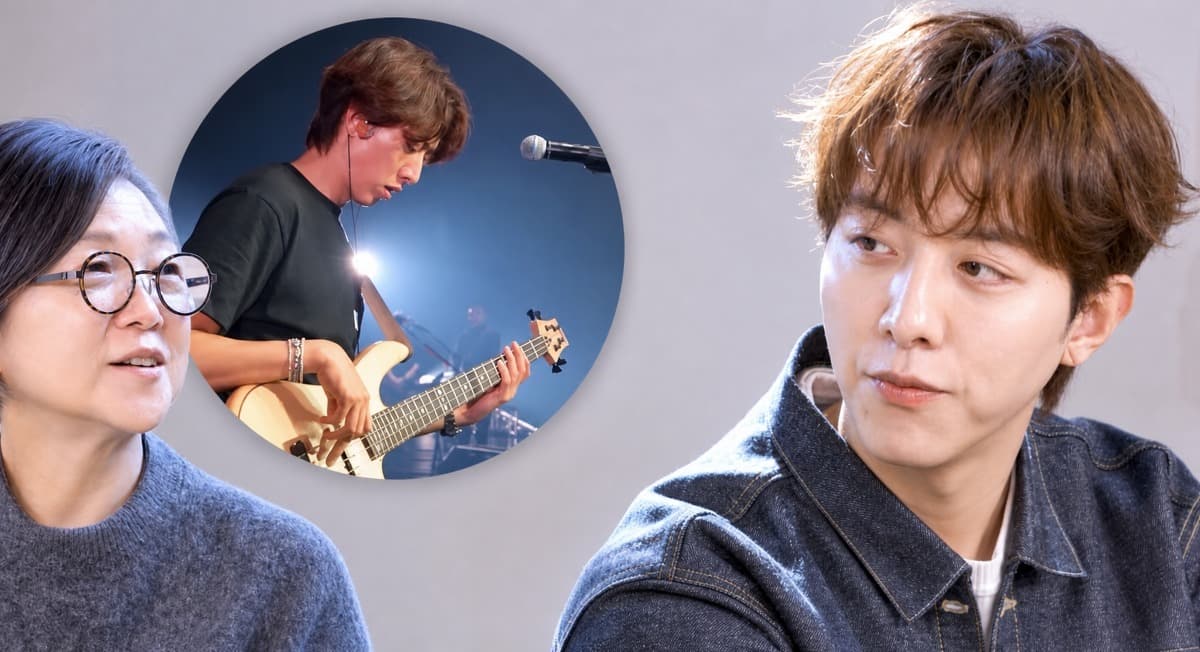
Lee Jungshin is bringing a musician's eye to JTBC's traditional-craft idol variety format. In a new clip from The Master and the Idol: Jjangdol, released on JTBC Entertainment's official YouTube channel, the CNBLUE member draws attention by shaping a knot-making idea around the head of a guitar, prompting the artisan in the room to respond with visible interest.
The moment is small in scale but useful as a snapshot of what Jjangdol is trying to do. The program is not built around idols simply visiting a craft studio for a quick reaction. It asks entertainers to learn traditional skills, reinterpret them and search for a contemporary entry point. Jungshin's guitar-head concept works because it connects his own artistic background to a Korean craft vocabulary that may feel distant to younger viewers.
Korean reports ahead of the program's July premiere described Jjangdol as a traditional rebranding reality show. JTBC introduced the format as a journey in which idols meet artisans and learn heritage techniques, with the cast including Highlight's Son Dongwoon, CNBLUE's Lee Jungshin, and TNX members Jang Hyunsoo and Eunhwi. The show began airing on July 26, 2026, and its YouTube clips now serve as searchable highlights for fans who may not watch the full broadcast.
A Guitar Idea Inside A Traditional Knot Mission
The official clip centers on Jungshin's attempt to model a knot after the head of a guitar. That detail is important because it shows the program's core idea in miniature. Rather than treating tradition as a museum object, Jjangdol asks idols to connect older techniques to the things they know. For Jungshin, the guitar is not a random prop. It is part of his public identity as CNBLUE's bassist and a musician who has spent years inside band performance.
When a musician looks at knot design through the shape of an instrument, the craft immediately becomes more personal. The object is no longer only decorative. It becomes a bridge between stage culture and handcraft, between pop performance and an artisan's repeated physical discipline. That is the kind of bridge a variety program needs if it wants traditional culture to feel alive rather than educational in a flat way.
The artisan's positive reaction gives the clip its emotional lift. Variety editing often amplifies praise, but the response still matters because it validates the idol's attempt to think through the craft rather than merely follow instructions. Jungshin is not positioned as an instant expert. He is shown as a learner who brings a useful idea from his own field.
That distinction keeps the segment grounded. It would be easy for an idol-craft format to become cute but shallow, with celebrities fumbling through tools while captions do the heavy lifting. The guitar-head moment suggests a better route. The cast can be entertaining while still treating the craft with respect.
Why Jjangdol Fits Current K-Entertainment
Jjangdol arrives at a time when Korean variety is increasingly interested in cultural recontextualization. Food, local travel, old neighborhoods, historical spaces and traditional skills have become common backdrops for shows that want more substance than studio games. The difference here is the idol angle. By placing K-pop and band performers inside artisan spaces, JTBC is trying to make craft legible to viewers who follow entertainment through personalities.
That strategy is practical. A viewer who might not search for knot-making videos may click because Jungshin is in the thumbnail. Once inside, the viewer sees the craft process, the artisan's standards and the challenge of turning a concept into something made by hand. The celebrity becomes the entry point, but the craft remains the center of the mission.
For Jungshin, the format also fits his career position. He is known first as a member of CNBLUE, one of Korea's representative idol bands, but he has also built acting and variety credits over the years. A show like Jjangdol lets him lean on the relaxed, observational side of his screen persona while still reminding viewers that music is his foundation.
The result is different from a standard comeback interview or drama promotion. Jungshin is not selling a new song in the clip. He is showing how a musician's instincts can travel into another discipline. That makes the moment useful for fans and for general viewers who enjoy seeing celebrities outside their most familiar lanes.
The Fan Value Of Craft-Based Variety
Official YouTube highlights are now a major part of how variety programs extend their reach. A broadcast episode can be difficult for international fans to access in full, but a focused clip gives them a shareable scene, a clear title and enough context to understand the appeal. JTBC Entertainment's upload does that by naming the idea directly: a knot modeled after a guitar head.
For CNBLUE fans, the scene adds a fresh layer to Jungshin's image. It shows him thinking like a musician even in a craft room. The guitar reference is specific enough to feel personal, and the artisan's reaction gives fans an easy reason to celebrate the moment. It is not a scandal, a competition result or a dramatic confession. It is a simple example of creative translation.
For viewers who follow Korean craft or culture-oriented entertainment, the clip offers a different value. It shows how heritage skills can be reframed without being trivialized. The idol is not replacing the artisan's knowledge. He is learning within it, proposing an idea and then seeing how that idea must be tested through technique.
That balance is the main challenge for any show that pairs celebrities with tradition. If the idol element overwhelms the craft, the program becomes ordinary fan service. If the craft instruction becomes too formal, the variety energy fades. Jjangdol's strongest clips will likely be the ones that find the middle, where personality creates curiosity and artisan standards create stakes.
What The Clip Suggests About The Program
The guitar-head knot scene suggests that Jjangdol has a workable formula. It gives each cast member room to bring a personal reference into a traditional skill, then lets the artisan setting test whether the idea can hold up. That structure creates a natural story inside a short clip: inspiration, attempt, feedback and a small moment of recognition.
The cast list also helps. Son Dongwoon, Lee Jungshin, Jang Hyunsoo and Eunhwi represent different corners of idol and band culture, which means each participant can approach craft from a slightly different performance background. Jungshin's contribution is especially clear because his instrument gives him a visual and tactile reference point. A guitar head has shape, function and personal meaning. Translating it into a knot makes the mission feel less abstract.
As the show continues, its success will depend on whether those personal ideas keep leading viewers back to the artisans rather than away from them. The best version of Jjangdol is not simply idols being charming in a craft room. It is a program where idols help audiences notice the intelligence of traditional work.
In that sense, Jungshin's clip is a strong promotional piece. It is short, specific and easy to understand, but it also carries a larger point about the show. Korean entertainment can make heritage feel current when it trusts artists to learn seriously and trusts viewers to enjoy the process. For Jungshin, one guitar-inspired knot is a modest moment. For Jjangdol, it is a neat example of why the format may have staying power.
How do you feel about this article?
저작권자 © KEnterHub 무단전재 및 재배포 금지
K-Drama & TV Correspondent · KEnterHub
Television and drama correspondent covering Korean series from first script reading to finale. Baek Seoyun tracks casting news, OTT release strategies, and the creative teams behind Korea's biggest shows, with a particular interest in how K-dramas travel to global audiences.
Comments
Please log in to comment