Lee Soo-geun Opens A School With A 70-Year Age Gap
 By Park Chulwon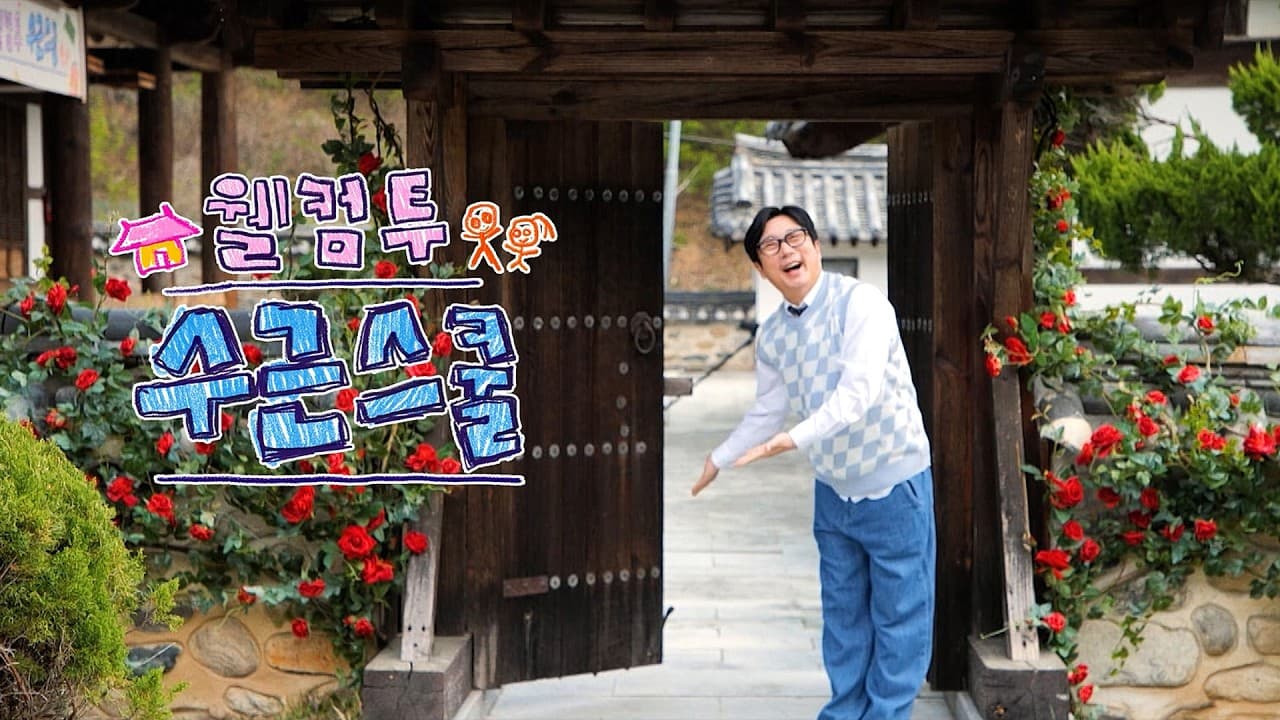
Lee Soo-geun is heading back to school, but KBS2's new variety format is not built around exams, rankings, or celebrity competition. Welcome to Sugeun School places the veteran comedian in a rural classroom in Uiseong, North Gyeongsang Province, where seven-year-old children and residents in their seventies and older are asked to become classmates.
The premise is simple enough to grasp in one sentence, yet it carries the kind of emotional hook that has helped Korean unscripted television travel beyond its home audience: strangers from very different generations learning how to laugh, listen, and move at the same pace. Lee will be joined by singer and entertainer Lee Mi-joo and comedian Im Woo-il, forming a trio of celebrity "teachers" for a school where age is less a divider than the starting point for the story.
A Rural Classroom With A 70-Year Gap
The program is set in Uiseong, a county known more for its quiet rural scenery and aging communities than for the high-speed celebrity circuits of Seoul. According to the source report, the show opens in a secluded mountain village area, where Lee Soo-geun takes on the role of principal while Lee Mi-joo and Im Woo-il join him as teachers. Their students are not a typical variety-show cast. The classroom brings together young children and older local residents, creating a school community that jumps across roughly seven decades of life experience.
That image gives the series its clearest identity. A seven-year-old child and a resident in their seventies do not share the same habits, vocabulary, memories, or physical pace. In an ordinary entertainment format, that gap could be treated as a quick gag. Welcome to Sugeun School appears to be aiming for something warmer: letting the comedy come from awkward first meetings, then allowing the relationships to deepen through shared lessons, games, and village life.
Regional coverage of the program described it as an eight-part healing variety series supported by Uiseong County. The local report said 12 Uiseong residents take part alongside Lee Soo-geun, Lee Mi-joo, and Im Woo-il, with the show designed around communication between generations. The program is scheduled to premiere on KBS2 on June 25 at 9:55 p.m. KST and air weekly on Thursdays in the same slot.
Why Lee Soo-geun Fits The Role
Lee Soo-geun is a natural anchor for this kind of format because his public image has long been tied to quick reactions, physical comedy, and the ability to make unfamiliar settings feel relaxed. He is best known to many viewers through long-running variety programs such as 2 Days & 1 Night and Knowing Bros, where cast chemistry and spontaneous jokes matter as much as the planned mission. In a classroom built around children and older residents, that flexibility may be more important than a polished hosting style.
The title also gives him an unusually direct responsibility. By making "Sugeun" part of the school name, the program frames Lee not simply as one member of a panel, but as the face of the experiment. The source report presents him as the figure leading the school, while Lee Mi-joo and Im Woo-il support the classroom as fellow teachers. That creates a familiar variety structure: one seasoned center, one high-energy entertainer, and one comic partner who can absorb and redirect the chaos.
Lee Mi-joo's casting adds a different texture. As a singer-turned-entertainer who has built a second career through variety appearances, she is often used for bright reactions, playful confidence, and emotional openness. In a school where the cast must connect with both children and older villagers, that kind of approachable energy can help soften the distance between generations. Im Woo-il, meanwhile, brings a comedian's timing to a format that will likely need small jokes to keep sentimental moments from feeling too heavy.
KBS's promotional material frames the show around celebrities who are experienced in entertainment but new to becoming teachers, while older residents and young children become partners in a classroom that crosses generations.
That framing matters because the show is not selling a lesson plan. It is selling a relationship. The celebrities may be called teachers, but the more interesting question is whether they will also become students: learning local customs, adjusting to the children's honesty, and listening to older participants whose lives hold decades of memory outside the entertainment industry.
Uiseong Becomes More Than A Backdrop
The choice of Uiseong is central to the show's identity. The county has, like many rural Korean communities, faced the twin pressures of population aging and low birth rates. A program that brings together children and senior residents in one classroom inevitably touches that reality, even if it does so through variety rather than documentary. The premise turns a demographic issue into a human scene: a school where the youngest and oldest members of a community are not separated into different narratives.
Local reporting noted that the series will feature Uiseong's natural scenery, traditional culture, resident life, and sense of community. That gives the show a second function beyond weekly entertainment. It becomes a soft showcase for the region, inviting viewers to see Uiseong not as an abstract rural area but as a place with faces, rituals, humor, and everyday warmth.
This is a familiar strategy in Korean broadcasting. Rural variety programs often introduce towns through food, work, landscape, and intergenerational conversation. The best versions avoid treating local residents as props. Instead, they allow the community's rhythms to shape the celebrities' behavior. If Welcome to Sugeun School follows that path, Uiseong's villages and residents could become the real emotional engine of the series.
The Appeal For Viewers Outside Korea
For English-speaking K-entertainment fans, the show arrives at a moment when Korean variety is increasingly watched for comfort as much as comedy. Idol survival shows, dating formats, and competitive reality programs can create loud online conversation, but slower community-based variety often builds a different kind of loyalty. These shows give viewers a window into daily Korean life, regional speech, family structures, and social etiquette without requiring deep knowledge of the entertainment industry.
Welcome to Sugeun School has several elements that could make it easy to follow even for viewers who do not know every cast member. The premise is visual. The age gap is immediately understandable. The rural classroom gives each episode a clear location. The celebrity roles are simple: Lee Soo-geun as the principal figure, Lee Mi-joo and Im Woo-il as teachers, and local residents as the students and partners who give the show its heart.
The emotional stakes are also low-pressure but real. No one needs to win a trophy. No one has to debut in a group. The point is whether people who normally live in separate worlds can become comfortable enough to learn together. That makes the series well suited to moments of surprise: a child saying something blunt, an older resident revealing unexpected humor, or a celebrity host realizing that the "lesson" has turned back on the teacher.
What To Watch When It Premieres
The first episode will likely need to establish three things quickly: the rules of the school, the personalities of the local participants, and the chemistry among the celebrity teachers. Lee Soo-geun's challenge is to guide the classroom without overwhelming it. Lee Mi-joo and Im Woo-il will need to find their own roles, especially if the show balances comedy with more tender scenes.
The strongest early moments may come from the mismatch between planned lessons and real personalities. Children often ignore the script without meaning to. Older participants can carry a confidence that comes from lived experience rather than television timing. When those two groups meet, the celebrities are forced to react honestly, which is where Korean variety often finds its most memorable scenes.
The show also gives KBS2 a chance to deliver a softer summer alternative to louder entertainment formats. A Thursday night slot at 9:55 p.m. KST positions it as a late-evening program for viewers who want warmth after the day's news and work. If the series can turn its rural school into a place audiences want to revisit each week, the title may become less a joke about Lee Soo-geun and more a promise of the show's emotional tone.
For now, the hook is clear: Lee Soo-geun, Lee Mi-joo, and Im Woo-il are walking into a classroom where the students may teach them as much as they teach anyone else. In a Korean variety landscape crowded with competitions and celebrity panels, Welcome to Sugeun School is betting that a village school, a 70-year age gap, and a few unlikely classmates can still feel fresh.
How do you feel about this article?
저작권자 © KEnterHub 무단전재 및 재배포 금지
Entertainment Journalist · KEnterHub
Entertainment journalist focused on Korean music, film, and the global K-Wave. Reports on industry trends, celebrity profiles, and the intersection of Korean pop culture and international audiences.
Comments
Please log in to comment