Lim Young-woong Fans Hit 100 Million Won in Charity Donations
The Busan fan club's milestone donation reflects a fandom culture built around giving back, not just showing up
 By Jang Hojin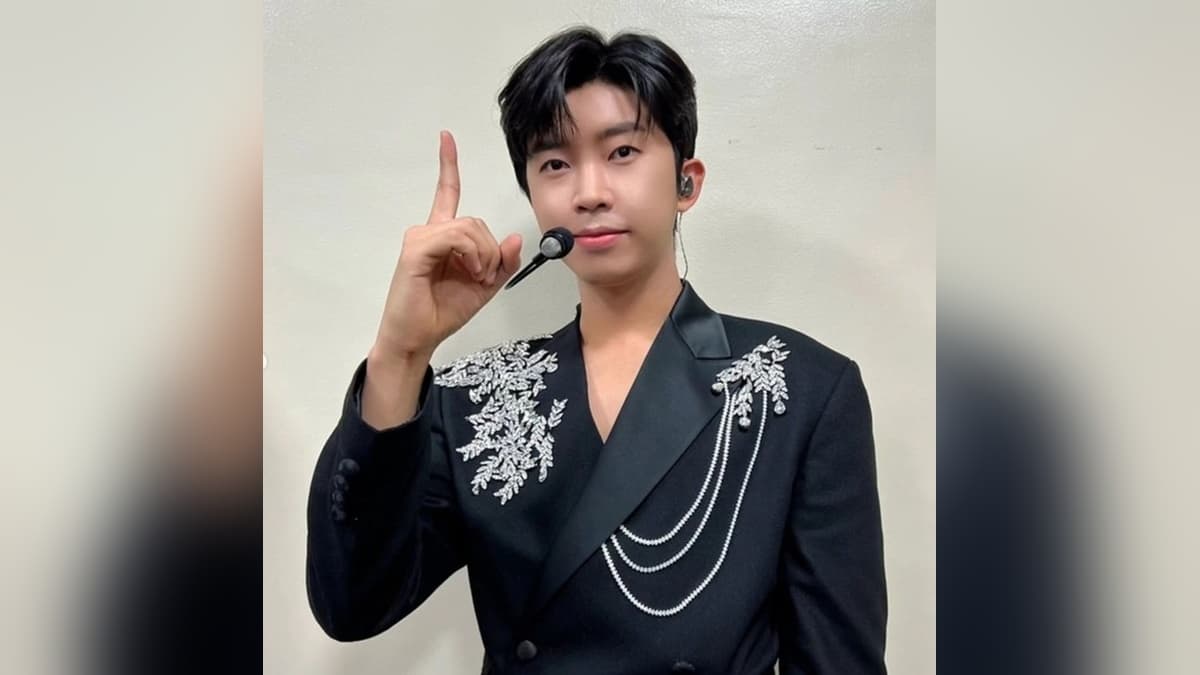
A fan club in Busan has crossed a threshold that very few in Korean pop music history have reached: cumulative charitable donations exceeding 100 million Korean won — approximately $73,000 — sustained over more than five years of consistent, voluntary giving. The fan club is "Busan Yeongwoong Sidae Study House," a group organized around their admiration for singer Lim Young-woong, and the milestone was reached through their 55th dosirak (lunch box) sharing service at the Busan Yeontan Bank's Bapsang Community.
The total, including a recent special donation, came to 101,670,450 won. It is a number that would be significant in any charitable context. In the context of a fan community choosing to channel their support for an artist into direct service to elderly and low-income neighbors, it represents something specific about the kind of community Lim Young-woong has fostered — intentionally or not — around his music.
Five Years of Showing Up
What distinguishes the "Study House" fan club's record is not just the total amount, but the consistency. The group has been making regular monthly donations of 700,000 won for over five years, with additional special contributions alongside. They have also participated directly in the work — volunteering for cooking, food service, and cleaning at the Bapsang Community's regular lunch programs. The 55th dosirak service represents nearly four and a half years of showing up to prepare and deliver meals to neighbors who might otherwise go without.
In a statement shared after reaching the milestone, a representative of the fan club said: "Under the slogan of 'the strength of being together, not alone,' we will continue our ongoing support and service for elderly people living independently. We will not stop this beautiful journey so that Lim Young-woong's positive influence can spread to every corner of our society." The Busan Yeontan Bank, for its part, expressed deep gratitude: "For five years, with an unchanged heart, the Study House members have cared for our neighbors. We are profoundly thankful."
Lim Young-woong's Role in Shaping This Culture
Lim Young-woong did not create these fan clubs directly, but his approach to fandom has clearly shaped them. He is known, unusually for Korean pop stars, for explicitly discouraging fans from giving him personal gifts — and for asking that the energy and resources they might spend on gifts be redirected toward charitable giving instead. That message, delivered consistently, has taken root in ways that extend well beyond the Busan group.
Across Seoul, another fan organization — "Yeongwoong Sidae Band (Nanum Moim)" — recently completed their 83rd lunch box service at the Dongja-dong Catholic Peace House in Yongsan, a support facility for residents of one of Seoul's remaining jokbang-chon districts: neighborhoods of extremely small, often windowless rooms that house the city's most economically vulnerable residents. The total donations from this group alone have reached 421 million won — over $300,000 — accumulated through regular monthly giving and special contributions over multiple years.
Taken together, the two fan club organizations represent an unusual phenomenon in Korean pop music: a fandom that has redirected a meaningful portion of its collective resources toward sustained social service, not as a one-time gesture, but as a defining ongoing practice. Reporting by Korean entertainment outlets has described the total giving by Lim Young-woong's fan community as a "new standard" for fandom philanthropy.
Why Lim Young-woong?
Lim Young-woong is not a K-pop artist in the traditional sense. He rose to national prominence through "TV Chosun Mister Trot," a 2020 competition show that revived interest in trot — a genre of Korean popular music with roots in the Japanese colonial era, characterized by a distinctive rhythm and emotional directness that differs sharply from the polished production of mainstream K-pop. His victory on the show, and the subsequent explosion of his career, came with a fan base that skews older than most Korean pop fandoms and brings with it a particular relationship to community and service.
His music, which centers on themes of longing, perseverance, and emotional honesty, has attracted listeners who identify with those themes in their own lives — and who have transferred some of that identification into collective action. One feature piece in the Korean media described his fan base's giving culture as having created a "new kind of fandom" in which the artist's expressed values become the community's values, acted out in practical ways that benefit people outside the fandom entirely.
What 100 Million Won Looks Like in Practice
To understand what the Busan fan club's milestone actually represents in concrete terms, it helps to consider what the Bapsang Community does. The organization provides regular meal services, direct financial support, and social connection to elderly residents living alone in the Busan area — a population particularly vulnerable to isolation and poverty. The 101,670,450 won donated by the Study House group has funded meals, supplies, and direct support for that population over more than five years.
The 55th dosirak service — the event that brought the total past the 100 million won mark — was organized and staffed by fan volunteers who prepared the food, delivered it, and cleaned up afterward. This combination of financial contribution and hands-on service is what organizations like the Bapsang Community describe as the most meaningful form of support: not just money, but presence.
A Different Kind of Fan Culture
Korean pop fandom has a complicated global reputation — one that sometimes emphasizes intensity, loyalty tests, and competitive spending as the measures of devotion. What the Lim Young-woong community has built alongside those more visible expressions is a counternarrative: one in which fandom becomes a mechanism for genuine social contribution, where the energy of collective admiration is converted into something that serves people who have nothing to do with the entertainment industry.
The Study House fan club's representative phrase — "the strength of being together, not alone" — echoes something that Lim Young-woong himself has said in various forms about the relationship between community and individual resilience. Whether consciously mirroring the artist's message or simply finding in it a language for something they already believed, the result is a fan community whose most significant act of loyalty has been showing up, month after month, to feed elderly strangers in Busan.
The 100 million won milestone is a number. The 55 dosirak services, stretching back to before most people had heard Lim Young-woong's name, are something else: a record of presence, accumulated one meal at a time.
How do you feel about this article?
저작권자 © KEnterHub 무단전재 및 재배포 금지
Entertainment Journalist · KEnterHub
Entertainment journalist specializing in K-Pop, K-Drama, and Korean celebrity news. Covers artist comebacks, drama premieres, award shows, and fan culture with in-depth reporting and analysis.
Comments
Please log in to comment