Love Prescription's 30-Year Secret Just Cracked
Kim Chang-wan's Gong Ki-cheol begins recovering the truth behind the KBS2 drama's old family wound.
 By Jang Hojin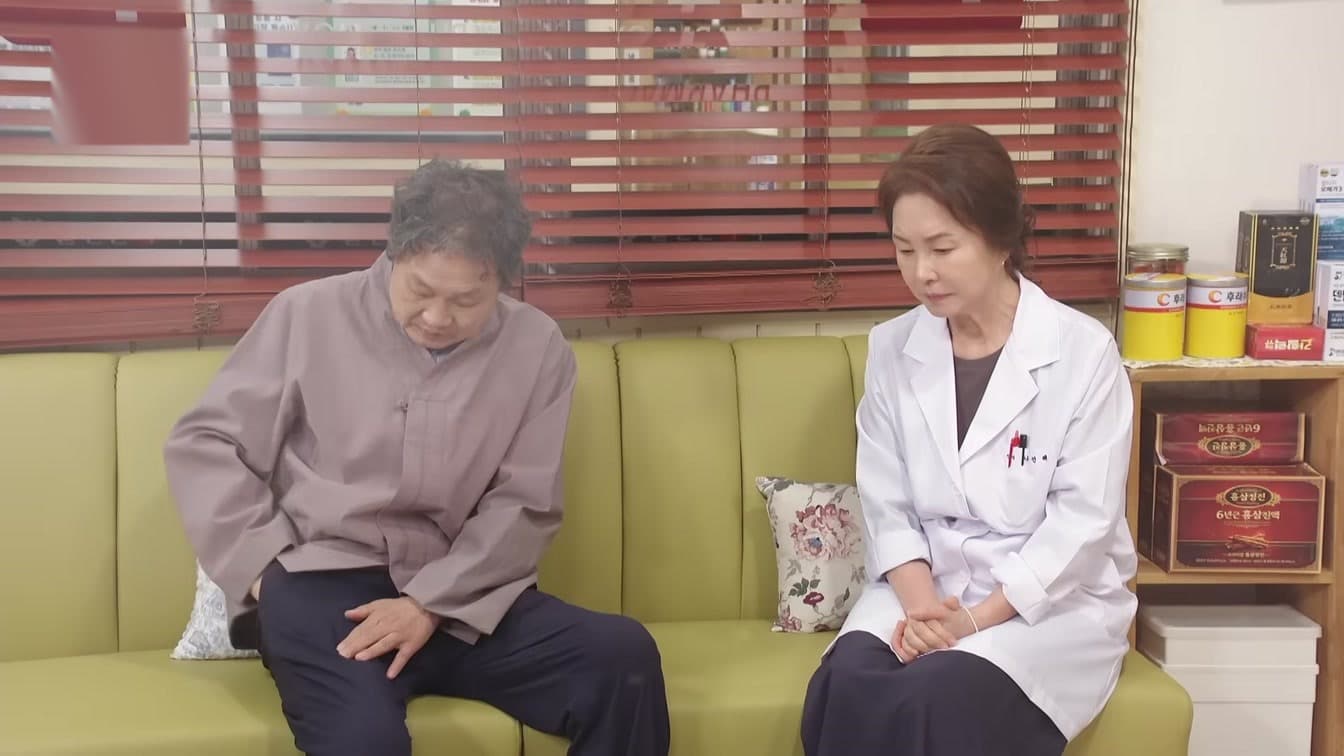
Love Prescription has reached the kind of late-run turn that makes a weekend drama feel newly searchable. Episode 42 of the KBS2 series, broadcast on June 21, pulled the story's 30-year mystery into sharper focus as Gong Ki-cheol, played by Kim Chang-wan, began recovering memories that could change how both families understand the past. The episode did not treat the reveal as a simple shock. It connected a medical clue, a family reunion, a suspected cover-up, and the drama's larger theme of wounds that cannot heal until someone finally names what happened.
The scene that pushed the mystery forward was small on the surface. Ki-cheol visited a barbershop with family, and attention turned to a deep scar on the back of his head. The barber suggested the injury looked more like the result of being struck than a normal fall, and the moment triggered Ki-cheol's buried fear. For a character who has spent decades separated from his old life through memory loss and manipulation, the physical scar became more than evidence. It became the first clear sign that the story's central misunderstanding may have been built on violence, neglect, and fear rather than abandonment.
That is why the episode is trending beyond ordinary recap interest. Love Prescription has always been framed as a "family makeup drama" about two households tied together by an old ill fate. But episode 42 gave viewers a more concrete answer to what that fate may have been. Ki-cheol's returning memory points toward Jo Mi-hyang, played by Yoon Bok-in, and raises the possibility that his disappearance and long confusion were not accidental tragedies. For viewers who have followed the families' arguments, marriages, resentments, and reconciliations, the reveal starts rearranging the emotional map of the whole series.
The 30-Year Wound Finally Has a Shape
The power of this turn comes from how long the drama has allowed the wound to sit in the background. The conflict between the Gong and Yang families has been described as a 30-year entanglement, with old disappearances and misunderstandings hardening into generational resentment. Ki-cheol's return already complicated that history because he came back without the full memory of what happened. Episode 42 changed the terms. Instead of asking only where he had been, the drama is now asking what was done to him and why his memories were kept out of reach.
The episode also linked Ki-cheol's recovery to medication. Reports describe his family realizing that painkillers he had been taking may have interfered with his memory returning. That discovery gives the plot a practical mechanism and an emotional charge. If the medication was misused because someone feared what Ki-cheol might remember, then the family's anger is not abstract. It becomes a response to years of stolen truth. The drama's title promises prescription and healing, but here the medicine itself becomes part of the suspicion.
Kim Chang-wan's role is central to why the reveal works. Ki-cheol is not simply a plot device carrying lost information. He is an older father, a former clinic director, and a man trying to understand himself after decades of separation. Earlier in the story, his medical knowledge resurfaced instinctively when he identified a likely condition during a clinic moment, surprising his family. That detail matters because it shows memory returning in layers: professional reflex first, then body memory, then traumatic recall. The writing uses those layers to make the recovery feel gradual rather than convenient.
There is also a strong viewer hook in the number itself. Thirty years is long enough for a single event to distort marriages, careers, family roles, and the way children judge their parents. When a weekend drama finally starts unlocking that much history, each new clue feels bigger than a single scene. The scar is not just a mark on Ki-cheol's body. It is a visual answer to three decades of suspicion.
Why Episode 42 Balanced Shock With Warmth
The memory reveal did not arrive in isolation. Episode 42 also spent time on domestic and comic beats, which is part of the drama's appeal. Gong Dae-han and Yang Dong-sook, played by Choi Dae-chul and Jo Mi-ryung, were shown adjusting after their difficult path to marriage. Their newlywed energy brought lighter moments into an episode otherwise shaped by dark past fragments. That contrast is important because Love Prescription is not built like a revenge thriller. It uses mystery to serve a family story, so warmth has to remain in the frame even when the past turns painful.
The same episode showed Cha Se-ri, played by So E-hyun, confronting the emotional emptiness that follows major family changes. Psychiatrist Han Seong-mi, played by Yoo Ho-jeong, offered her a gentle prescription for caring for herself rather than only filling roles for others. That subplot may seem far from Ki-cheol's scar, but it belongs to the same drama logic. The series keeps returning to the question of how people live after long emotional strain. Some characters need evidence. Some need apologies. Some need permission to want a life of their own.
Meanwhile, Gong Ju-a and Yang Hyun-bin, played by Jin Se-yeon and Park Ki-woong, continued shifting from former lovers into business partners. Their trip to Gangwon Province for a project involving departing employees gave the episode a lighter, bickering rhythm. Their dynamic also kept the romantic thread alive without distracting from the main family mystery. In a late-stage weekend drama, that balance matters. Viewers want answers, but they also want to feel the everyday ties that those answers will affect.
The result was an episode with several emotional speeds. It had newlywed comedy, workplace tension, self-care advice, romantic awkwardness, corporate ambition, and the sharp memory clue at the barbershop. That range helps explain why Korean viewers searched for the drama after broadcast. The episode did not offer only one headline. It gave fans multiple conversation points, with Ki-cheol's recovered memory as the strongest engine.
A Ratings Signal Gives the Twist Extra Weight
The timing of the reveal is also significant because the drama is approaching its final stretch. A related report notes that, as of June 22, Love Prescription had reached a personal-best rating of 15.9 percent for episode 42, according to Nielsen Korea's nationwide household data. The same report described the show as having eight episodes left before the finale and noted that its later episodes were gaining stronger attention. For a weekend drama, a late rise can be especially valuable because final-arc mysteries often determine whether casual viewers return for the ending.
That 15.9 percent figure gives the memory reveal measurable weight. It suggests that the show is not only resolving old threads for existing fans but also generating broader curiosity as the truth becomes clearer. The drama may not rely on the harshest kind of sensational conflict, but episode 42 proves it can still create urgency. A father remembering that his injury may have been inflicted is a strong enough turn to make viewers reconsider everything they assumed about the past.
It also clarifies the drama's message. The series has been praised in some coverage for focusing less on extreme provocation and more on reconciliation, communication, and diverse family forms. Ki-cheol's storyline tests that message. Reconciliation cannot mean forgetting harm. Healing cannot happen if the person who was hurt is denied the truth of his own life. By bringing his memory back now, the drama seems to be preparing a final phase where forgiveness, accountability, and family repair have to be separated from simple sentiment.
What Viewers Should Watch Next
The next episodes are likely to focus on how Ki-cheol's recovered memory affects Jo Mi-hyang's position and the two families' understanding of the original scandal. If his injury was caused by an attack and then hidden, the drama has to answer who knew, who benefited, and who chose silence. Those questions could reshape the old belief that the two families were simply doomed by betrayal. They may instead have been trapped by a lie that lasted long enough to become family history.
Viewers should also watch how the younger generation responds. Ju-a and Hyun-bin's unresolved feelings, Dae-han and Dong-sook's new marriage, and Se-ri's evolving family role all sit downstream from the same old conflict. Once Ki-cheol's truth becomes public, every relationship connected to the Gong and Yang households may have to be reinterpreted. That is the advantage of a 30-year mystery: when it finally cracks, it does not change one character's past. It changes the emotional inheritance of everyone around him.
For now, episode 42 gives Love Prescription exactly what a final stretch needs: a concrete clue, a wounded elder with a returning voice, and a mystery that turns family healing into something more demanding than a warm speech. The drama's title suggests care, but this episode argues that the first real prescription is truth.
How do you feel about this article?
저작권자 © KEnterHub 무단전재 및 재배포 금지
Entertainment Journalist · KEnterHub
Entertainment journalist specializing in K-Pop, K-Drama, and Korean celebrity news. Covers artist comebacks, drama premieres, award shows, and fan culture with in-depth reporting and analysis.
Comments
Please log in to comment