NCT DREAM's 'Go Back To The Future': What the Time-Travel Album Signals Five Days Before Release
Double title tracks, a 1M pre-sale trajectory, and the question of where NCT DREAM's artistry goes next
 By Jang Hojin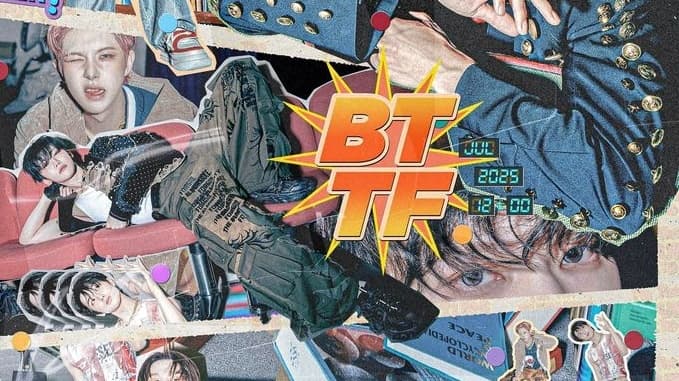
NCT DREAM releases "Go Back To The Future" on July 14. The fifth full-length album from SM Entertainment's veteran group features double title tracks "BTTF" and "CHILLER," structured around a time-travel narrative. Five days remain before the release.
Here is what the album concept, tracklist, and production approach suggest about where NCT DREAM is in their artistic development — and why the double-title-track strategy makes sense for this particular group at this particular moment.
The Concept: Time Travel as NCT DREAM's Mirror
The "Go Back To The Future" concept centers on a journey through time to find "the most shining version of oneself" — experiencing different emotions and incidents across past, present, and future using a time machine. As album concepts go, this is thematically resonant for NCT DREAM specifically. The group debuted in 2016 with a youthful, energetic brand identity that their earlier work amplified; by 2025, most members are in their mid-to-late twenties, and the question of how a group defined by youth imagery evolves into maturity is one NCT DREAM has been navigating for several years.
The time-travel framing allows both a nostalgic look backward — acknowledging the specific energy of their debut era — and a forward-looking assertion that the group's best material is still ahead. It is a clever concept for managing the dual audiences that NCT DREAM commands: longtime fans who want the exuberant early-era sound acknowledged, and newer listeners who want evidence of growth.
The Double Title Track Strategy: "BTTF" and "CHILLER"
"BTTF" was released as a pre-album single before July 14, giving audiences a first look at one dimension of the album's sonic range. The track — whose title borrows the shorthand for "Back to the Future" — is upbeat and momentum-driven, fitting comfortably within NCT DREAM's established energetic mode. Its prior release builds anticipation for the album while giving radio formats something to work with in advance of the full release.
"CHILLER" is the genuinely new discovery waiting for listeners on July 14. Described as both the prequel and sequel to "BTTF," the track works with experimental sounds, diverse genre combinations, and what reviews describe as unpredictable structure. The contrast is deliberate: "BTTF" gives audiences something immediately familiar; "CHILLER" challenges them to follow the group into less charted sonic territory. Together, the two title tracks cover NCT DREAM's range more completely than a single title track would allow.
The Nine-Track Album and Its Context
The full tracklist — "BTTF," "CHILLER," "I LIKE IT," "DREAM TEAM," "Interlude: Back to Our Paradise," "'Bout You," "That Summer," "Miss Me," and "Beautiful Sailing" — suggests an album with genuine tonal range. "That Summer" and "Beautiful Sailing" sound like potential album highlights for listeners who want the group's more melodic work. "DREAM TEAM" positions as an ensemble showcase. The "Interlude" track implies a narrative architecture that rewards listening to the album as a complete sequence rather than picking individual tracks.
NCT DREAM has historically performed well on Hanteo and Circle Chart with their full album releases. First-week physical sales projections for "Go Back To The Future" are significant — the album's ten physical versions (including NFC editions) maximize the purchase incentives that drive K-pop pre-order and first-week numbers. The commercial infrastructure is in place; the question the July 14 release will answer is whether the music itself expands the group's creative ceiling.
Where NCT DREAM Fits in July 2025's K-Pop Landscape
July 14 places NCT DREAM's release three days after BLACKPINK's "JUMP" and TWICE's "THIS IS FOR" have dropped on July 11. That placement is not accidental. SM Entertainment has a deep understanding of K-pop release ecology, and positioning "Go Back To The Future" for the weekend following the July 11 releases gives NCT DREAM chart momentum in a week when streaming attention is shifting rather than concentrating.
The group's Dreamzen fanbase operates with the organizational sophistication of established large-fandom communities. First-week purchase coordination, streaming campaigns, and social media activity will ensure that the album's opening numbers reflect the fanbase's maximum mobilization rather than casual discovery. Ten physical versions — including the NFC-enabled Hoverboard edition — maximize the revenue per fan from core supporters who collect multiple versions.
Outlook
NCT DREAM arrives at July 14 with a strong concept, a double title track structure that covers their sonic range, and a fanbase primed to deliver strong first-week numbers. The more interesting question is whether "Go Back To The Future" — as a creative statement rather than a commercial operation — advances the case that NCT DREAM's artistic identity is genuinely evolving alongside their members as they move into their late twenties. Five days from now, the album's full scope will be audible. The pre-release signals are encouraging. In the week that followed the July 14 release, first-week Hanteo sales crossed one million copies — making it the first NCT DREAM full album to reach that milestone and answering the commercial question definitively, if not yet the artistic one.
How do you feel about this article?
저작권자 © KEnterHub 무단전재 및 재배포 금지
Entertainment Journalist · KEnterHub
Entertainment journalist specializing in K-Pop, K-Drama, and Korean celebrity news. Covers artist comebacks, drama premieres, award shows, and fan culture with in-depth reporting and analysis.
Comments
Please log in to comment