Nine Puzzles Review: Kim Da-mi and Son Suk-ku Lead Disney+'s Best Korean Thriller of 2025
The first six episodes of the mystery series premiering May 21 demonstrate exactly what distinguishes exceptional K-drama crime fiction from routine procedural fare
 By Jang Hojin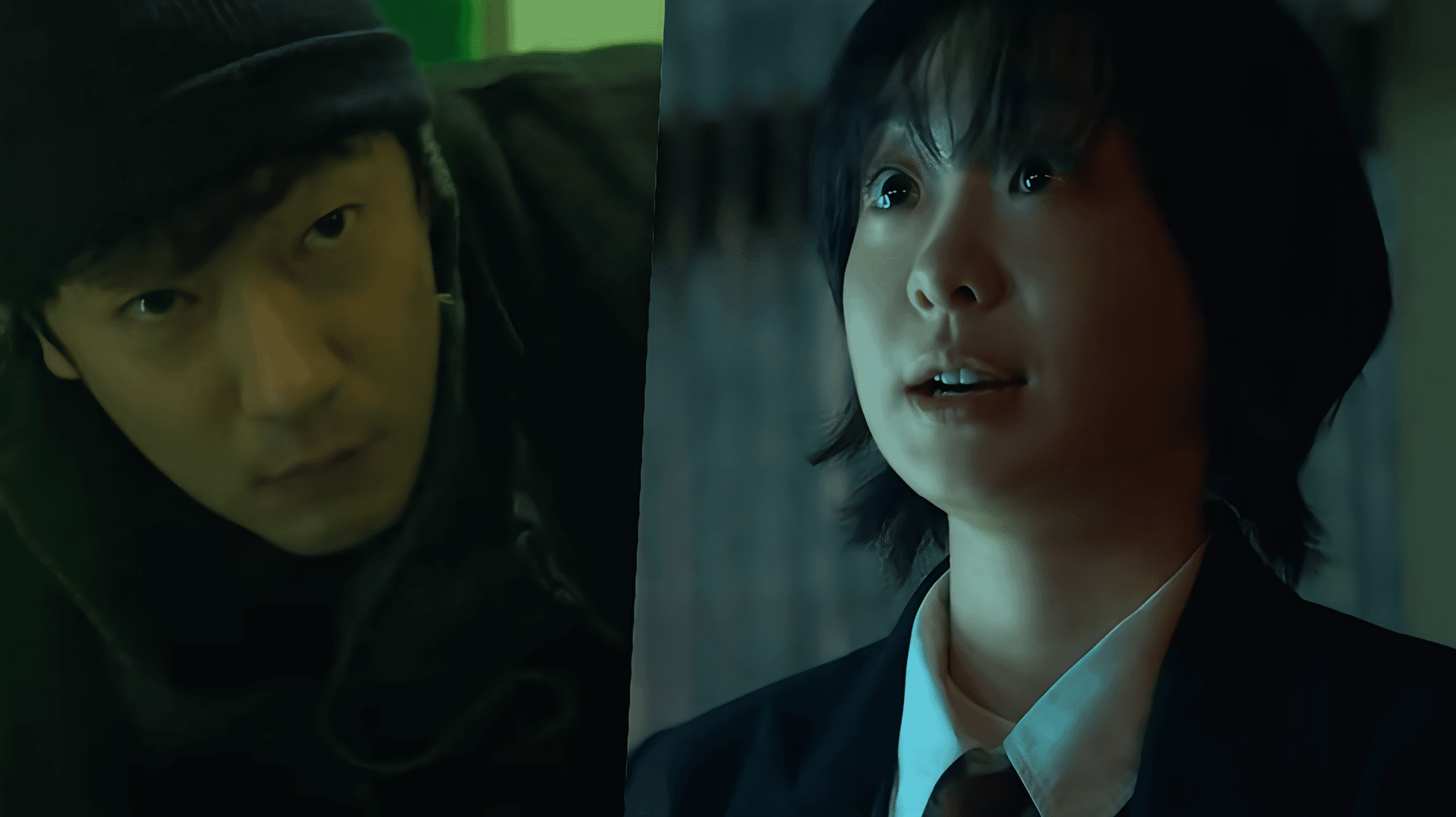
Disney+'s crime thriller Nine Puzzles launched on May 21 with Kim Da-mi and Son Suk-ku, delivering one of Korean drama's most compelling mystery premieres in years.
The Premise: When the Puzzle Arrives, Someone Dies
The central premise of Nine Puzzles is deceptively clean: a high school student named Yoon Ena finds her uncle murdered, a single puzzle piece left beside his body. She has no memory of how she arrived at the crime scene. Ten years later, Ena has become a criminal profiler — and a new series of murders has begun, each victim found with an identical puzzle piece. The lead detective assigned to the cases is Kim Hansaem, the same officer who first questioned Ena as a teenage suspect in her uncle's death.
Written by Lee Eun-mi, who previously wrote Tunnel (2017) and Navillera (2021), the series layers multiple mysteries simultaneously: the identity of the current killer, the truth about what Ena witnessed as a teenager, and the nature of the institutional failures that allowed the original case to go unsolved. That layering is what elevates Nine Puzzles beyond standard procedural territory — the puzzle metaphor isn't decoration but structural logic, as each episode adds pieces to several overlapping pictures.
Kim Da-mi Anchors the Series with a Career-Best Performance
Kim Da-mi has been a compelling screen presence since her debut in The Witch: Part 1. The Subversion (2018), and her work in Itaewon Class (2020) and Our Beloved Summer (2021-22) expanded her range significantly. Nine Puzzles represents something different — a role requiring her to convey two distinct psychological states simultaneously, the competent professional and the traumatized survivor, often within the same scene.
The performance succeeds because Kim Da-mi commits to the specificity of Ena's condition rather than generalizing it as dramatic vulnerability. Ena's mannerisms shift between sharp professional focus and a subtle dissociation that only becomes visible in retrospect, once viewers understand what the character is managing beneath the surface. Early episodes establish her as capable and controlled; the weight of what she is controlling accumulates across the six episodes until the full picture of her psychological architecture comes into view.
Son Suk-ku as the Detective Who Can't Let Go
Son Suk-ku's Detective Kim Hansaem is a more straightforwardly realized character than Ena, but no less important to the series' emotional core. Hansaem investigated Ena's uncle's murder and found no resolution — the case technically closed, the truth buried. When the puzzle-piece murders resume, he returns to a case he never fully left, carrying guilt about the original outcome that he has channeled into meticulous professional rigor.
The dynamic between Hansaem and Ena avoids the most predictable versions of its setup. There is no romantic tension, and the series resists the easy intimacy that often develops between procedural protagonists who share danger. What exists instead is more interesting: professional respect complicated by the fact that Hansaem once treated Ena as a suspect, and a shared need for truth that neither character can fully articulate to the other. Their scenes function as a masterclass in restrained chemistry — two people drawn together by something they don't entirely understand, circling each other with a wariness that gradually becomes collaboration.
Director Yoon Jong-bin Brings Film-Quality Precision
Director Yoon Jong-bin is known in Korean cinema for gritty realism: Nameless Gangster: Rules of the Time (2012), Kundo: Age of the Rampant (2014), The Spy Gone North (2018). His previous longform television work was Netflix's Narco-Saints (2022). Nine Puzzles demonstrates what a feature-film sensibility brings to Korean streaming drama: economical visual storytelling, a sustained commitment to atmosphere over exposition, and a clear eye for the physical details that accumulate into psychological texture.
The first six episodes establish a visual grammar that treats Seoul not as a backdrop but as a participant — the city's geography matters to the murders' logic, and the contrast between its clean contemporary surfaces and the disorder beneath them is part of what the series is arguing about institutional systems. The direction never telegraphs its intentions, trusting the viewer to connect dots that have been carefully placed.
Institutional Critique Beneath the Thriller Mechanics
What distinguishes Nine Puzzles from competent thriller fare is its consistent interest in why the system fails. The original murder went unsolved not because investigators were incompetent but because the institutional logic of closing cases, protecting reputations, and preserving official narratives worked against finding the truth. The current killer understands this — the puzzle pieces are not just a serial killer's signature but a commentary on incomplete investigations, on the pieces that institutions deliberately leave unassembled.
Lee Eun-mi's writing maps this critique onto the personal histories of both protagonists: Ena's trauma is inseparable from the failure of the investigation that should have protected her, and Hansaem's guilt is the guilt of someone who participated in a system that prioritized closure over truth. The series uses its genre mechanics to make an argument about accountability that never feels preachy because the argument is embedded in the characters' psychology rather than stated directly.
Global Reception and Disney+ Performance
Nine Puzzles entered Disney+'s global top 10 for television shows within days of its May 21 premiere, topping streaming charts in South Korea, Japan, and Hong Kong. According to FlixPatrol data, the series has become Disney+'s most-watched Korean title of 2025 — a significant achievement for a platform that has struggled to match the streaming hit rates of Netflix's Korean slate.
The Rotten Tomatoes critics' score stands at 100% from five reviews, with praise concentrated on Kim Da-mi's performance and the series' structural sophistication. The remaining five episodes — three releasing May 28 and two on June 4 — will determine whether the narrative architecture of the opening six holds to a satisfying conclusion. Based on the first batch, Nine Puzzles has the craft and the casting to deliver something memorable.
How do you feel about this article?
저작권자 © KEnterHub 무단전재 및 재배포 금지
Entertainment Journalist · KEnterHub
Entertainment journalist specializing in K-Pop, K-Drama, and Korean celebrity news. Covers artist comebacks, drama premieres, award shows, and fan culture with in-depth reporting and analysis.
Comments
Please log in to comment