Nobody Was Ready for Im Jae-beom's Final Goodbye
Korea's rock legend closed 40 years of music history with an emotional farewell that left fans chanting his name long after the lights came up
 By Jang Hojin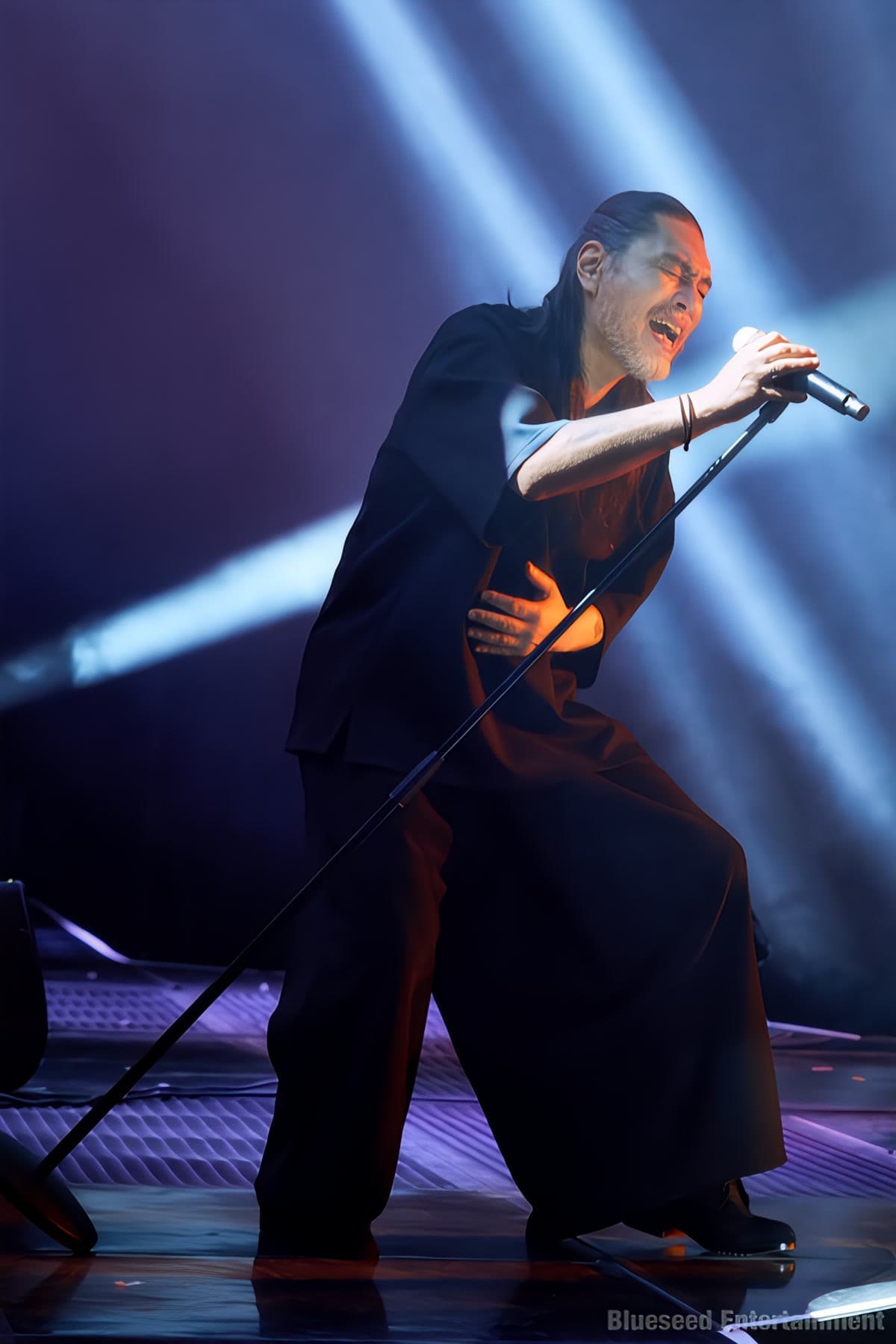
When Im Jae-beom walked off the Olympic Hall stage in Seoul on the night of May 17, 2026, he did not look back. He had just spent three hours singing every note he had left — 20 songs across four decades — and the audience of thousands stood chanting his name long after the lights came up. Nobody was ready for it to be over.
"Today, my 40 years of music comes to a full stop," Im told the crowd that night, his voice steady despite the weight of the words. "The fact that my songs became a source of comfort and strength in your lives — that has been the greatest meaning of all."
The two-night farewell concert — officially titled I Am Im Jae-beom — marked the final chapter of one of Korean rock music most storied careers. Over 40 years, Im Jae-beom became something rare: a singer so synonymous with raw emotion that even his quietest moments left audiences breathless.
The Legend Who Refused to Fade
Im Jae-beom story begins in 1986, when he emerged as the lead vocalist of the heavy metal band Sinawei (시나위). His debut was immediate and electric — a voice that sounded as though it had been forged in something painful, capable of shifting from a whisper to a roar without losing its intimacy. He transitioned to a solo career in 1991, and what followed was a string of songs that would define Korean ballad and rock music for a generation.
Tracks like Bitsang (비상, "Soar"), Gohae (고해, "Confession"), For You (너를 위해), and When This Night Passes (이 밤이 지나면) became permanent fixtures in Korean cultural memory — the songs played at the end of nights, at moments of grief and joy, at every karaoke session where someone dared attempt the impossible. His voice carried the kind of quality that feels unearned by any amount of training: it simply was.
The road was not always smooth. Im faced long stretches of public silence and personal hardship, including the illness and eventual passing of his wife in 2017, whom he had publicly credited as his anchor through the hardest years. In 2022, after a seven-year hiatus, he returned with the album Seven Comma, proving that whatever time had taken, it had not taken his voice.
The Retirement That Stopped Korea
The announcement came on January 4, 2026, quietly and without warning. Im Jae-beom posted a letter in video format to his social media, stating that he would retire from the music industry upon completing his 40th anniversary national tour. Days later, appearing on JTBC Newsroom, he explained his reasoning with the directness that had always defined him: "I want to leave while people are still clapping."
The tour — which had already been running since November 2025 — suddenly took on a different weight. Dates across 12 cities sold out almost immediately. Fans who had seen him perform before rushed to see him one final time; others who had only known his songs from their parents playlists showed up to understand what the fuss had been about for four decades. The answer was never in doubt.
On January 6, two days after the retirement announcement, Im released his final single: Life is a Drama. The song felt like a thesis statement — unhurried, emotionally honest, built around a melody that lingers long after the last note fades.
Three Hours That Felt Like Forty Years
The finale came on May 16 and 17 at Olympic Hall in Seoul Olympic Park — an encore engagement added after fans demanded one last night in the capital. The venue filled with audience members spanning generations: teenagers who had grown up with their parents playlists alongside longtime fans now in their 40s and 50s who had been with Im from the beginning.
He opened with Days I Have Endured (내가 견뎌온 날들), a ballad from the Seven Comma album, its lyrics — "let us meet again someday, somewhere else, let us meet again" — framing the entire evening as a farewell that refused to feel final. From there, he moved through a setlist that felt less curated than remembered: the songs arrived in the order they seemed to demand, each landing differently in the context of an ending.
The emotional peak arrived with Gohae, a song so vocally demanding it has long been called a "karaoke forbidden song" in Korea. As the intro began, Im turned his back to the audience, facing a projected image of the Virgin Mary on the stage screen. After a long instrumental passage, he turned back and unleashed the opening line — "What shall I do" (어찌합니까) — and a sound swept through the crowd that was somewhere between a sigh and a gasp. Sighs rippled through the audience before erupting into thunderous applause.
He did not waver. Not once across 20 songs and nearly three hours did he lean on his backing singers to cover a difficult passage or quietly sidestep a high note. "Every night of this tour," he told the audience, "I sang like someone with no tomorrow."
The Words He Left Behind
Between songs, Im spoke with the measured honesty of someone who had thought carefully about what he wanted to leave behind. "Looking back on 40 years, so many moments flash by," he said. "On every path I walked, you were always there. I am sincerely grateful for the time you walked beside me."
When an audience member called out asking him to keep singing, he shook his head gently. "There will be no more," he said. "But today — please do not be sad. Enjoy this. I will give back everything I have received, and more."
The concert closed with an encore that fans had spent weeks preparing: a flashlight event where the entire arena pulsed in unison, and a singalong that Im himself seemed moved by. He stood at the edge of the stage and watched it with something that looked like gratitude.
In a brief video interview shown near the concert conclusion, Im was asked what he planned to do after the final show. "Check concert reviews," he said with a laugh, "and take out the recycling." The audience laughed and cried at the same time.
"I have always said I want to be a singer who tells the stories of people," Im said during his closing remarks. "I think that dream was fulfilled, at least a little."
What Comes Next
Im Jae-beom, 64, has been clear about his plans. After decades of navigating public life — careful about where he went, unable to walk freely with his daughter without attracting attention — he intends simply to live. "I am returning to ordinary life," he told fans at the concert close. "Not leaving — just stepping into another kind of time. I have not been able to walk openly with my daughter. Now I can."
His music, of course, is not going anywhere. The catalog he built across four decades remains: the songs sung at weddings and funerals, on New Year Eve and late Sunday mornings, by people who have never met each other but who know, instinctively, that the lyrics were written for them.
"I will leave," Im said, "but my music will stay warmly by your side."
Outside Olympic Hall after the final show, fans stayed for nearly an hour, chanting his name into the Seoul night. Some wept openly. One audience member, who had traveled from Seodaemun to attend, reflected: "He was a singer among singers. For someone this good to leave — it is a loss. But he made this choice on his own terms, and I hope he is happy."
That is the thing about Im Jae-beom: even at the end, it was entirely on his own terms. He spent 40 years making music that felt impossibly personal — as though every lyric had been written specifically for whoever happened to be listening — and he closed those 40 years the same way. No shortcuts. No exceptions. Just one more night of everything he had, and then a quiet bow.
How do you feel about this article?
저작권자 © KEnterHub 무단전재 및 재배포 금지
Entertainment Journalist · KEnterHub
Entertainment journalist specializing in K-Pop, K-Drama, and Korean celebrity news. Covers artist comebacks, drama premieres, award shows, and fan culture with in-depth reporting and analysis.
Comments
Please log in to comment