Park Chan-wook, Colony, Hope: Korea's Most Powerful Cannes Yet
Park Chan-wook takes the jury chair as Yeon Sang-ho's Colony and Na Hong-jin's Hope bring Korean cinema's full range to the 79th Festival.
 By Park Chulwon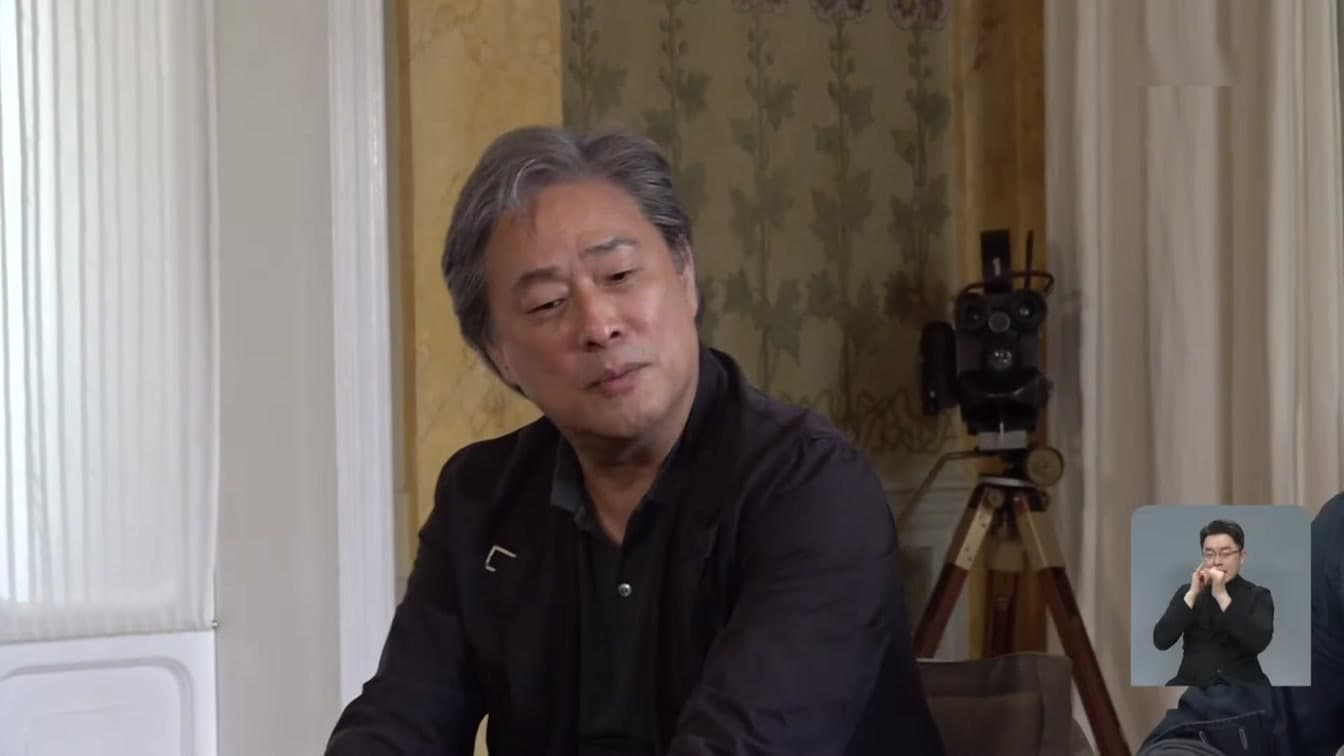
This is not the year Korean cinema arrived at Cannes. That arrival happened gradually — in Im Kwon-taek's Best Director prize in 2002, in Hong Sang-soo's quiet critical prestige, in the decade-long build that made Bong Joon-ho's 2019 Palme d'Or feel, in retrospect, inevitable. What 2026 represents is something different: the year Korean cinema stopped arriving and started presiding. Park Chan-wook — director of Oldboy, The Handmaiden, Decision to Leave — has been named the first-ever South Korean president of the Cannes Film Festival jury, presiding over the 79th edition. Simultaneously, two Korean productions are on the official selection: Na Hong-jin's Hope in competition, and Yeon Sang-ho's Colony in the prestigious Midnight Screenings section. The configuration is unprecedented. And it comes with a cast list that reads like a studio's dream pitch.
The Historic Weight of Park Chan-wook's Jury Presidency
The significance of Park Chan-wook's appointment cannot be measured only in firsts, though the firsts are real. No South Korean director had ever held the jury president position at Cannes in the festival's 79-year history. The role is not ceremonial: the jury president leads deliberations, casts votes, and ultimately signs off on the Palme d'Or and all major awards. It is the most influential position a filmmaker can occupy at the world's most watched film festival — and the optics of a Korean director occupying it in a year two Korean films are competing is not lost on anyone in the industry.
Park's relationship with Cannes is long-standing. His 2022 film Decision to Leave earned him the Best Director prize in competition, adding to a career built on psychological precision and genre subversion that has found consistent recognition at European festivals. His appointment signals something the industry has been circling for years: Korean cinema is no longer a category at Cannes — it is a peer of the European art-house tradition the festival was built to champion.
The appointment also carries practical weight for Korean films in competition. Park, as jury president, cannot vote on Korean films to avoid conflict of interest. But his presence shapes the conversation and the room in ways that extend beyond individual votes. The 79th Cannes jury will evaluate Korean cinema with a Korean director as its chair. That context does not change the films — but it changes what it means when those films are recognized.
Colony and the Evolution of Korean Genre Cinema
Yeon Sang-ho's Colony is his fourth Cannes invitation across 15 years — a consistency that few directors from any country can claim. His debut feature, the animated The King of Pigs (2011), screened in the Directors' Fortnight section. Train to Busan (2016) opened in Midnight Screenings and went on to become one of the defining Korean genre films of the decade, drawing 11.5 million domestic admissions and establishing a global footprint for Korean horror. Peninsula (2020) returned to Midnight Screenings under pandemic-altered conditions. Colony now completes a fourth chapter in this Cannes relationship — this time with a cast assembled at a scale that signals something closer to a studio event film than an art-house curio.
The casting of Jun Ji-hyun alone warrants attention. She has been absent from the big screen for 11 years, since the 2015 heist thriller Assassination — a film that drew 12.7 million Korean admissions, the seventh-highest in Korean cinema history at the time. Her return in a Yeon Sang-ho genre film, released through Showbox with a Cannes world premiere, is not a quiet comeback. The film also stars Koo Kyo-hwan — whose work in D.P. and Decision to Leave established him as one of Korean cinema's most versatile character actors — alongside Ji Chang-wook, Shin Hyun-been, Kim Shin-rok, and Go Soo.
The plot centers on a biotech conference that erupts when an unknown virus rapidly mutates and overruns the facility, forcing authorities to quarantine the building and trap survivors inside. Yeon's signature concern — what happens to human communities under apocalyptic biological stress — runs directly through the premise. But Colony suggests an evolution: the infected, according to early descriptions, begin to evolve in ways that imply not just contamination but speciation. The horror becomes ontological. A genre director known for his social anxiety is, reportedly, asking bigger questions this time.
Na Hong-jin in Competition — and What Two Korean Films Mean
The presence of Na Hong-jin's Hope in the official competition section is a different kind of statement. Na's filmography — The Chaser (2008), The Yellow Sea (2010), The Wailing (2016) — is built on a decade-long reputation for violence, dread, and genre mastery that Cannes has long admired from a distance. A competition placement is the festival's strongest endorsement, the slot where the Palme d'Or is contested.
Having two Korean productions on the official Cannes selection — one in competition, one in Midnight Screenings — in the same year is not unprecedented, but it is uncommon. Having both of those films arrive with a Korean director presiding over the jury is genuinely new. It creates a configuration that Korean cinema has not previously occupied at the world's most watched film festival.
The context matters beyond prestige. Cannes success functions as an industry signal, shaping acquisition decisions, distribution deals, and festival placements downstream. A Cannes-premiered Korean film arrives in foreign markets with a credential that changes buyer conversations. Colony's Showbox release in Korea on May 21 will launch with that credential already in place, regardless of what prizes the official jury awards — or withholds.
What 2026 Means for the Next Decade
The arc from Bong Joon-ho's Palme d'Or in 2019 to Park Chan-wook's jury presidency in 2026 covers seven years. In that span, Korean cinema went from the subject of a global conversation to one of its architects. The industry question is no longer whether Korean films can win at Cannes — Parasite settled that. The question now is whether Korean filmmakers will shape how Cannes thinks about cinema broadly, not just as a national category.
Park Chan-wook sitting in the jury chair is one answer. His presence signals a Cannes that views Korean cinema not as an exotic regional tradition but as a central tradition — one that has earned the authority to evaluate global filmmaking on its own terms. For directors like Yeon Sang-ho and Na Hong-jin, that context is both a responsibility and a runway. The films they've brought to Cannes 2026 will be seen in a festival where the most senior judge is someone who understands, from the inside, what Korean genre cinema is trying to do.
The domestic release of Colony on May 21 gives Korean audiences their own timeline for this reckoning. Jun Ji-hyun's return, Yeon Sang-ho's evolution, a cast built for scale — all of it arrives with the weight of Cannes already behind it. The question is whether the film can carry that weight in a market where genre expectations are as high as any on the planet. Given the decade-long build to this moment, the answer will say something about Korean cinema's next ten years, not just its current season.
How do you feel about this article?
저작권자 © KEnterHub 무단전재 및 재배포 금지
Entertainment Journalist · KEnterHub
Entertainment journalist focused on Korean music, film, and the global K-Wave. Reports on industry trends, celebrity profiles, and the intersection of Korean pop culture and international audiences.
Comments
Please log in to comment