Park Hyoshin's Phantom: Ten Years of Korea's Most Electrifying Musical Role
 By Park Chulwon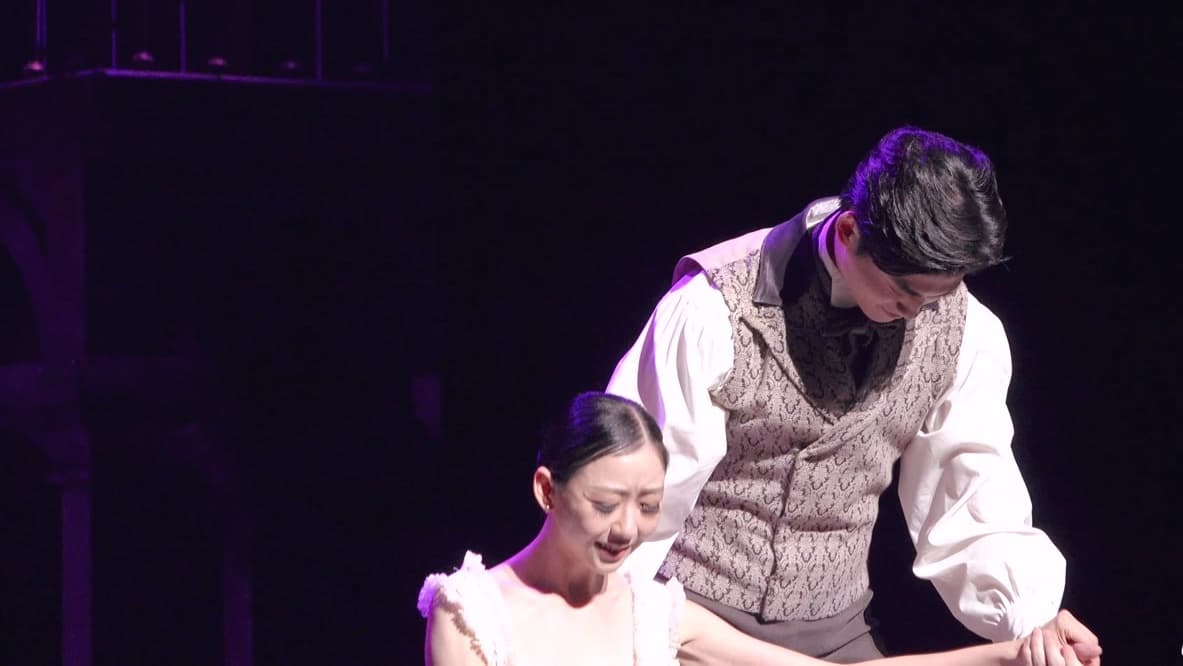
Park Hyoshin is returning as Erik. For Korean musical theater, few announcements carry more anticipatory weight than that single fact. The casting of Park Hyoshin in the 10th anniversary production of Phantom—the EMK Musical Company adaptation that has become one of Korea's most commercially and artistically significant stage properties—confirms what many have suspected since the show announced its grand finale season: this is being built as a definitive run, a summation of everything the production and its most iconic performer have achieved over a decade together.
The Phantom That Korea Made Its Own
Phantom is not Andrew Lloyd Webber's Phantom of the Opera, though it draws from the same source material: Gaston Leroux's 1910 novel about the disfigured musical genius who haunts the Paris Opera House. EMK's production, staged by director Robert Jess Roth and built with a score by Maury Yeston and a book by Arthur Kopit, occupies a different dramatic register—more psychologically grounded, less spectacle-driven, more invested in the inner life of its central figure, Erik. It has always been a vehicle for the kind of singing that stops rooms.
Park Hyoshin became inseparable from that vehicle after the production's Korean premiere in 2015. His portrayal of Erik—a man of devastating vocal power trapped behind a mask and a mythology—drew on exactly the qualities that have defined his recording career: a tenor voice of uncommon range and emotional transparency, deployed with a technique that sounds effortless precisely because of how much effort has gone into it. His Erik is not primarily a monster or a villain. He is a genius who has been made to feel monstrous, and Park Hyoshin's singing communicates that distinction at every moment.
The result was an audience response that Korean musical theater had not quite seen before. The show's ticket demand at launch was intense; Park Hyoshin's scheduled dates sold disproportionately to the multi-cast run as a whole. In a theatrical culture that already supports strong fandom around individual performers, Phantom starring Park Hyoshin became something closer to a concert event than a standard repertory production—while never losing the dramatic integrity that makes the role worth performing.
Ten Years, Five Seasons, One Grand Finale
EMK has described this production as a grand finale, meaning the 2025 season is being framed not as one more installment but as a culminating statement. The casting reflects that ambition: alongside Park Hyoshin, the production announces Kai of EXO as an alternate lead—a selection that speaks to K-pop's ongoing crossover relationship with musical theater, and to the degree to which a musical as vocally demanding as Phantom now draws consideration of idol artists trained in both performance disciplines.
Kai's inclusion is significant for reasons beyond marketability. EXO's primary visual and main dancer has appeared in musical productions before, and his approach to stage performance—physical, detail-oriented, committed to character over spectacle—suggests a genuine suitability for a role that requires presence as much as voice. Whether his interpretation will stand alongside Park Hyoshin's as a distinct artistic statement is a question the season is set to answer. That both performances are being presented in the same production run, to audiences who have the option of attending both, transforms the 10th anniversary season into a comparative event as well as a celebratory one.
The production is staged at Sejong Cultural Center's Grand Theater in Seoul, one of Korea's largest and most acoustically demanding venues. Filling that space with the title role's vocal requirements is, in itself, a measure of what the production is asking of its lead performers. Park Hyoshin has done it four times. His fifth time arrives as a closing argument.
What Makes Park Hyoshin's Erik Definitive
To understand why Park Hyoshin's return matters, it helps to understand what makes his Erik distinctive in comparison to other productions of the same material. The character of Erik is typically played as either a romantic obsessive or a dangerous recluse, depending on which dramatic register a production favors. Park Hyoshin's interpretation has consistently occupied a third position: a man of complete artistic sovereignty who has been isolated from the world that his talent should command, and who cannot fully separate his love from his rage because he has never been shown that the two can coexist.
That reading works only if the singing supports it, because Phantom's score gives Erik the emotional core of every major musical moment in the show. Park Hyoshin's voice has the range to move through those moments without resorting to emotional shorthand—the notes that should sound devastating do, and the ones that should sound tender do that too, and the transition between those registers happens within phrases rather than between them. It is a specific kind of vocal intelligence that Yeston's score demands and that very few singers in the world deliver as consistently.
The tenth year of a production is, in theater, when you find out what was truly being built. Phantom's return as a grand finale is a bet that the answer involves Park Hyoshin's voice, the role that has defined a chapter of Korean musical theater, and an audience that has followed both for a decade. In the months ahead, that bet will be tested in front of full houses at Sejong Cultural Center. On the available evidence, it is not a difficult bet to make.
How do you feel about this article?
저작권자 © KEnterHub 무단전재 및 재배포 금지
Entertainment Journalist · KEnterHub
Entertainment journalist focused on Korean music, film, and the global K-Wave. Reports on industry trends, celebrity profiles, and the intersection of Korean pop culture and international audiences.
Comments
Please log in to comment