Park Ji-sung Reopens Korea's 2002 World Cup Diary
 By Jang Hojin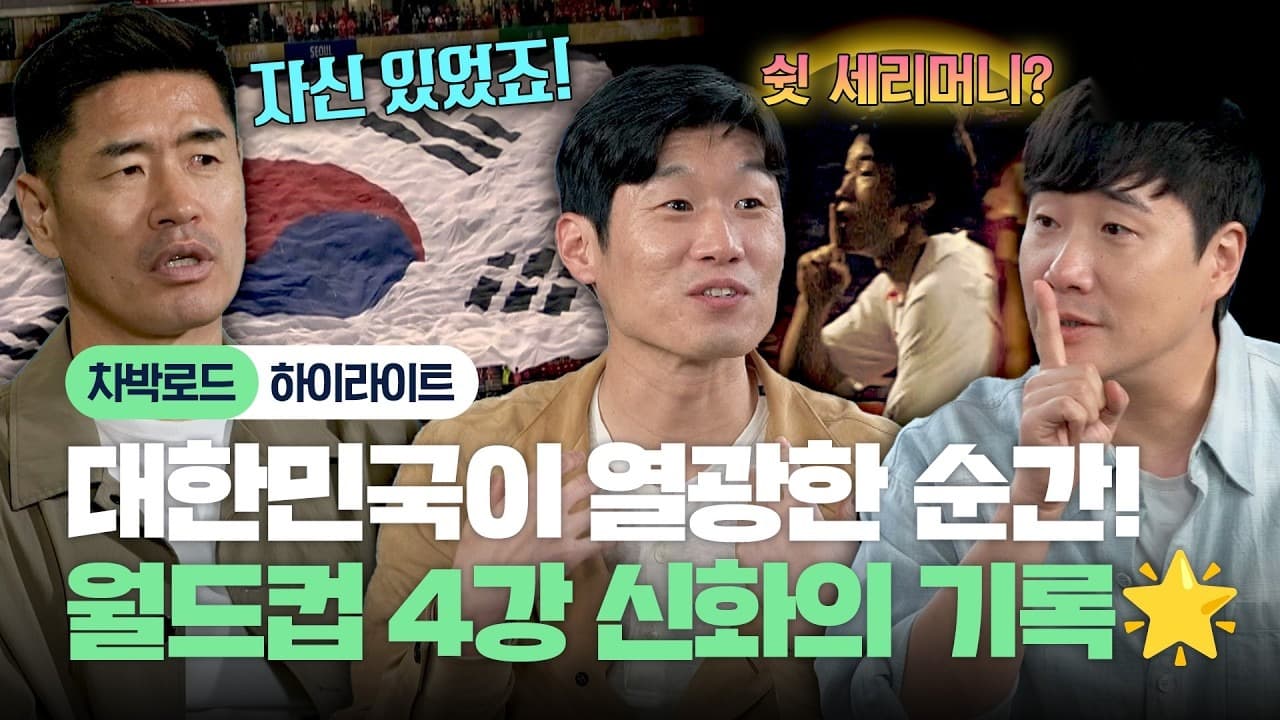
JTBC Entertainment has turned one of Korean sports culture's most familiar memories into fresh television conversation, releasing a new highlight from Car Camping Road in which Park Ji-sung and fellow football figures look back on the 2002 FIFA World Cup with the distance of time, humor, and a surprising amount of tactical detail. Featured on JTBC Entertainment's official YouTube channel, the video revisits the national team's first win on the World Cup stage, the defining group-stage run, the Portugal goal that made Park a household name, and the Italy match that pushed Korea's summer of football into myth.
The clip is not packaged like a conventional sports documentary. It works as a variety-show memory session, using quick reactions, laughter, and studio-style pacing to let retired players reframe moments that many viewers first experienced as national drama. That format gives the highlight an entertainment angle: rather than simply replaying famous goals, it asks what the players felt inside the locker room, how they interpreted opponents in real time, and why some celebrations have aged into stories that are still funny more than two decades later.
JTBC Turns A National Sports Memory Into Variety Storytelling
The highlight centers on the cast's recollection of Korea's breakthrough at the 2002 World Cup, especially the opening match against Poland. In the discussion, the players describe the unusual emotional conditions of a home tournament. Instead of feeling only pressure, they suggest that playing in Korea reduced the distance between the squad and the public. The stadiums, the crowd energy, and the familiarity of the environment helped create a confidence that grew as the tournament moved forward.
One of the strongest points in the video is the contrast between Korea's expectations before the tournament and the way the team read Poland once the game began. The speakers recall Poland as a respected European side that had arrived with a serious reputation, but they also explain that Korea began to sense opportunities during the match. Hwang Sun-hong's opening goal, assisted by Lee Eul-yong's cross, is treated as a psychological shift rather than only a scoreline event. Yoo Sang-chul's second goal then becomes the proof that the first win was not a passing accident but the start of a tournament identity.
For international viewers who know Park primarily through Manchester United or Premier League history, this JTBC highlight also restores the domestic emotional scale of 2002. Korea had never won a World Cup match before that tournament. The players' memory of the locker room after beating Poland is therefore presented as something close to a release. Park and the cast describe a room that felt more like a celebration than an ordinary post-match space, with the first three points carrying historic weight before the team even knew how far the run would go.
Park Ji-sung Reconsiders The Goal That Defined His Youth
The highlight naturally spends considerable time on Park's goal against Portugal, one of the most replayed moments in Korean football history. The discussion emphasizes how instinctive the sequence felt from the player's perspective. The ball arrived quickly, the defender closed down the space, and Park controlled the moment with a first touch before finishing through the goalkeeper. In the video, the cast treats the goal with respect, but the tone remains loose enough for jokes about posture, timing, and the slightly awkward body shape that can be seen in the replay.
That balance is what makes the YouTube clip useful as entertainment news rather than just sports nostalgia. Park does not speak about the goal as a frozen heroic image. He reopens it as a young player's reaction in a high-speed moment, shaped by instinct rather than a pre-planned move. The result is a more human version of a famous highlight: the action still matters, but the memory becomes more vivid because the player can laugh at how it looked and explain why it happened so fast.
The clip also revisits Park's celebration after the Portugal goal, when he ran toward Guus Hiddink. The cast frames it as a piece of accidental theatre. Park recalls seeing Hiddink on the bench and moving toward him, while the conversation jokes about how the bench positioning created the scene. The highlight also notes the gesture Park made toward the crowd, which he now describes with self-deprecating humor because it resembled a celebration more commonly associated with away games. That willingness to undercut his own iconic image gives the segment a relaxed charm and keeps the tone aligned with JTBC's variety programming.
The Italy Match Adds Tension Beyond The Famous Golden Goal
The second half of the highlight widens the conversation to the Italy match, where Korea's tournament reached another emotional peak. The cast stresses that Italy felt different from the previous opponents. The memory is not presented as simple triumphalism; instead, the speakers acknowledge the physical strength and quality of the Italian side, including the feeling that Korea had entered a more demanding level of competition. That admission gives the later comeback more dramatic value because the players describe the pressure as real and sustained.
Park's recollection of the late equalizer sequence is especially notable because it shifts attention away from the final golden goal and toward the build-up of belief that made it possible. The conversation describes a loose ball, a left-footed strike, and the sense that even if the shot did not go in, a possible handball might have produced a penalty claim. The memory is messy in the way live sport often is: not a perfectly scripted moment, but a chain of pressure, reaction, and decision-making compressed into seconds.
That kind of detail is where the JTBC clip has its strongest archival value. Viewers already know the broad story: Korea beat Italy, Ahn Jung-hwan scored the golden goal, and the country advanced to the quarterfinals. What the program adds is the players' internal rhythm. They talk about whether they had mentally accepted defeat, how difficult it is for an active player to "settle" emotionally while still running, and how each match made the team feel stronger. The result is a memory piece that works for fans who watched in 2002 and younger viewers encountering the story through short-form clips.
Why The Clip Works For A 2026 Audience
The timing of the YouTube release also matters. In 2026, Korean entertainment content often blends sports, celebrity, travel, and talk formats rather than keeping them in separate lanes. Car Camping Road uses that hybrid language. A football legend can become a storyteller, a tactical memory can become a comic exchange, and a national event can be reframed through the chemistry of a television cast. JTBC's official channel gives the segment a second life beyond broadcast, allowing it to circulate among fans who may not follow full episodes but will watch a focused highlight around Park Ji-sung and the 2002 World Cup.
For Park, the clip reinforces his position as more than a retired athlete. He remains a recognizable Korean public figure whose stories can anchor entertainment programming, especially when those stories connect personal humility with national memory. The video also shows why former players continue to be valuable in variety and talk-show formats: they can translate historic matches into human-scale anecdotes without draining the emotion from the original event.
The broader appeal lies in how the highlight refuses to flatten 2002 into a single heroic image. It includes confidence before Poland, regret after missed chances, laughter around celebrations, respect for Italy's quality, and gratitude for a tournament that changed the players' lives. Park's final reflections in the segment point to the World Cup as a stage that helped him grow and made him feel the power of football more deeply. That note gives the clip its emotional landing. It is not merely a replay of old goals; it is a conversation about how public memory, private pressure, and television storytelling can keep a defining Korean sports moment alive for a new audience.
How do you feel about this article?
저작권자 © KEnterHub 무단전재 및 재배포 금지
Entertainment Journalist · KEnterHub
Entertainment journalist specializing in K-Pop, K-Drama, and Korean celebrity news. Covers artist comebacks, drama premieres, award shows, and fan culture with in-depth reporting and analysis.
Comments
Please log in to comment