Park Shin-yang’s TV Tears Revealed a 30-Year Friendship
The actor who stepped away from Korean drama a decade ago opened up on ‘Pyeonstar’ about illness, painting, and a Russian friend he once saved from drowning
 By Park Chulwon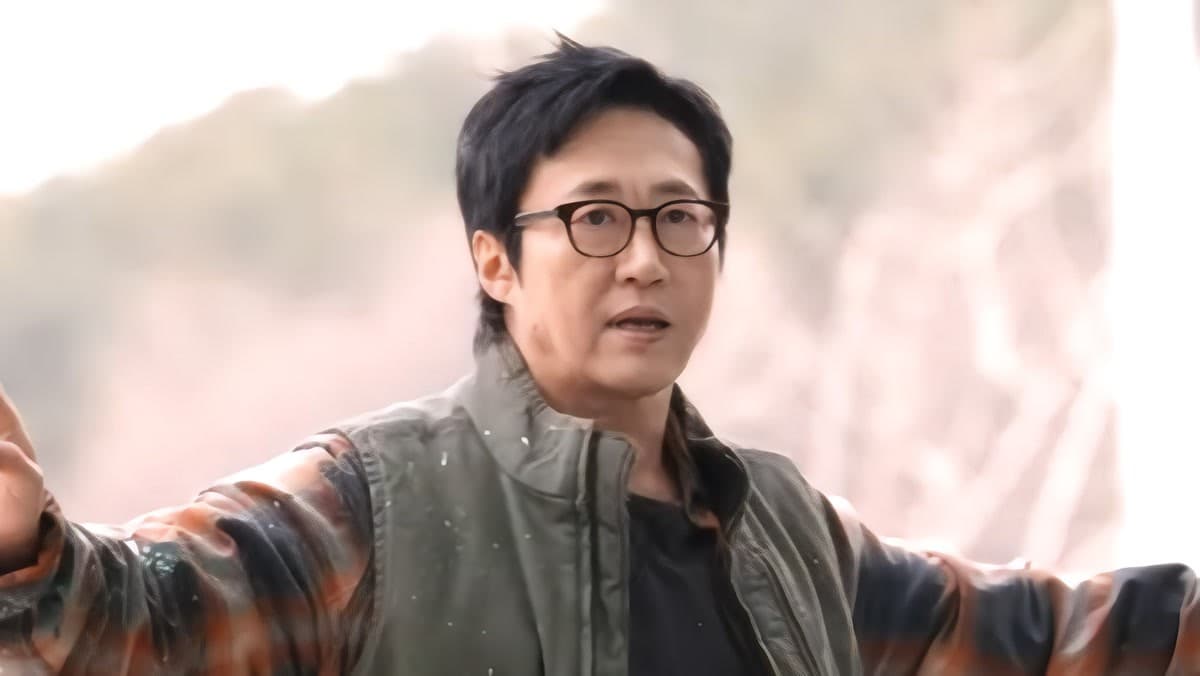
In March 2026, Park Shin-yang sat across a cooking table on KBS2's variety program Pyeonstar (신상출시 편스토랑) and began talking about a friend. Then he stopped, looked down, and cried. "I'm going to lose it if I say this," he told the cast. "We have to meet again." He was talking about a man named Kirill Kero — a Russian actor he had met thirty years earlier, on the other side of the world — and the moment crystallized something that viewers had sensed but never fully understood about one of Korean television's most celebrated actors: the silence of the last decade had a reason, and the reason was deeper than anyone knew.
Park Shin-yang rose to prominence in the early 2000s, when his role as the romantically troubled lawyer Han Ki-ju in the 2004 KBS2 drama Paris Lover made him one of the defining faces of Korean television. His image was intensity, precision, and almost theatrical control — the kind of actor who seemed constitutionally incapable of doing anything carelessly. When he stepped back from acting, the industry noticed, but the explanation offered was vague: health issues. What the March 2026 episode of Pyeonstar revealed was the full shape of that absence, and what filled it.
From Top Actor to Container Studio — A 13-Year Reinvention
The health issues were serious. Park disclosed on the program that he underwent emergency surgery for a herniated disc — an injury that began accumulating during the filming of Paris Lover and became critical during the production of Neighborhood Lawyer Jo Deul-ho 2. The surgery did not end his problems. He subsequently developed hyperthyroidism, a condition that compounds fatigue and physical vulnerability, and found himself unable to return to the set in any meaningful capacity. The body that had sustained twenty years of intense dramatic performance had reached its limit.
What came next was not a planned reinvention so much as a survival mechanism. Park moved to a rural village in Andong, a city in North Gyeongsang Province best known for its traditional Korean culture — hahoe village, mask dances, and a landscape that changes slowly across centuries. He set up a five-pyeong (approximately 16.5 square meters) container unit as both studio and, for a considerable stretch of time, living quarters. He started painting.
"I missed my friend intensely," he said on the show, "and I wanted to understand what that longing was. So I started drawing." Over thirteen years, he completed approximately 200 works. The body of paintings became substantial enough that he has now confirmed an upcoming exhibition at the Sejong Center for the Performing Arts in Seoul — one of the country's premier cultural venues — having selected the strongest pieces from the accumulated years of work. When co-host Boom asked on an earlier broadcast whether he had become destitute during his years in the container, Park answered with characteristic directness: he lived on pills when food seemed unnecessary, wore ski clothes inside the container in winter, and found the simplification of his life clarifying rather than degrading.
The Pyeonstar segment showed Park cooking for the cast — a Russian-influenced spread that included traditional kebabs, Korean bulgogi, and wild garlic doenjang-jjigae (fermented soybean paste stew). Other cast members described his cooking style as "a man's cooking" and "unmeasured and bold," watching him move through the kitchen without timers or measuring spoons. It was a window into how he lives now: deliberately, according to instinct, without the framework that structured his earlier life.
The Video Message That Broke Him
At his Andong exhibition space, Park introduced the cast to a portrait he had painted of Kirill Kero — a Russian actor he met during a study trip to Moscow early in his career. The painting depicted a man with specific attention to expression, the kind of portrait that takes years of practice and a great deal of feeling to get right. Then a video played.
In it, Kirill delivered a message in Russian that was subtitled for the broadcast. He recalled a specific night in Moscow when he had fallen into the Neva River and was unable to get out. Park Shin-yang, a young Korean actor in a foreign country with no particular obligation to anyone around him, pulled him to safety. Kirill also remembered something smaller: a Korean fairy tale that Park had taught him, years ago, which he said he still remembered. "I experienced a friendship in Korea that I'd never felt in Russia," Park said, in Russian, in his reply. And then he cried.
The scene resonated partly because of what it revealed about where Park had been spending his attention for the past decade. The portrait of Kirill was not a commissioned work or a career exercise — it was the documentation of a memory that evidently mattered enough to paint. The show's audience, accustomed to celebrity appearances built around image management, found themselves watching something that looked genuinely unscripted: an actor missing a friend, in front of cameras, without any apparent effort to manage how that looked.
What the Return Looks Like
Park has not announced a return to acting. The Sejong Center exhibition will be his most public appearance in years, presenting work accumulated over a decade and a half to an audience that remembers him primarily as a dramatic lead. Whether the exhibition represents a step back toward the entertainment industry or a formal declaration of transition is unclear — Park has not framed it either way.
What Pyeonstar offered was a portrait of an actor who made a choice under pressure and then lived inside that choice long enough for it to become genuinely his own. The container in Andong is not a temporary retreat. The 200 paintings are not a hobby. And the tears over Kirill Kero are not performance — or if they are, they are the most transparent kind, the kind that comes from having nothing left to protect.
Korean television's most celebrated recent comeback stories have tended to be returns: actors reappearing in dramas after hiatuses, groups reforming, stars reclaiming the territory they left. Park Shin-yang's story is something else. He did not leave Korean entertainment to come back to it. He left it to find out what he actually needed — and what he found, apparently, was a container, a canvas, and a Russian actor who still remembers a story about drowning.
How do you feel about this article?
저작권자 © KEnterHub 무단전재 및 재배포 금지
Entertainment Journalist · KEnterHub
Entertainment journalist focused on Korean music, film, and the global K-Wave. Reports on industry trends, celebrity profiles, and the intersection of Korean pop culture and international audiences.
Comments
Please log in to comment