RIIZE: Three Countries, Five Days — K-Pop New Festival Kings
How SM Entertainment's youngest boy group turned a five-day festival sprint into a masterclass in global expansion
 By Jang Hojin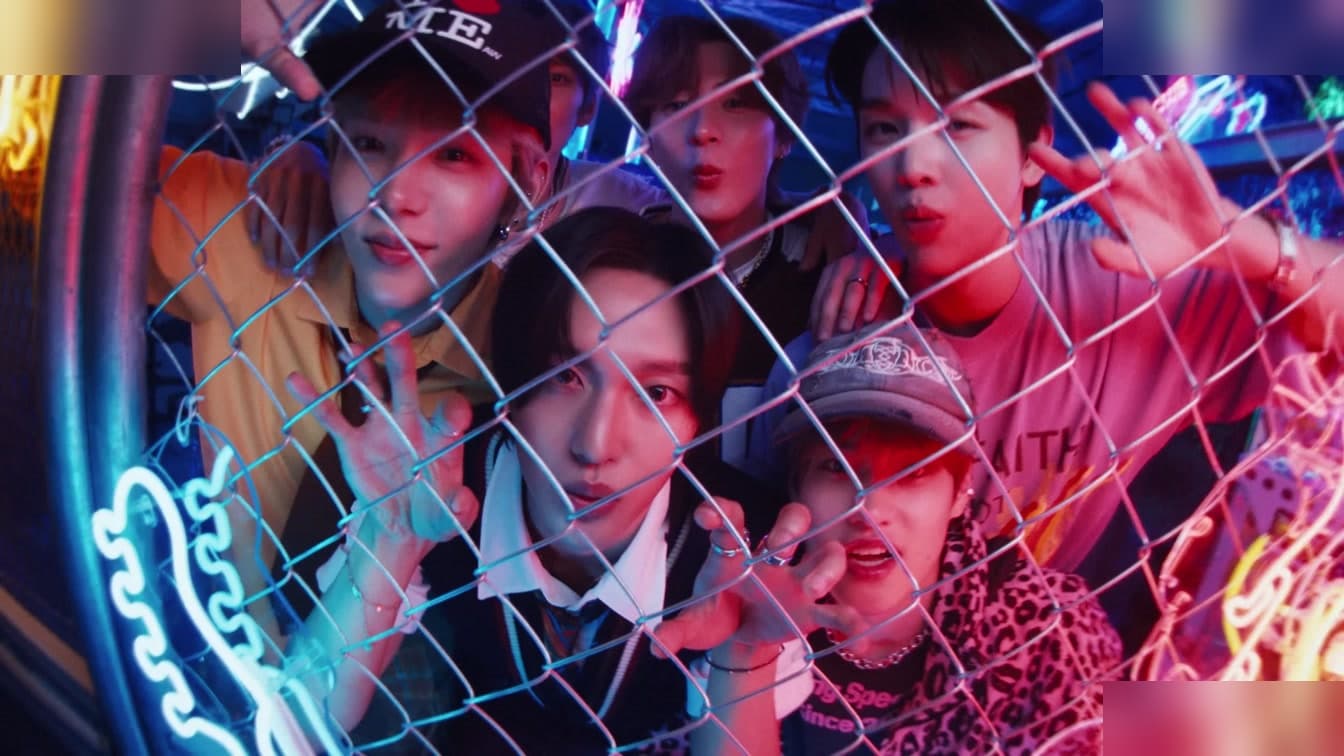
In five days across three countries, RIIZE demonstrated exactly why SM Entertainment's youngest boy group has quietly become one of K-pop's most formidable forces on the global live stage. From a 20,000-seat arena in Yokohama to a rain-drenched university courtyard in Seoul to the water-soaked streets of Bangkok's Songkran festival — the group covered Japan, Korea, and Thailand in a sprint that left fans and industry observers paying close attention to what this kind of schedule actually signals.
This was not a world tour. It was something more telling: a deliberate, festival-first expansion strategy that positions RIIZE not just as a K-pop act releasing music in multiple markets, but as a live entertainment brand capable of headlining major multi-act events far outside their home turf.
Five Days, Three Countries: What Actually Happened
The run began April 10 and 11 at K-Arena Yokohama, Japan's largest dedicated music venue with a capacity of over 20,000, where RIIZE performed as part of TV Asahi's flagship music festival "The Performance." They filled their set with Japan-specific releases — "Lucky," "All of You," and "Flashlight" — alongside a collaboration with Japanese group THE RAMPAGE on "Boom Boom Bass," a moment that drew enthusiastic coverage from both acts' fan communities. Performing Japan-exclusive singles at a Japanese festival is not an accident; it signals that RIIZE's team treats each market as distinct, with its own repertoire and its own relationship to the group.
Back in Seoul on April 12, RIIZE headlined the Lovesome Festival at Yonsei University's iconic outdoor stage — one of Korea's most culturally resonant spring festival venues. The set delivered tracks like "Get A Guitar," "Love 119," and "Fly Up" with live session backing, and closed with an encore of "Bag Bad Back" that fans had not anticipated. That unscripted moment — an encore born from crowd demand rather than a preset plan — captured something harder to manufacture than a setlist: genuine mutual energy between performers and audience. RIIZE left as headliners, and the audience left with a story.
Two days later, the group flew to Bangkok for the K2O Songkran Music Festival at S2O Land on Ratchada Road. Songkran, Thailand's traditional New Year water festival, is one of Southeast Asia's largest annual celebrations, and its K-pop edition has grown into a marquee event for the region's fandom community. RIIZE delivered six tracks — "Memories," "Siren," "Talk Saxy," "Impossible," "9 Days," and "Show Me Love" — for an audience that had waited months for exactly this kind of direct K-pop engagement during the country's most festive week.
Why This Is More Than a Busy Schedule
The festival circuit model represents a meaningfully different international strategy from what K-pop acts traditionally pursue. Most groups, particularly those under large agencies, follow a solo concert tour structure: book arenas, sell tickets to an existing fanbase, move city to city. That model works reliably for established names with deep international followings. For groups still building their global identity, it carries risk — ticket sales in newer markets are harder to predict, and the overhead of a self-produced tour is considerable.
Festivals solve both problems at once. They guarantee a built-in audience of people who are already excited and already present — even if those attendees came primarily for another act. A strong RIIZE set at Songkran becomes word-of-mouth for everyone in attendance, not just fans who specifically searched them out, but curious newcomers encountering them live for the first time. That is audience-building through performance quality — arguably the most efficient form of it available to a group in RIIZE's stage of development.
What stands out is how RIIZE has been positioned differently at each event. At Lovesome, they headlined. At Songkran, they performed as the marquee K-pop draw. At K-Arena Yokohama, they shared the stage with a Japanese act in a collaboration moment. Each context sends a distinct message to its local audience: in Korea, they are already headline-caliber; in Japan, they are an integrated part of the local scene; in Thailand, they are the K-pop act fans travel to Songkran to see. One group, three different signals, all within five days.
The Anime Play: What "KILL SHOT" Reveals About RIIZE's Japan Strategy
On April 19, just days after their Japan festival appearances, RIIZE releases "KILL SHOT" — the ending theme for the Japanese TV anime "Kill Blue" (キルアオ). The timing is deliberate. Coming immediately after their K-Arena performance and a placement on Fuji TV's new music show "STAR," the anime tie-in is a calculated move into one of Japan's most powerful cultural distribution pipelines.
Anime opening and ending themes create a form of exposure that is genuinely difficult to replicate through other channels. Unlike streaming numbers or chart positions, which can be driven by organized fan activity, an anime tie-in creates passive discovery — viewers who may have no prior awareness of K-pop encounter a song week after week as part of a series they already love. If the song resonates, they find the artist. RIIZE's placement on "Kill Blue" is a direct bet on that discovery chain.
The group already has two Japanese singles under their belt — "Lucky" (September 2024) and "All of You" (February 2026) — demonstrating that SM Entertainment is treating Japan as a long-term market development project rather than a one-off push. Adding an anime tie-in accelerates that trajectory significantly. Groups like BTS and EXO spent years building Japanese presence before reaching similar levels of cultural integration; the fact that RIIZE is pursuing this approach less than three years into their career speaks to how deliberately SM is compressing that timeline.
What Comes Next
The summer brings the BOF headliner slot in June 2026 — the 10th anniversary edition of the Busan One Asia Festival, which has grown from a regional K-pop showcase into one of the most significant K-content events in Asia. For RIIZE, headlining BOF at this stage represents a meaningful milestone: confirmation that their live status in their home market has cleared the same bar their streaming numbers suggested some time ago.
Beyond BOF, SM Entertainment has not made public announcements about a second full album cycle or a dedicated world tour, though the pace of international activity in spring 2026 suggests planning is underway for the second half of the year. What the April festival blitz leaves behind, more than anything, is a statement of intent. RIIZE is not waiting for a breakthrough moment to justify international live expansion. They are building the audience one performance at a time — across three countries, in five days, at the height of spring.
How do you feel about this article?
저작권자 © KEnterHub 무단전재 및 재배포 금지
Entertainment Journalist · KEnterHub
Entertainment journalist specializing in K-Pop, K-Drama, and Korean celebrity news. Covers artist comebacks, drama premieres, award shows, and fan culture with in-depth reporting and analysis.
Comments
Please log in to comment