RIIZE’s II Makes Fan Singalongs the Comeback Strategy
The second mini album points beyond teasers and into live participation, where RIIZE’s next growth test will happen.
 By Park Chulwon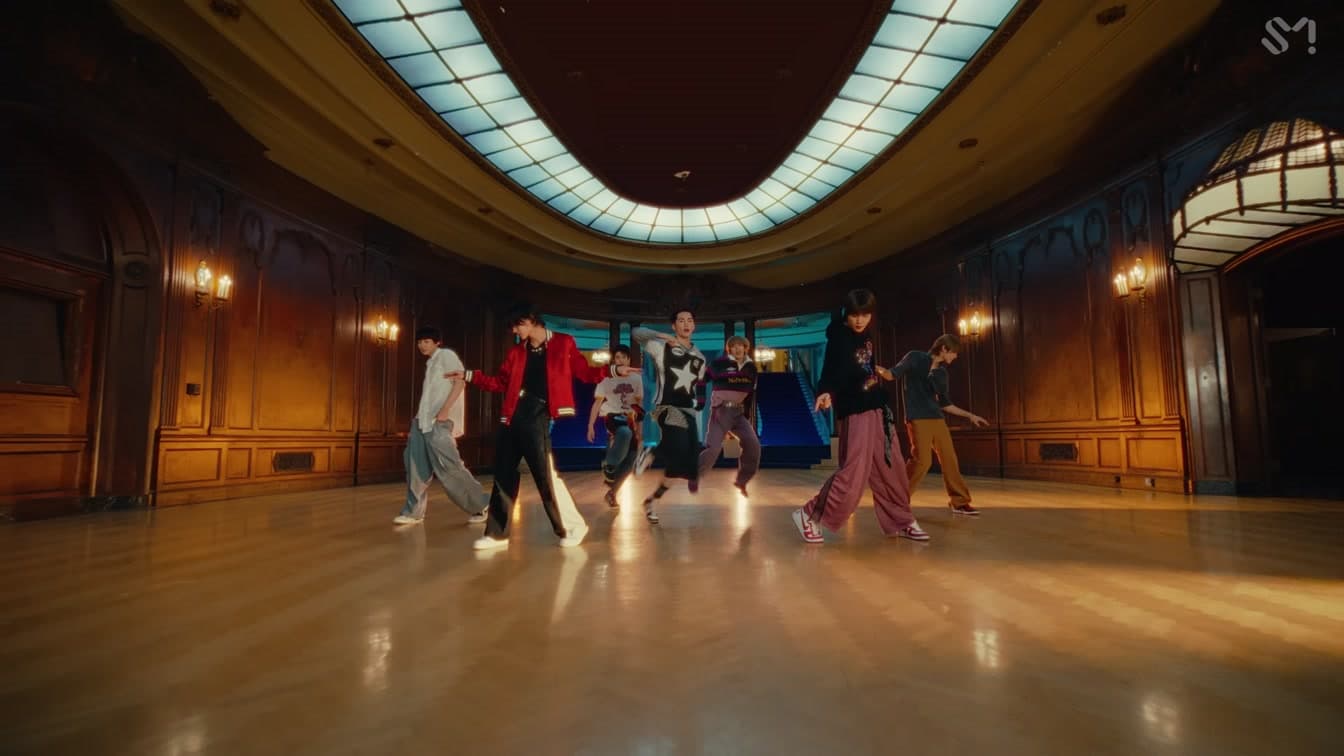
RIIZE’s next comeback is being framed as something fans can sing back. The group will release its second mini album, II, on June 15, 2026 at 6 p.m. KST, with six tracks led by “Do your dance.” The immediate news cycle has focused on airport photos, teaser clips, and individual B-side previews. The deeper story is that SM Entertainment is positioning the album around participation: songs built not only to stream, but to travel through concerts, festivals, and fan-chorus moments.
This article analyzes how RIIZE uses II to turn singalong energy into a strategic asset for its next phase. That angle matters because RIIZE is no longer simply a fast-rising rookie act. The group has already carried a world-tour brand, generated strong festival attention, and built an audience that responds loudly in live settings. For a fifth-generation group moving from momentum to durability, the question is not whether fans are watching. It is whether the music gives those fans something repeatable to perform together.
Why Singalong Became the Core Signal
The strongest clue is “In a Loop.” Korean coverage describes the final track on II as a pop anthem with an easy-to-follow chorus, forceful drums, bright synths, and a message about trust that remains stable through repetitive seasons of life. That combination is unusually direct. It tells listeners where the hook is supposed to land and how the song might function beyond headphones.
That matters because RIIZE’s recent live context already trained the audience for call-and-response behavior. Reports around the comeback mention the group’s first world tour, RIIZING LOUD, as well as festival appearances at Austin City Limits and Lollapalooza South America stops in Argentina, Chile, and Brazil. Those references are not casual resume padding. They explain why a fan-chorus track would make sense now. A group that has seen international audiences sing back has reason to build a release that formalizes that response.
The timing also helps. II arrives in a dense June comeback field, where attention is split across major idol releases, reunions, and seasonal singles. In that environment, a track that fans can chant, clip, and carry into live venues has promotional value beyond its chart line. It gives the fandom a behavior. That is often more durable than a teaser image.
The Six-Track Design of II
But the singalong strategy is only persuasive if the album around it has enough range. The confirmed track list gives RIIZE six pieces to work with: “Do your dance,” “SOAR,” “D-D-Done,” “Overdrive,” “Like a Bomb,” and “In a Loop.” That structure suggests a mini album designed as a compact performance map rather than a loose bundle of songs. Each previewed track has been framed with a different emotional or rhythmic purpose.
“Like a Bomb” has been introduced as a dance track built on rhythmic beats, a funky groove, and layered synth sounds, using the image of a lit fuse to express the rush of love. “Overdrive,” previewed through the II trailer “Born Free,” is described as an R&B hip-hop track driven by heavy bass, beat switches, and vocal contrast. “In a Loop” then closes the sequence with a more communal anthem shape. The selection is not random. It moves from movement, to acceleration, to collective release.
The most important number is not just six. It is what six allows. A mini album can support a title track, several short-form moments, and at least one live-audience anchor without asking every song to do the same job. RIIZE’s rollout appears to understand that. It gives the album a center, then builds secondary routes for different fan behaviors.
From Rookie Momentum to Live-Market Durability
The broader context is RIIZE’s transition from breakout visibility to live-market durability. Many newer K-pop groups can generate online heat, but fewer can turn that heat into a repeatable concert environment. Singalong music is useful because it creates proof inside the venue. When thousands of people know where to enter a chorus, the show starts to feel larger than the stage production.
RIIZE’s existing profile makes that especially relevant. The group’s public identity has often been tied to “emotional pop,” performance freshness, and a fan relationship built around growth. II pushes that identity toward scale. “Overdrive” emphasizes acceleration and self-definition. “Like a Bomb” turns romantic feeling into kinetic ignition. “In a Loop” then converts emotional stability into a communal refrain. These are different moods, but they all point toward motion.
That is the commercial logic underneath the creative language. A song that audiences can sing at festivals also works in fancams, short clips, encore moments, and tour recaps. It is portable. For RIIZE, portability matters because the group is being discussed in both domestic comeback terms and international festival terms. The album has to satisfy Korean release-week attention while also preparing material that can survive louder, less controlled global stages.
For RIIZE, the next step is not simply making fans listen; it is giving them a part in the sound.
How the B-Sides Support the Live Thesis
The B-side previews matter because they distribute the album’s functions across several kinds of performance. “Overdrive” is useful for image-making: a heavier track, connected to the “Born Free” trailer, can make the comeback feel cinematic before the full music is available. “Like a Bomb” is useful for emotional immediacy: the fuse metaphor gives the song a simple visual and lyrical frame that fans can understand quickly. “In a Loop” is useful for audience participation: its reported chorus design and bright instrumental palette make it the clearest candidate for collective singing.
That division of labor is one reason the rollout has felt unusually legible. Some comebacks ask every teaser to sell the title track alone. RIIZE’s campaign instead gives each preview a job. The result is a mini album that can be discussed before release without requiring the public to hear everything at once. Fans can speculate about the title, compare B-side colors, and imagine which track will become the live favorite. That kind of pre-release conversation is not accidental; it is part of how idol albums now create demand before the first full stream.
The same structure also protects RIIZE from overreliance on a single hook. If “Do your dance” becomes the main performance driver, the album still has “In a Loop” as a fan-chorus closer and “Overdrive” as a harder-edged identity piece. If the title track dominates short-form platforms, the B-sides can still stretch the group’s live set. This is the practical advantage of a well-organized mini album: it gives the team more than one route to sustain attention after release week.
What RIIZE Is Really Testing
The most important test for II is not whether the comeback can make noise on June 15. RIIZE has enough built-in attention for that. The harder test is whether the songs create a repeatable concert grammar. A concert grammar is the set of moments fans learn to expect: where they shout, where they clap, where the group leaves room for response, and where a chorus becomes less a line in a song than a shared ritual.
That grammar has become more important as K-pop’s global live market has expanded. International festival audiences do not always behave like domestic music-show viewers, and they do not always know every lyric. A song with a clear chant, a simple melodic entry point, or a repeated English phrase can bridge that gap. RIIZE’s reported emphasis on “In a Loop” as an easy-to-sing pop anthem therefore reads like a direct answer to the live-market problem: how does a group make its emotional pop identity audible in a field, arena, or festival crowd?
This does not mean every RIIZE song should become a chant. Too much audience-engineered writing can flatten a group’s musical personality. The better version is selective: one track for communal lift, one for kinetic dance impact, one for emotional tension, and one for fan interpretation. II appears to be aiming for that balance. It keeps the group’s smooth vocal and performance identity intact while adding at least one song that seems built to expand outward from the stage.
The Competitive Context of June
June 2026 is not an empty runway. The Korea Times framed the month as a packed early-summer comeback period, with major releases spread across the calendar and multiple fandoms competing for attention. For RIIZE, that density changes the promotional math. A conventional comeback can still chart and trend, but it may disappear quickly if another high-profile release arrives within days. A comeback attached to fan participation has a better chance of leaving residue because the audience keeps reproducing it.
That is why the “singalong” language should be read as strategy rather than decoration. It gives the comeback a behavioral claim. Fans are not merely asked to anticipate the album; they are invited to imagine themselves inside the music before it is released. That anticipation can show up in teaser comments, fan edits, concert wish lists, and post-release clips. The group’s label benefits because participation is easier to circulate than a purely descriptive concept.
RIIZE’s position also gives the approach a different weight than it would have for an unknown rookie. The group has enough recognition for a fan-chorus idea to spread, but it is still young enough that each comeback helps define what kind of act it will become. II therefore sits at a useful midpoint: not a debut introduction, not a legacy victory lap, but a format for testing how large and interactive the group’s audience can feel.
Why the Album Could Matter Beyond Release Week
The value of II will become clearer after the first week, when the conversation moves from teaser language to actual audience behavior. If “In a Loop” becomes the song fans sing at events, the album will have succeeded in creating a live utility track. If “Do your dance” dominates performance clips, the title will have done its job as a choreography engine. If “Overdrive” or “Like a Bomb” attracts deeper fan attention, the mini album will have proven that its B-side architecture is more than filler.
That layered outcome is what RIIZE should want. A fifth-generation group does not build durability by winning one week of attention; it builds durability by giving fans multiple reasons to return. One reason may be the title performance. Another may be a chorus that feels communal. Another may be a B-side that explains the group’s emotional palette more clearly than the main single. II has the ingredients for all three, which is why the album’s participatory design deserves attention before its numbers arrive.
The final measure will be whether RIIZE can make the crowd sound like part of the arrangement. If that happens, the album’s strategy will have moved from press language into lived fandom practice. That is the difference between a comeback that is watched and a comeback that is carried. II is being built for the second outcome.
Impact and Outlook
The early reaction around II suggests fans are reading the rollout exactly where SM wants them to: through performance, group identity, and anticipation for live participation. The airport-photo source that placed Wonbin in the news cycle is minor by itself, but it sits inside a larger week of teasers that kept the album visible from multiple angles. That is how idol comebacks now work. Small visibility moments feed the bigger release architecture.
The risk is that “singalong” can become a vague promotional word if the chorus does not actually travel. RIIZE will need “In a Loop,” “Do your dance,” or another track from II to prove itself in real crowds after release. The test will not end on June 15. It will continue through music shows, fan events, festival clips, and the next stretch of tour material.
If the songs land, II could clarify RIIZE’s post-rookie position. The group would not just be a high-demand SM act with strong visuals and performance polish. It would be a live-facing pop group with music built for audience participation. In a fifth-generation field crowded with visual concepts, that kind of shared vocal behavior can become a differentiator. RIIZE is betting that fans do not only want to watch the comeback. They want to be heard inside it.
How do you feel about this article?
저작권자 © KEnterHub 무단전재 및 재배포 금지
Entertainment Journalist · KEnterHub
Entertainment journalist focused on Korean music, film, and the global K-Wave. Reports on industry trends, celebrity profiles, and the intersection of Korean pop culture and international audiences.
Comments
Please log in to comment