Roy Kim's KSPO DOME Expansion Signals Growing Market Strength and Fandom Loyalty
A fifth consecutive year of sold-out year-end concerts turns a venue debut into a live-market case study.
 By Im Garam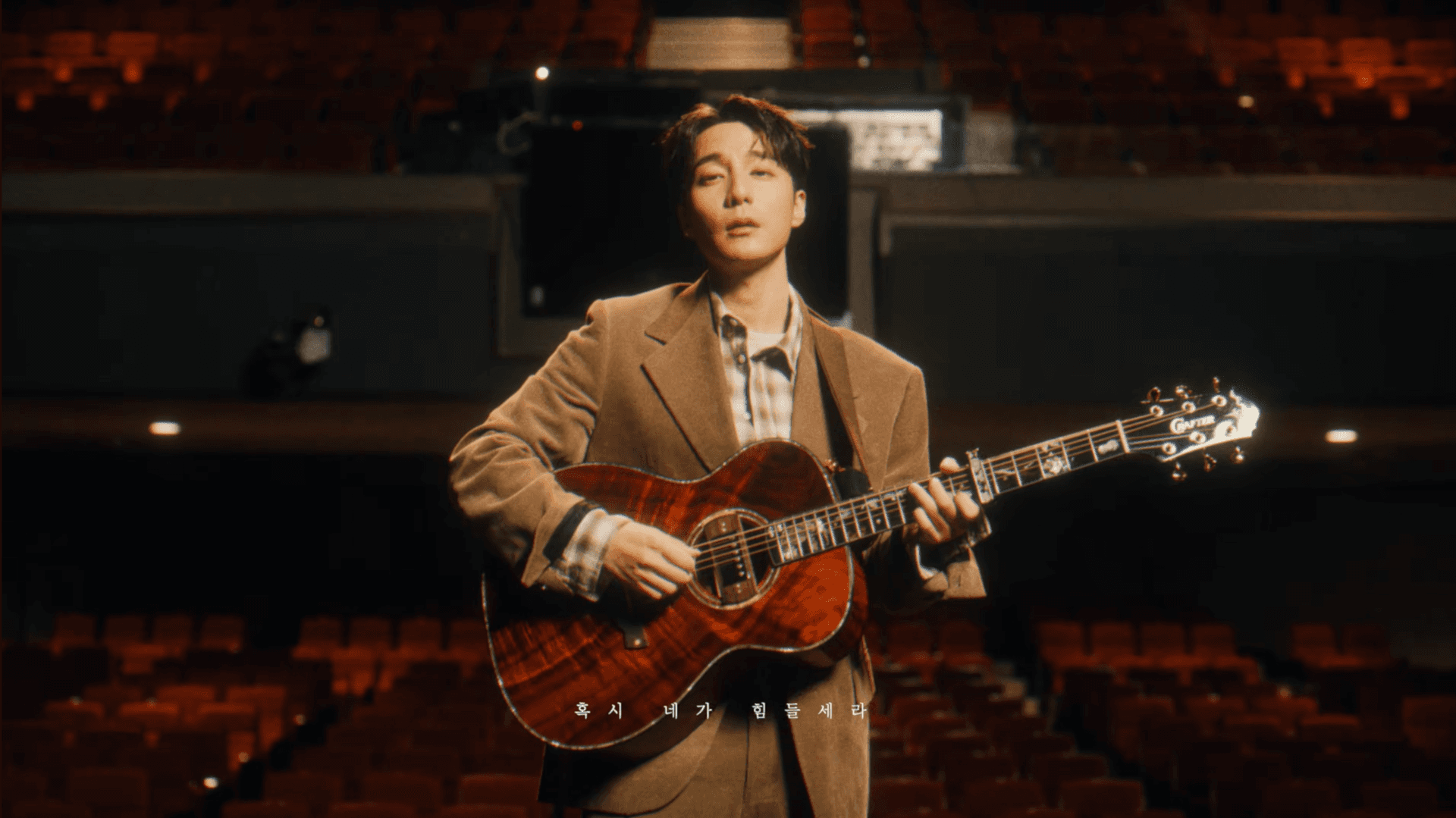
Roy Kim's first KSPO DOME concert has already become a three-night story. The singer-songwriter sold out the originally scheduled November 21 and 22, 2026 performances, then added November 20, turning a venue debut into a measurable test of how far durable Korean live fandom can scale.
This article examines what that expansion means beyond one booking announcement. The evidence points to a specific pattern: a four-year year-end sellout run from 2022 through 2025 has reached a fifth consecutive year in 2026, while the Seoul schedule has grown from two announced shows to three. In a Korean performance market whose 2025 ticket sales rose 18.8% year over year, Roy Kim's move is a useful case study in the value of consistency.
Lead: A Venue Debut With Immediate Demand
The 2026-27 Roy Kim LIVE TOUR [R:O:Y] in Seoul is scheduled for November 20-22 at Seoul's KSPO DOME. Hankyung reported on October 2 that the November 21 and 22 dates sold out and that a third performance was added for November 20. News1 reported the same two-date sellout and described the additional date as a response to demand.
The sequence matters because this is Roy Kim's first concert at KSPO DOME. Moving to a larger room is one decision; filling the first two dates quickly enough to justify a third is another. The result does not prove a precise attendance figure—the sources do not publish one—but it does provide a clear demand signal: the initial plan expanded after tickets for both announced nights were gone.
That signal is especially meaningful for a singer whose commercial identity is built around songs, voice and repeat listening rather than a large idol-group production system. Roy Kim is not simply adding a date to a calendar. He is testing whether a long-running individual audience can follow him into a larger live environment.
Background: Four Years of Reliability Before the Bigger Room
The KSPO DOME announcement did not arrive in isolation. According to Hankyung and News1, Roy Kim sold out his year-end concerts for four consecutive years from 2022 through 2025. The 2026 Seoul run extends that sequence to five consecutive years, provided the newly added date proceeds as scheduled.
That time span is more revealing than a single sellout headline. A fast sale can reflect a comeback moment, a viral song or unusual scarcity. A four-year run asks a different question: will fans return when there is another concert, another ticket purchase and another reason to make the artist part of their year-end routine? The available record suggests that they have.
The official NOL ticket listing confirms the three Seoul dates and lists VIP seats at 165,000 won and R seats at 154,000 won. Those prices are not a reported revenue total, and they should not be converted into an invented box-office estimate. They do show that the tour is being positioned as a full-scale concert experience with differentiated seating, not as a casual fan event.
There is also a useful distinction between continuity and expansion. The four-year streak establishes continuity. The move into KSPO DOME and the added third night establish expansion. Read together, they describe a career stage in which the audience is not only returning but supporting a larger operational bet.
Deep Analysis: What the Numbers Actually Show
Two comparisons define this case. First, the Seoul plan moved from two announced performances to three confirmed dates. Second, the year-end sellout pattern moved from four consecutive years, 2022-2025, to five consecutive years with the 2026 run. The two changes are different measurements, but they point in the same direction: demand has remained dependable while the physical scale of the event has increased.
Two grouped comparisons: the Seoul plan increased from two originally announced shows to three confirmed dates; the consecutive year-end sellout run increased from four years through 2025 to five years including 2026. Roy Kim's 2026 Live-Demand Signals 0 1 2 3 4 5 2 3 4 5 Seoul shows Sellout years announced confirmed 2022-25 through 2026 earlier measure expanded measure
The chart is deliberately limited to reported counts. It does not pretend that three nights equal a known number of seats, because venue configuration and production design can change capacity. What it visualizes is the direction of the decision: two nights were enough to announce the event, but three were needed after the first plan sold out.
The broader market makes that direction less surprising, but not less important. The Ministry of Culture, Sports and Tourism reported on March 11, 2026 that South Korea's 2025 performance ticket sales reached 1.7326 trillion won, an 18.8% increase from 2024. The same report counted 23,608 performances and 24.77 million tickets sold in 2025. These are market-wide figures, not Roy Kim's results, yet they provide the economic setting in which an established solo singer can attempt a bigger room.
The key interpretation is not that market growth automatically creates a sellout. It does not. A larger market gives more artists room to compete, but each artist still has to convert attention into paid attendance. Roy Kim's four-year streak is therefore the more specific evidence. The 18.8% national increase explains why the environment may be receptive; the repeated sellouts explain why this particular expansion was credible.
Impact & Reactions: From Ticket Event to Career Signal
The immediate impact is operational. A third date creates another performance, another ticketing cycle and another chance to turn fan demand into a sustained live experience. The official NOL listing schedules the added show for November 20 at 8 p.m. and identifies the original Seoul run as November 21-22. Fan-club and general-sale procedures for the additional show were also listed there, making the expansion a concrete event rather than a vague promise.
For fans, the added date changes access. A sold-out two-night plan can turn a major venue debut into a closed story for people who missed the first sale. The third night gives the market another entry point. That is a practical form of audience response, and it is more useful to analyze than unverified claims about online excitement.
For the industry, the story is about the middle of the market. Mega-tours attract attention because their scale is obvious. Roy Kim's case is different: a recognizable solo act is using accumulated trust to move upward without claiming stadium status. If the run performs as planned, it will support the idea that singer-songwriters can build substantial live businesses through consistency, catalog attachment and annual ritual.
That is why the five-year comparison matters. A one-off larger venue can be a gamble. A larger venue after four consecutive year-end sellouts looks more like a measured next step. The distinction is small in wording but significant in strategy.
Future Outlook: The Next Test Is Delivery
The next question is no longer whether Roy Kim can announce a larger Seoul plan. That has happened. The question is whether the three-night run can turn demand into an experience strong enough to sustain the next cycle.
Several outcomes will matter, even if the sources available before the concerts do not provide them yet: whether the expanded production suits his singer-songwriter identity, whether the third date broadens access beyond the earliest buyers, and whether the five-year year-end habit continues into future tours. Those are forward-looking questions, not facts to be treated as settled.
The evidence supports a measured conclusion. Roy Kim's 2026 KSPO DOME debut is not proof that every soloist can scale in the same way. It is proof that repeated demand can make a larger venue defensible. The movement from two announced shows to three confirmed dates, and from four consecutive sellout years to a fifth, gives the expansion a clear numerical shape.
In a live market that generated 1.7326 trillion won in ticket sales in 2025, durable fandom may be the most valuable growth asset. Roy Kim's case shows what that asset looks like when it leaves the language of popularity and becomes a calendar: another night, another ticket release and another reason to believe the audience will return.
Context: Why the Five-Year Run Matters
The five-year sequence is not just a convenient headline. Roy Kim has held an annual year-end solo concert since 2022, and MK reported that each of the four concerts through 2025 sold out. The earlier events carried different identities, including the 2022 concert “And,” the 2023 “Roy Note,” and the 2024 year-end show. That naming history matters because it shows a recurring appointment rather than one campaign repeated under a single tour brand. Fans were returning to a seasonal live format while the artist continued to refresh the concert context.
That pattern gives the 2026 announcement a stronger baseline than a first-time sellout claim. The original Seoul schedule was already a two-night plan at a venue larger than Roy Kim’s previous year-end stages. When both November 21 and 22 performances sold out, the additional November 20 date converted the result from a capacity test into a scheduling decision. Newsis reported that the original two performances sold out as soon as ticket reservations began, while YTN also described the two dates as sold out before the extra show was announced.
The sequence should still be read carefully. “Sold out” establishes that the ticket inventory made available for the announced performances was taken, but it does not reveal the exact number of seats released, the venue configuration, or the final attendance after production holds. That is why the most defensible conclusion is about demand and planning, not a precise box-office total. The evidence supports a larger commitment; it does not support an invented revenue estimate.
Career Context: Repetition as a Growth Asset
Roy Kim’s live position has been built through repetition rather than a sudden scale jump. His annual year-end concerts have created a predictable point on the calendar, and that predictability can lower the friction involved in a ticket purchase. Fans do not have to wait for a rare reunion or a once-in-a-career event to see him live. They can treat the concert as part of an established yearly routine, which gives the artist a clearer demand signal when a new date is announced.
The musical schedule has also kept that routine from becoming static. MK reported that Roy Kim planned new October releases for three consecutive years: “If You Ask Me What Love Is” in 2024, “I Can’t Express It Else” in 2025, and “Cry Out Loud” in 2026. Those releases are not proof that a particular song caused a ticket sale, and the article should not imply that they did. They do, however, show how a recurring concert can be paired with new material, giving returning audiences both familiarity and a reason to revisit the artist’s current chapter.
That combination is especially useful for a singer-songwriter. An idol-group tour can distribute demand across a large fandom system, multiple members and a production-heavy brand. A solo singer has to make the audience feel that the individual catalogue and live presence are sufficient reasons to return. Roy Kim’s five-year run suggests that his concert proposition has acquired that kind of continuity. The KSPO DOME expansion therefore tests the depth of an existing relationship, not merely the reach of a newly promoted single.
Market Reading: National Growth Does Not Remove Artist Risk
The national market data provides context but not a shortcut to success. The Ministry of Culture, Sports and Tourism said that South Korea’s performing-arts ticket sales reached 1.7326 trillion won in 2025, an 18.8% year-over-year increase from 1.4589 trillion won in 2024. The ministry also counted 23,608 performances and 24.77 million tickets sold during 2025. Those figures describe the size and direction of the market as a whole. They do not identify which artists captured the growth, nor do they guarantee that every larger venue will fill.
For that reason, Roy Kim’s case is most useful when the broad figure and the artist-specific figures are kept separate. The national market moved from 1.4589 trillion won in 2024 to 1.7326 trillion won in 2025. Roy Kim’s own evidence moved from four consecutive year-end sellouts through 2025 to a fifth-year run in 2026, while his initial Seoul plan moved from two announced nights to three scheduled nights. The market explains the commercial backdrop; the repeated sellouts explain why the venue expansion could be attempted with a reasonable basis.
There is also a difference between growing a market and growing an individual show. More tickets sold across the country can reflect more performances, changing prices, large tours, or shifts in consumer spending. Roy Kim’s added date is narrower evidence: the demand was concentrated around one artist, one city and one set of November dates. That narrower signal is strategically valuable because it can inform future venue choices, pricing, production scale and tour routing more directly than a national total can.
What the Expansion Can and Cannot Prove
The three-night schedule can prove that the promoter and artist responded to the first two dates with additional inventory. It cannot yet prove that Roy Kim has permanently moved into a higher venue tier. That judgment will require more than the announcement: final attendance, audience response, production costs, repeat demand and the performance of the next tour cycle will all matter. A sellout is an important input into that decision, but it is not the entire business case.
The same caution applies to the phrase “growing market strength.” The evidence shows a stronger live-market position than the four-year baseline: the artist has reached a larger venue, sold out the original two dates and added a third. It does not establish a universal trajectory in which each future tour must add another night. The sustainable outcome may instead be a stable three-night Seoul run, a better-balanced national tour, or a more selective use of larger venues.
That measured reading is what makes the story worth following. Roy Kim’s expansion is not valuable because it can be turned into an exaggerated record claim. It is valuable because the available numbers line up across different time scales: the Korean performance market grew between 2024 and 2025, Roy Kim maintained an annual sellout pattern from 2022 through 2026, and the Seoul schedule expanded from two dates to three in the same 2026 announcement. Together, those facts describe a credible next step while leaving room for the concerts themselves to determine what comes next.
How do you feel about this article?
저작권자 © KEnterHub 무단전재 및 재배포 금지
Music Charts & Data Analyst · KEnterHub
Music data analyst turned journalist. Im Garam covers K-pop through the numbers — chart performance, album sales, streaming milestones and touring economics — and writes the deep-dive reviews and industry analyses that put those numbers in context.
Comments
Please log in to comment