Saryunghwa's Debut Signals a New Era for Korea's Expanding Virtual Idol Market
 By Jang Hojin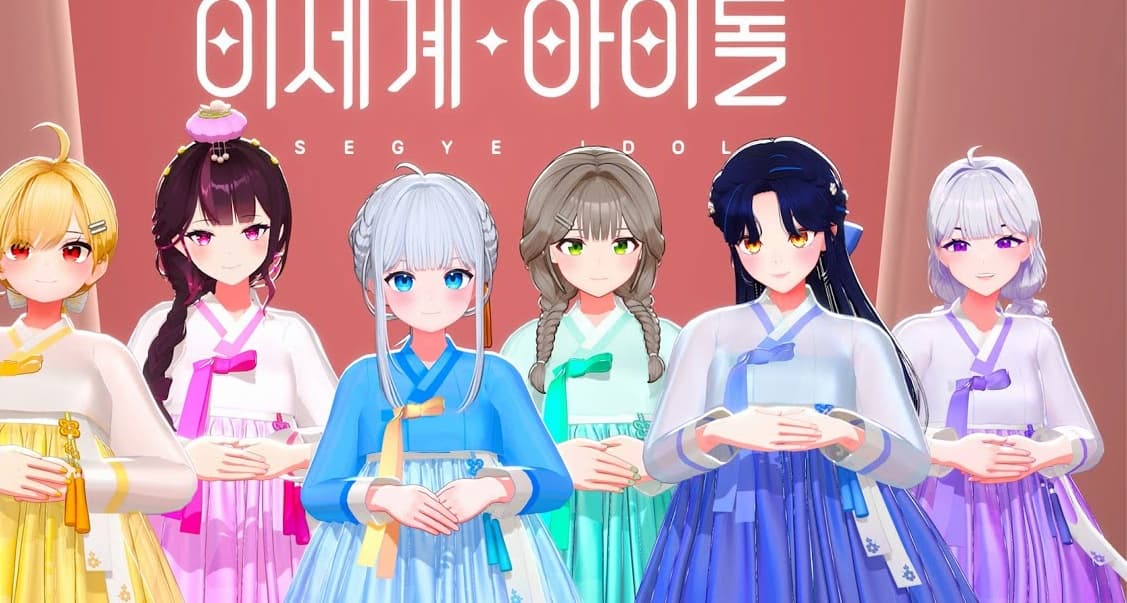
A new virtual idol group called Saryunghwa has debuted via Naver's Chijijik platform, entering a market where PLAVE recently filled a stadium with 37,000 fans. The four-member girl group's debut anime Miro, released October 31, accumulated 880,000 views within two weeks — a striking opening number for a newcomer in a segment that was still considered niche just three years ago.
Saryunghwa's arrival is more than a single group debut. It is a data point in a rapidly evolving industry story: Korea's virtual idol market is now commercially significant enough to attract new entrants, invite mainstream investment, and produce artists capable of headlining venues that physical performers spend years trying to reach. Understanding what Saryunghwa enters — and what it must compete with — requires looking at the industry that built the foundation beneath it.
From Cyber Singer Adam to Stadium-Filling Avatars: A 27-Year Arc
Korea's relationship with virtual performers dates back to 1998, when cyber singer Adam made his debut as the country's first fully digital artist. Rendered in the graphical constraints of late-1990s computing, Adam was conceptually ahead of his time but technologically limited — a curiosity rather than a blueprint. The broader entertainment ecosystem was not yet ready to sustain the infrastructure that a sustainable virtual idol career required, and the experiment faded without spawning immediate successors.
The model that finally unlocked sustained virtual idol viability emerged through the VTuber format — virtual YouTubers who combine real-time performance with animated avatars, building communities through direct audience engagement rather than traditional media exposure. When Isegye Idol (이세계아이돌) debuted in 2021, they brought this approach into the Korean market with an emphasis on music alongside streaming content. Their growth demonstrated that Korean audiences were prepared to invest emotional and financial loyalty in virtual performers. By late 2025, the group had accumulated over 2.3 million YouTube subscribers and hit the top of the YES24 music sales chart in November — a commercial benchmark that no one tracking the group's early streams would have confidently predicted.
PLAVE's debut in March 2023 represented the next evolutionary step. Rather than the VTuber-native pathway, PLAVE launched with a conventional K-pop structure — agency backing, professional music production, systematic fandom cultivation — but applied those tools to five entirely virtual members. The result was a commercial trajectory that defied every expectation for the format. Their debut EP sold over a million copies in its first week, becoming the first virtual idol release to clear that threshold — a milestone that even established physical K-pop groups do not consistently achieve.
The PLAVE Effect: Redefining What Virtual Idols Can Achieve
By November 2025, PLAVE had moved from impressive sales figures to a milestone that carried symbolic weight across the entertainment industry: a sold-out two-night run at Gocheok Sky Dome in Seoul. The stadium drew 37,000 fans across November 21 and 22, making PLAVE the first virtual idol group to headline a stadium-scale venue in Korea. What made the achievement particularly significant was the audience composition — not just dedicated online communities, but mainstream fans who had come to treat PLAVE as equivalent to any physical group performing at comparable scale.
The technology behind PLAVE's live concerts relies on a real-time avatar system in which performers backstage control the members' movements and expressions as the show unfolds. Unlike pre-recorded animation or programmatically scripted sequences, this approach allows the avatars to respond to unexpected crowd moments, interact spontaneously with each other, and project genuine performance energy. Fans in the Gocheok audience described the experience as indistinguishable from watching a physical act — a perception that validates the years of technical development invested in making virtual idol performance convincingly live.
The commercial ecosystem around PLAVE extended through November, with both PLAVE and Isegye Idol occupying the top position on YES24's music sales chart in the same month. That two virtual idol acts simultaneously held the chart's summit — without displacing each other but rather dominating a category alongside physical K-pop — illustrated how deeply embedded virtual idols have become in Korean music consumption patterns.
Saryunghwa: Differentiation Through Cultural Depth
Into this established and growing market, Saryunghwa has entered with a deliberately distinctive identity. Where PLAVE and Isegye Idol draw their aesthetics from science fiction, gaming, and digital subculture, Saryunghwa grounds itself in Korean folk mythology. The group's name translates as "four sacred beings blooming as a single flower," and each member's character derives from mythological archetypes: dokkaebi (the goblin of Korean legend), a ghost spirit, a mountain deity, and a fourth entity rooted in traditional folklore. Their debut anime Miro presented this worldview through plum-blossom imagery and hand-drawn sequences that deliberately evoked classical Korean visual aesthetics rather than contemporary digital styles.
The group's producer, Grim Production, launched the project through its GRIM WORKS virtual idol initiative, selecting the four members via public audition in May 2025. The Chijijik debut on November 8 included a live broadcast that gave initial audiences direct interaction with the group — a launch strategy borrowed from the VTuber playbook but applied to a distinctly Korean narrative framework. Audience response was immediate: "Better than expected," and "Their voices are incredible" were among the most shared reactions in fan communities following the stream.
The 880,000-view accumulation on Miro within two weeks is notable context, not a definitive verdict. PLAVE's first-week album sales of over a million units took years of fandom development to reach; Saryunghwa is at week two of its public existence. What the debut does demonstrate is that Korean audiences are actively looking for new virtual idol acts to invest in — that the market has appetite beyond the incumbents, and that cultural differentiation is a viable entry strategy alongside technical excellence.
What Saryunghwa's Debut Tells Us About the Industry
The broader implications of Saryunghwa's arrival extend beyond the group itself. When a new virtual idol act can generate nearly a million views on a debut animation and prompt media headlines about whether it can challenge PLAVE's market position, it signals that Korea's virtual idol industry has reached a threshold of mainstream legitimacy. Investment is flowing into the format not speculatively but because successful precedents exist. The companies now building virtual idol acts can point to PLAVE's stadium shows and Isegye Idol's chart dominance as evidence that the audience is real, spendable, and growing.
Saryunghwa's use of Korean folk mythology as a core aesthetic differentiator is also strategically interesting. It creates natural cultural exportability — stories rooted in distinctively Korean traditions carry the same explanatory appeal internationally as the historical dramas and mythological films that have grown K-content's global footprint. A virtual idol group whose worldbuilding is legible without translation, whose visual language references traditions unfamiliar to non-Korean audiences in exactly the ways that make K-content compelling abroad, may find audiences in markets that PLAVE and Isegye Idol have already cultivated.
The market that Saryunghwa enters in November 2025 is not the speculative experiment that received Adam in 1998. It is a structured commercial segment with established fandom mechanics, proven revenue pathways, and increasingly sophisticated production infrastructure. Whether the new group can carve out its position in that market will depend on the quality and consistency of the content it delivers going forward. But the question of whether the market exists, and whether audiences are willing to support a virtual idol act — that question has already been answered.
How do you feel about this article?
저작권자 © KEnterHub 무단전재 및 재배포 금지
Entertainment Journalist · KEnterHub
Entertainment journalist specializing in K-Pop, K-Drama, and Korean celebrity news. Covers artist comebacks, drama premieres, award shows, and fan culture with in-depth reporting and analysis.
Comments
Please log in to comment