Seoul's Wonder Show Model: What City-Organized K-Pop Concerts Do That Labels Can't
 By Park Chulwon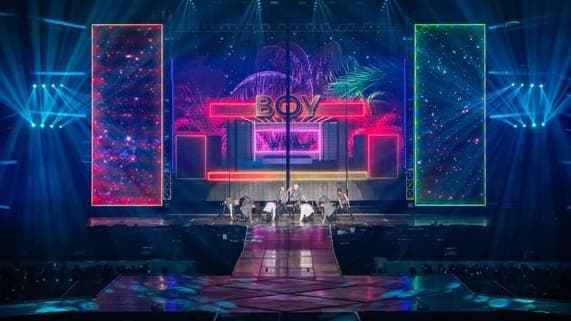
When the Seoul Metropolitan Government organized the 2025 Spring Festa Wonder Show, it was making a specific argument: that K-pop performance is a public infrastructure investment. The April 30 concert at Seoul World Cup Stadium drew 30,000 attendees and opened a week that would bring nearly 800,000 total visitors to the capital by May 6. That ratio — one concert night to an entire week of 800,000 visitors — captures the logic of city-sponsored K-pop programming better than any theoretical framing could.
The City as Concert Organizer
Korea's largest entertainment labels — HYBE, SM, JYP, YG — each operate extensive concert businesses. They book venues, manage talent routing, and set ticket prices in direct response to commercial demand. The Seoul Metropolitan Government operates under a completely different mandate. Its concert programming answers to tourism objectives, cultural diplomacy goals, and the city's desire to position Seoul as a destination rather than merely a host city for label-owned events. These different mandates produce fundamentally different kinds of events.
The Wonder Show's pricing structure makes this visible. Tickets for the April 30 event were priced at approximately 99,000 KRW — below market rate for a concert featuring multiple established idol groups. A comparable private-sector concert featuring THE BOYZ, NMIXX, and TWS in a 30,000-capacity outdoor venue would likely be priced substantially higher. The government's subsidy of the event's economics directly lowers the access barrier for domestic and international fans, which serves the tourism objective even if it reduces per-event revenue.
The result is a show with demographic reach that the commercial market cannot replicate efficiently. A 17-year-old attending their first concert, drawn by a single group on the lineup, experiences ten additional acts in the same evening at below-market cost. For emerging groups like izna, KiiiKiii, and Hearts2Hearts, that exposure compounds into something commercially valuable: new listeners acquired through subsidized proximity to established peers.
Deep Analysis: The Emerging Act Development Function
The Wonder Show's emerging-act component deserves analysis as a structural feature rather than an incidental booking choice. Eight of the event's fifteen acts — more than half — were groups in early-stage development with limited prior large-venue exposure. The Wonder Show's 30,000-capacity context represents a performance scale that most of these acts would not access through their own headline bookings for at least one to two more years under normal career progression.
The subsidy logic compounds through the fandom development cycle. When Hearts2Hearts member Jiwoo hosted the event alongside actor Wi Ha Joon and NMIXX's Kyujin, she performed two roles simultaneously: MC and artist. That dual visibility — present for the entire show's broadcast and livestream, not just during the group's performance slot — is exactly the kind of exposure that accelerates individual artist recognition in the crowded pre-debut and early-career market. The city government, by selecting newer artists as hosts, distributed platform access in a way that purely commercial events rarely do.
For THE BOYZ, NMIXX, TWS, and STAYC, the Wonder Show context provides a different kind of value. These are groups with established fanbases performing in a co-headliner format that does not require them to carry the entire commercial risk of a solo concert. The festival format — multiple acts sharing a single stage — distributes the audience-attention risk across performers, allowing established acts to reach casual listeners who came for other groups. The cross-pollination between fanbases is a known feature of multi-act festivals, and at the Wonder Show's scale, it operates across a wider demographic range than label-managed events typically reach.
The streaming and social data following the event reinforces this. Groups that performed at the Wonder Show consistently reported follower upticks on their official social channels in the days after April 30, reflecting the audience cross-pollination that festival formats enable. For newer groups, the Wonder Show stage functioned as a controlled introduction to fanbases they had not yet organically reached. The government's programming decision to mix generations and career stages was, in effect, a subsidized fanbase-transfer mechanism operating at 30,000-person scale.
What Government Involvement Changes
K-pop's relationship with Korean government institutions has historically been transactional: the government recognized the genre's export value and responded with various support mechanisms, while the industry operated commercially at arm's length from direct programming involvement. The Wonder Show represents something slightly different. Seoul Metropolitan Government is not merely promoting K-pop tourism — it is directly organizing the concert, selecting the lineup, setting the price, and choosing the venue. This is direct public programming of cultural content at commercial scale.
The distinction matters because it changes who has programming leverage. Label-organized events give management companies control over which acts participate, in which format, at what price point. City-organized events give local government that control instead. The 2025 Wonder Show's decision to include god alongside 2024-debut groups was a city government decision, not a label strategy. No single management company would have had the incentive to construct that particular multi-generational booking.
Outlook
The Spring Festa model — city-organized, below-market-priced, multi-generational, internationally targeted — is worth watching as a potential template for other municipal governments in the K-pop touring ecosystem. Seoul's success in drawing 800,000 visitors through a single week of programming anchored by a K-pop concert offers a data point that cities in Japan, Southeast Asia, and increasingly North America and Europe are already studying. The Wonder Show is not just a concert; it is an argument that cultural infrastructure investment in K-pop generates measurable tourism returns. In the years that followed, the Spring Festa would continue iterating on that formula, expanding both the venue capacity and the generational range of its programming.
How do you feel about this article?
저작권자 © KEnterHub 무단전재 및 재배포 금지
Entertainment Journalist · KEnterHub
Entertainment journalist focused on Korean music, film, and the global K-Wave. Reports on industry trends, celebrity profiles, and the intersection of Korean pop culture and international audiences.
Comments
Please log in to comment