SEVENTEEN's HOSHI and WOOZI Prove the 96ers Sub-Unit Is the Year's Most Surprising K-Pop Breakthrough
How 'BEAM' reshaped expectations for SEVENTEEN's creative range in 2025
 By Park Chulwon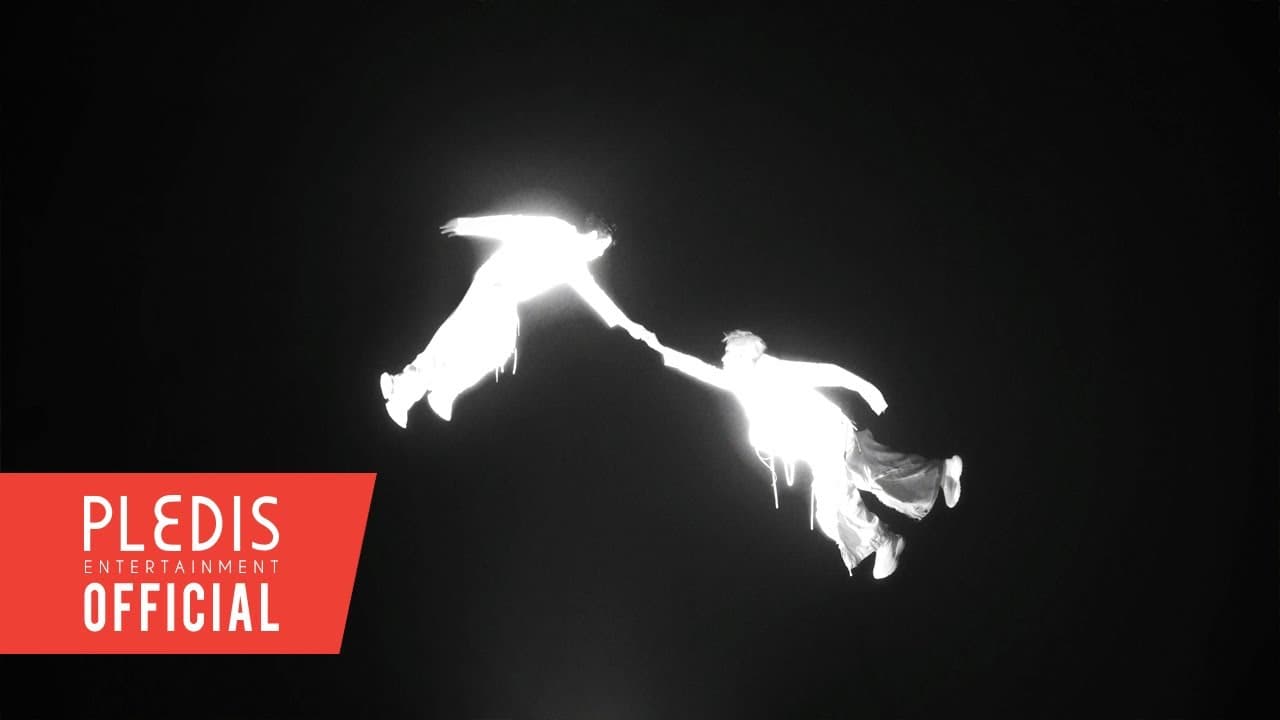
SEVENTEEN's HOSHI X WOOZI released "Beam" on March 10, 2025 — a three-track single album that marked the official debut of SEVENTEEN's fourth formal sub-unit and the first unit formation centered around friendship rather than around the group's traditional performance, vocal, and hip-hop unit architecture. The album arrived with a concept built around light as metaphor — the Korean word "beam" functioning simultaneously as a reference to radiance and to the specific human warmth that the two members intended to represent. HOSHI and WOOZI had known each other since their trainee years at Pledis Entertainment, had debuted together in SEVENTEEN in 2015, and had spent a decade building the kind of creative and personal relationship that the unit was designed to make visible. The album was not simply a product release but a documentation of something that already existed and had been waiting for the appropriate formal container.
The commercial response was immediate. The "96ers" music video — the unit name derived from HOSHI and WOOZI's shared birth year of 1996 — accumulated more than four million YouTube views within twelve hours of its release, a figure that established the unit's debut as one of the year's most anticipated K-pop events within the organized fandom context. The response reflected the specific kind of anticipation that SEVENTEEN sub-unit releases generated: fans who had followed the full group's decade of activity had accumulated enough contextual knowledge about the members' individual personalities and creative relationships that a unit debut was not simply a new commercial product but a revelation of something already known from a new angle. "Beam" gave that knowledge a formal structure, and the audience responded accordingly.
The 96ers: Birth Year as Creative Identity
HOSHI (Kwon Soonyoung) and WOOZI (Lee Jihoon) shared a 1996 birth year — the "96er" designation — but their connection within SEVENTEEN ran deeper than chronological coincidence. HOSHI had established himself as SEVENTEEN's primary choreographer and one of the group's most physically dynamic performers, responsible for the intricate, spatially complex choreography that had become one of the group's defining commercial differentiators. WOOZI had served as SEVENTEEN's primary music producer for a decade, writing and arranging a substantial majority of the group's catalog and developing a production identity that had evolved from the acoustic-influenced sound of their early releases into something considerably more sophisticated. The two roles — performer and producer — had been in conversation throughout SEVENTEEN's decade, and the unit debut was an explicit acknowledgment of that conversation's depth.
The "96ers" title track was structured around the specific register of friendship between people who have known each other since before the world's assessment of them was settled — who remember each other from a time when neither had yet become the public figure they would spend their careers being. The production approach reflected WOOZI's evolution as a producer: sophisticated enough to avoid the acoustic simplicity that might have been the default emotional register for a friendship-themed track, but sufficiently direct in its melodic and rhythmic construction to communicate the emotional content without requiring the layered conceptual decoding that some of SEVENTEEN's more complex releases demanded. HOSHI's choreographic contribution was visible in the MV's emphasis on the spatial relationship between the two performers — not the mirrored synchronization of standard K-pop choreography but something more conversational, two people moving in relation to each other rather than in parallel formation.
The Three-Track Structure: "PINOCCHIO," "96ers," and What Each Track Accomplished
"Pinocchio" opened the album with HOSHI and WOOZI joined by So!YoON! — the independent singer-songwriter whose collaboration brought a sonic texture distinct from the standard SEVENTEEN production palette and whose presence signaled a creative openness that the unit concept had established. So!YoON!'s voice introduced a quality of uncertainty and vulnerability into the album's opening that HOSHI and WOOZI's established public presences might not have generated independently; the track's function was to establish the album's emotional register before "96ers" provided its commercial center. The choice to open with a featured collaboration rather than with the title track was a structural statement about the unit's priorities — not commercial maximization but emotional preparation.
"96ers" followed as the unit's primary statement: the track that named the unit, provided the MV, and generated the viewership data that established the debut's commercial scale. Its production combined the energy level appropriate to HOSHI's performance identity with the melodic sophistication that WOOZI's production work consistently delivered, and its hook — built around the year 1996 as a shared coordinate, a temporal marker that had long preceded SEVENTEEN's existence and would outlast the group's commercial lifecycle — gave the friendship theme a specificity that prevented it from collapsing into generic sentiment. The third track filled the album's structural need for variation without overextending the unit's conceptual scope, providing the emotional resolution that the "Beam" concept's light metaphor implied without overstating it.
CARAT LAND 2025: Stadium Scale and the Military Announcement
The release of "Beam" on March 10 was followed ten days later by SEVENTEEN's annual CARAT LAND fan meeting, held on March 20 and 21 at Incheon Munhak Main Stadium. The events were structurally connected: "Beam" had introduced the 96ers unit to the audience, and CARAT LAND 2025 provided the large-scale live context in which that introduction was amplified and given its full emotional weight. The fan meeting broadcast to 110 countries and regions — evidence of the global scale of SEVENTEEN's fandom infrastructure — with an in-person audience that tested the limits of the stadium's capacity.
CARAT LAND 2025 was significant for reasons that extended beyond its function as a promotional vehicle for the 96ers debut. It was at this event that HOSHI and WOOZI announced their plans to enlist for mandatory military service — WOOZI on September 15 and HOSHI on September 16, 2025. The announcement carried particular weight because it arrived during the same event that had formally introduced their sub-unit, a temporal compression that gave the debut album a specific emotional context: music made at a specific moment in a creative partnership that was about to enter a period of enforced separation. "Beam" was not simply a sub-unit debut but a document of a creative relationship at a particular point in its history, and the military announcement made that temporality explicit in ways that the album's light metaphor had perhaps anticipated.
The fan community's response to the military announcement — delivered with the characteristic SEVENTEEN approach of transparency and forward-facing preparation — was mediated by the decade of trust that the group had built with its audience. HOSHI and WOOZI's statement "We have been prepared" communicated both practical readiness and emotional steadiness, and the fans' response reflected a reciprocal steadiness: acknowledgment of the approaching absence alongside appreciation for the completed work that "Beam" represented. The all-13-member performance at CARAT LAND, before the eventual staggered separations that military service would impose, carried the weight of a collective showing-up that the fandom would reference during the service periods that followed.
SEVENTEEN's Sub-Unit History and the 96ers' Position Within It
SEVENTEEN had operated a sub-unit structure since their 2015 debut, with the performance unit (HOSHI, Jun, THE8, Dino), vocal unit (WOOZI, Jeonghan, Joshua, DK, Seungkwan), and hip-hop unit (S.Coups, Wonwoo, Mingyu, Vernon) providing the structural architecture through which the thirteen-member group managed its creative output and member development across the full range of musical styles. Unit sub-releases had been a consistent feature of SEVENTEEN's commercial strategy, giving individual members the opportunity to demonstrate creative range outside the full group's aesthetic while maintaining the institutional framework that made large-group K-pop commercially viable.
The 96ers unit differed from the performance/vocal/hip-hop architecture in its organizing principle. Rather than a functional classification based on artistic specialization, the unit was organized around personal relationship and shared biographical experience — a different kind of cohesion that produced a different kind of music. Where the performance unit's releases reflected HOSHI's choreographic identity, and the vocal unit's releases reflected WOOZI's production approach, "Beam" reflected what the combination of those two identities sounded like when the functional boundaries between them were lowered. The album was, in this sense, a document of collaboration in a mode that SEVENTEEN's regular structure had not previously made formal — and that formalization was its primary artistic distinction.
The sub-unit also established a template that the group's 10th anniversary year could deploy for subsequent unit activities — a template that prioritized member-relationship-based combinations alongside the functional unit structure that had served SEVENTEEN's commercial output for a decade. The anniversary context gave "Beam" its retrospective significance: not merely a new release but a reflection on what a decade of shared experience between two people had accumulated into, and what form that accumulation took when given the container of a formal debut.
Verdict: A Debut That Documented What Was Already There
The most unusual quality of "Beam" as a K-pop sub-unit debut was its retrospective character. Most unit debuts in K-pop are prospective — they introduce a new combination, propose a new aesthetic, establish a new commercial profile. "Beam" was oriented in the opposite temporal direction: toward documentation of what already existed, toward the formalization of a creative and personal relationship that had been generating music and performances for a decade under the umbrella of the full group's activities. The debut's contribution was not to create something new but to make something visible that had been present throughout SEVENTEEN's history.
That visibility generated the commercial response it did — four million YouTube views in twelve hours, CARAT LAND performances in a stadium broadcast to 110 countries — because the audience for "Beam" had the contextual knowledge to understand what the visibility revealed. The K-pop fandom's investment in member relationships, in the accumulated understanding of who people are within the complex social ecology of a large idol group, gave the album a significance that could not be generated by the music alone. But the music was strong enough to sustain the significance it was given: "96ers" was not a mediocre track made meaningful by context but a well-crafted piece of work that the context made extraordinary. In the year of SEVENTEEN's 10th anniversary, with military service approaching for multiple members and the full-group era drawing toward a temporary close, "Beam" landed exactly when it needed to and said exactly what it needed to say.
WOOZI as Producer and the Architecture of "Beam"
WOOZI's decade of production work for SEVENTEEN had created one of the most distinctive production identities in K-pop: a sound that could accommodate the genre diversity required by a thirteen-member group across multiple unit structures while maintaining a coherent aesthetic sensibility that made SEVENTEEN's catalog immediately recognizable. The move from producing for the full group — where the requirements of commercial range and thirteen members' varying vocal profiles created specific production constraints — to producing for a two-person unit that included only himself and one collaborator gave WOOZI creative parameters that were simultaneously more constrained (two voices, one acoustic-to-dance register to navigate) and more liberated (no need to serve the full group's commercial requirements).
"Beam"'s production reflected that liberation. The album's sonic palette was more cohesive than a full SEVENTEEN album needed to be, and the individual tracks were able to pursue their tonal intentions with less compromise than group productions typically permitted. "Pinocchio" could be as intimate and textured as it needed to be without requiring accommodation to the group's commercial range. "96ers" could be as specifically constructed around HOSHI and WOOZI's creative chemistry as the song's concept demanded without needing to serve a broader audience of thirteen members' stylistic preferences. The result was an album that sounded, more than most K-pop sub-unit releases, like a creative statement rather than a commercial obligation — which was appropriate, given that the unit's founding premise was a personal relationship rather than a functional categorization.
The significance of WOOZI's production work for "Beam" extended beyond the album itself. It demonstrated that a decade of producing under the institutional constraints of a large entertainment company and a thirteen-member group had not calcified his creative instincts but had developed them to the point where the removal of those constraints produced work of genuine distinction. That distinction — audible in the album's tonal specificity and the "96ers" track's structural intelligence — was the strongest evidence available in March 2025 that WOOZI's solo production identity had developed far enough to sustain a musical project of its own, independent of SEVENTEEN's collective requirements. "Beam" was a sub-unit debut, but it was also, obliquely, a solo producer's first full statement of intent.
The Light Metaphor and What "Beam" Actually Meant
The "beam" concept — light as both physical phenomenon and emotional metaphor — threaded through the album's visual and lyrical content with the kind of sustained thematic consistency that K-pop conceptual releases often struggled to maintain across their full duration. The light metaphor worked because it was multidirectional: HOSHI and WOOZI were beams of light to each other, but also beams of light to the audience, whose energy and attention had illuminated both members' careers across the decade. The reciprocity embedded in the metaphor prevented it from being merely self-referential; "Beam" was not simply a celebration of friendship but an acknowledgment of the triangular relationship between two friends and the community of people who had watched them become who they were.
This triangularity — friend to friend, both to audience — was what gave "Beam" its particular emotional resonance in the context of CARAT LAND 2025. The stadium full of fans who had arrived knowing what the military announcement would mean, who had purchased tickets and traveled to be present at a specific moment in SEVENTEEN's collective history, who would stream the broadcast from 110 countries to be virtually present in ways that physical distance prevented — these were not simply consumers of a commercial product. They were participants in the relationship that "Beam" documented, and their participation was part of what made the album's light metaphor something more than promotional language.
How do you feel about this article?
저작권자 © KEnterHub 무단전재 및 재배포 금지
Entertainment Journalist · KEnterHub
Entertainment journalist focused on Korean music, film, and the global K-Wave. Reports on industry trends, celebrity profiles, and the intersection of Korean pop culture and international audiences.
Comments
Please log in to comment