SHINee's Key Delivers Career-Best Work with 'HUNTER': Why the Second-Generation Solo Renaissance Matters
KEY's third album blends urban legend aesthetics with precision production to earn the most acclaimed reviews of his solo career
 By Jang Hojin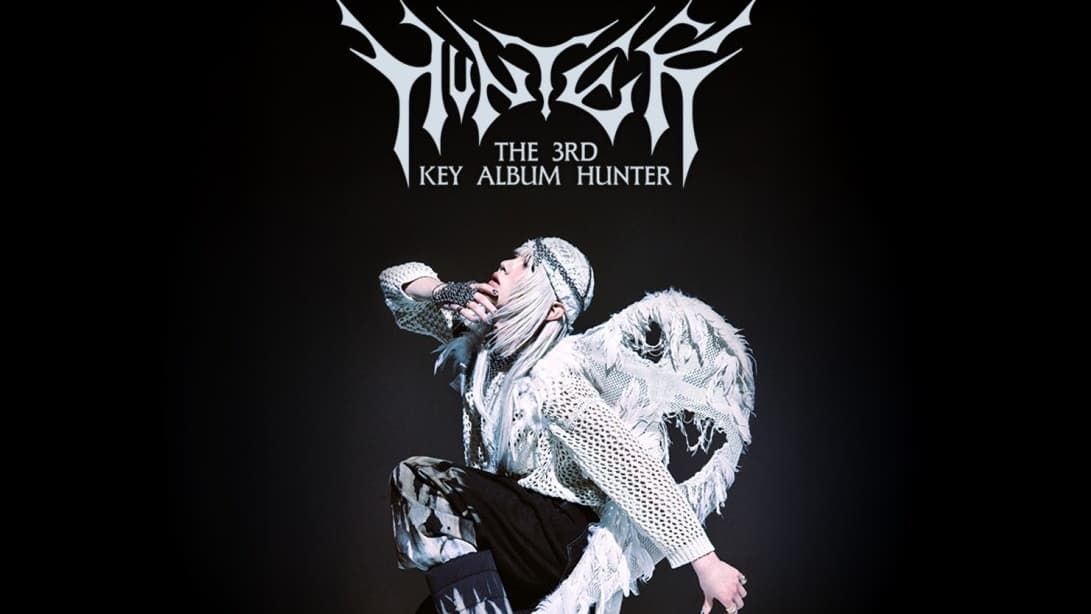
SHINee's Key released his third studio album, HUNTER, on August 11, 2025, and the resulting critical reception placed it among the year's most compelling solo K-pop releases. Thirteen days after its arrival, the album's influence continued to build — a slow-burn success story that says as much about the evolution of second-generation idol artistry as it does about Key himself.
HUNTER is not an album built for immediate mass consumption. Themed around urban legends and constructed across ten tracks that traverse glossy dance-pop, experimental electronics, and emotionally layered ballads, it is the work of an artist who knows exactly who he is and is no longer interested in making that knowledge palatable for the broadest possible audience. The result is the most critically acclaimed release of Key's solo career — and a significant cultural moment for what K-pop artistry can look like when second-generation artists enter their most creatively mature phase.
The Album: Camp, Chaos, and Precision
NME described HUNTER as a record where "camp and chaos collide," calling it one of the most exciting releases out of Korea in 2025. The Bias List called the title track "HUNTER" a showcase of Key's transformation — a dance track combining grand bass sounds, rhythmic guitar riffs, and various synth pads into something that vibrates with deliberate controlled energy. KPOPreviewed called the album "an incredibly taut and cohesive artistic vision."
The album's featured collaborations are strategically significant. Track nine, "Perfect Error," pairs Key with Red Velvet's Seulgi — a second-generation pairing that recalls the era that made both of them industry icons. Track six, "Infatuation," sees Key work alongside PLAVE's EUNHO, a fourth-generation virtual idol, creating a cross-generational sonic experiment that few artists could have made work. The fact that both collaborations feel organic rather than calculated-for-audience-appeal speaks to Key's curatorial instincts. He knows which voices complement his aesthetic, and he builds around them accordingly.
The chart performance was not record-shattering but was solid: HUNTER peaked at No. 3 on South Korea's Circle Album Chart, confirming that Key's fanbase remains loyal and engaged even as the album's experimental qualities might limit its top-of-chart ceiling. The critical praise, however, far outpaced the typical commercial discourse around K-pop albums — a pattern that suggests HUNTER is being received as an artistic statement rather than just a product cycle.
Deep Analysis: The Second-Generation Solo Renaissance
Key's HUNTER arrives at a moment when the second generation of K-pop idols — those who debuted roughly between 2003 and 2012 — are experiencing a collective creative renaissance in their solo careers. SHINee members have long been noted for their individual artistic ambitions: Taemin's boundary-pushing choreography and vocal style, Jonghyun's late-career songwriting depth, Minho's acting, and Key's own long-established reputation for theatrical, fashion-forward solo work.
What makes HUNTER significant in this context is its thesis: that an artist can build on the accumulated authority of a career spanning 17+ years without simply recycling it. The album's urban legends concept gives Key license to visit musical horror, dark glamour, and synthetic nostalgia — registers that would feel gratuitous for a younger artist but arrive with earned gravitas from someone who has performed on stages from Seoul to Tokyo for nearly two decades. The ten tracks do not merely showcase range; they demonstrate editorial discipline, each song functioning as a chapter in a cohesive narrative rather than a standalone showcase of technical skill.
The second-generation solo trend illuminates a structural shift in K-pop's market. While fourth-generation groups dominate the album sales race — Stray Kids' KARMA just set a 3-million-first-week record — there exists a distinct and commercially sustainable market for legacy artists releasing premium creative projects. Key's KEYLAND: Uncanny Valley North American tour, announced alongside HUNTER, demonstrated that the demand for his live presence is not confined to Korea or Japan. The bifurcated market — mass commercial new releases at the top, premium artistic legacy releases in a steady middle tier — is a feature, not a compromise, of mature K-pop's ecosystem. HUNTER's critical success points to a listener segment that values artistic coherence over sales metrics.
Comparatively, legacy solo releases from this generation — including artists like Taemin, Baekhyun, and INFINITE's Woohyun — have consistently outperformed expectations with dedicated fandoms and international touring demand that defies mainstream chart logic. HUNTER follows this template while pushing its artistic ambitions further than most, signaling that the market for ambitious second-generation solo work is not just stable but growing.
Impact and the Fan Response
SHINee's fandom (Shawols) and Key's solo fanbase responded with predictable enthusiasm to HUNTER's release, but what was notable in the days following August 11 was the volume of engagement from outside the core fanbase. Critical reviews were widely shared on music-adjacent social media spaces beyond traditional K-pop fan communities, suggesting that HUNTER was reaching listeners who follow album criticism rather than artist fan accounts.
The KEYLAND: Uncanny Valley North American tour announced alongside the album gave the release an additional commercial scaffold. Live shows remain one of the most powerful vehicles for album discovery — fans who see Key perform before they know the album will come home to stream and purchase it. The North American tour leg indicated that Key's agency (SM Entertainment) viewed the album as an opportunity to expand his Western footprint beyond the established Japan-Korea circuit that had defined much of his solo career.
Future Outlook
Key's HUNTER, releasing into a K-pop landscape dominated by the commercial firepower of fourth-generation acts, chose a different path entirely: depth, eclecticism, and uncompromising artistic identity. The album's success — measured by critical reception and sustained engagement rather than first-week sales records — suggests that this path is not only viable but increasingly valued.
In the months that followed its release, HUNTER would be cited in end-of-year critical lists as one of 2025's most distinguished K-pop releases. For Key specifically, it marked a career milestone: the moment when solo work became definitively separate from his SHINee legacy in quality and ambition, while drawing on that history to fuel its creative authority. The second-generation renaissance he embodies is not nostalgia — it is evolution.
How do you feel about this article?
저작권자 © KEnterHub 무단전재 및 재배포 금지
Entertainment Journalist · KEnterHub
Entertainment journalist specializing in K-Pop, K-Drama, and Korean celebrity news. Covers artist comebacks, drama premieres, award shows, and fan culture with in-depth reporting and analysis.
Comments
Please log in to comment