SMTOWN LIVE 2025: How SM's 30th Anniversary Concert Maps K-Pop's Entire Evolution
 By Jang Hojin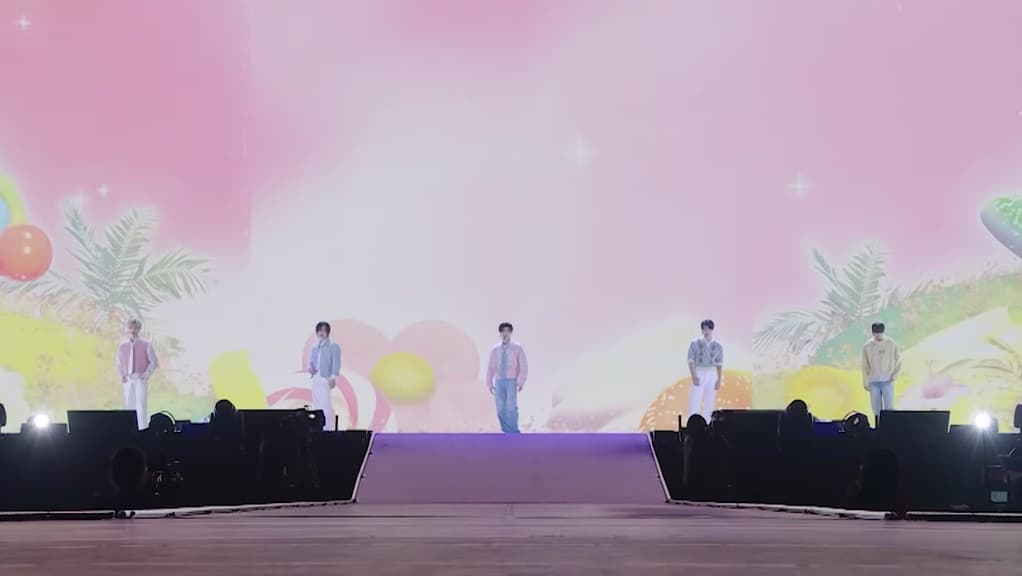
SMTOWN LIVE 2025 opens today at Gocheok Sky Dome in Seoul, bringing together artists from five generations of K-pop under a single roof for two historic nights. Titled "The Culture, the Future," the concert marks SM Entertainment's 30th anniversary — a milestone that invites reflection not just on one company's legacy, but on how that company's decisions, systems, and aesthetics shaped the entire Korean entertainment industry. From Kangta and BoA, who first carried Korean pop music to Asia's mainstream, to RIIZE and NCT WISH, who are currently defining what fifth-generation K-pop sounds like, tonight's lineup is an industry timeline made flesh.
The event runs January 11-12, 2025, with global audiences able to tune in via Beyond LIVE, Weverse Concert, and KNTV. The scale alone is significant: Gocheok Sky Dome, South Korea's only domed baseball stadium, holds approximately 16,000 fans for concerts, and securing it for two nights signals a level of ambition that few entertainment companies in the world could match. SM is not staging a concert. It is staging a historical argument.
Thirty Years of Building the Machine
SM Entertainment was founded in 1995 by Lee Soo-man, a former singer who had studied computer engineering at California State University. That combination — pop instincts fused with systems thinking — proved prophetic. Where earlier Korean pop acts had operated on intuition and regional market logic, Lee envisioned something modular: a training pipeline, a visual identity system, a content production apparatus that could be replicated, scaled, and exported.
The result was what the industry now calls the K-pop training system. Trainees as young as 13 entered multi-year programs covering vocals, dance, language, and media training before debut. Groups were architected rather than assembled — each member assigned a defined role (main vocal, visual, rapper, dancer) to serve both the song and the brand. The system was rigorous, controversial, and enormously effective. When H.O.T debuted in 1996, they were the first product of this factory. When they sold out stadiums across Asia, every agency in Korea took notice.
SM's influence helped create the "Big 3" era — a period from roughly 2000 to 2015 when SM, YG Entertainment, and JYP Entertainment collectively produced the majority of Korea's most globally recognized acts. Each agency developed its own aesthetic philosophy, but all three operated on the infrastructure template that SM had pioneered. The training system, the concept-driven debut, the synchronized choreography, the merchandising ecosystem — these were SM inventions that became industry standards. Tonight's concert, in that sense, is not merely SM celebrating itself. It is K-pop celebrating its own architecture.
A Generational Lineup as an Industry Timeline
What makes SMTOWN LIVE 2025 analytically extraordinary is what the roster reveals when read as data rather than as a setlist. Each act on tonight's stage represents a distinct chapter in K-pop's evolution, and the progression from earliest to most recent mirrors the industry's widening ambition.
Generation 1 — represented tonight by Kangta, who debuted with H.O.T in 1996 — operated in a pre-streaming, pre-social-media landscape where physical albums and live television were the only metrics that mattered. BoA, who debuted in 2000, bridged that era with something new: a genuinely bilingual, bicultural star designed from the outset for the Japanese market. Her success there proved that K-pop was exportable, not merely enjoyable.
The second generation — TVXQ (2003), Super Junior (2005), Girls' Generation (2007), and SHINee (2008) — is where SM's factory model reached full expression. These groups were not just popular; they were structural experiments. Super Junior pioneered the large-group format and sub-unit strategy. Girls' Generation codified the girl group aesthetic that would influence everything from TWICE to BLACKPINK. SHINee introduced what the industry would later call "contemporary" K-pop — tighter production, sharper choreography, a downtown Seoul sophistication.
EXO (2012) and NCT (2016) mark the third and fourth generational shift. EXO arrived at K-pop's first truly global moment — the Gangnam Style wave had just broken internationally, and EXO channeled that energy into a mythology-driven concept. NCT was SM's most experimental structural bet: an open-membership system with no fixed roster, organized into rotating sub-units (127, DREAM, WayV, WISH) that allowed simultaneous activity across multiple markets. All four NCT units perform tonight.
aespa (2020) and RIIZE (2023) complete the timeline. aespa's virtual member concept — where real artists share the stage with AI avatar counterparts — was either visionary or gimmicky depending on who you asked when it launched. Four years later, with navis now performing as a semi-autonomous virtual entity on tonight's lineup, it is clear that SM was anticipating a future where the boundary between physical and digital performance is genuinely negotiable.
The Absences That Speak
No analysis of tonight's concert would be complete without acknowledging who is not on the stage. Taeyeon, arguably SM's most beloved solo artist and one of Girls' Generation's most recognizable members, withdrew from the lineup following reported creative differences with SM management. Wendy of Red Velvet also pulled out for personal reasons. These absences matter not as gossip, but as data points in a larger story about structural tensions that have always existed between SM's corporate machinery and its human artists.
The history of SM is also a history of departures — of artists who left under difficult circumstances, of legal disputes that became public, of the friction inherent in any system that treats human creativity as a pipeline output. That SMTOWN LIVE 2025 can still field a roster of this scale is itself a statement. But the Taeyeon and Wendy situations are reminders that the machine has costs, and that thirty years of industry leadership has not resolved every tension between artist and institution.
What Thirty Years Actually Signals
SM Entertainment at 30 is not the company it was at 10, or at 20. The Big 3 consensus has fractured — HYBE's rise, the global breakthrough of acts from smaller agencies, and the democratization of music production tools have made the old oligarchy harder to maintain. SM itself was acquired by Kakao Entertainment in 2023 following a high-profile corporate governance dispute, a reminder that even the most established K-pop institutions are subject to market forces.
And yet tonight's concert makes a credible case for SM's ongoing centrality. No other agency in K-pop history has produced active, globally relevant artists across five consecutive generations. The systems Lee Soo-man built — however imperfect — created a kind of institutional continuity that is genuinely rare in pop music. SMTOWN LIVE 2025 is a demonstration that the architecture holds. What it cannot demonstrate, and what the next thirty years will determine, is whether that architecture can evolve fast enough to stay relevant in a landscape it no longer fully controls.
How do you feel about this article?
저작권자 © KEnterHub 무단전재 및 재배포 금지
Entertainment Journalist · KEnterHub
Entertainment journalist specializing in K-Pop, K-Drama, and Korean celebrity news. Covers artist comebacks, drama premieres, award shows, and fan culture with in-depth reporting and analysis.
Comments
Please log in to comment