Solbi's Secret Writer Era Stuns Fans
The Radio Star reveal connected Solbi's Laura Jang pen name, a short-form drama hit, and Kim Jung-eun's viral name story.
 By Park Chulwon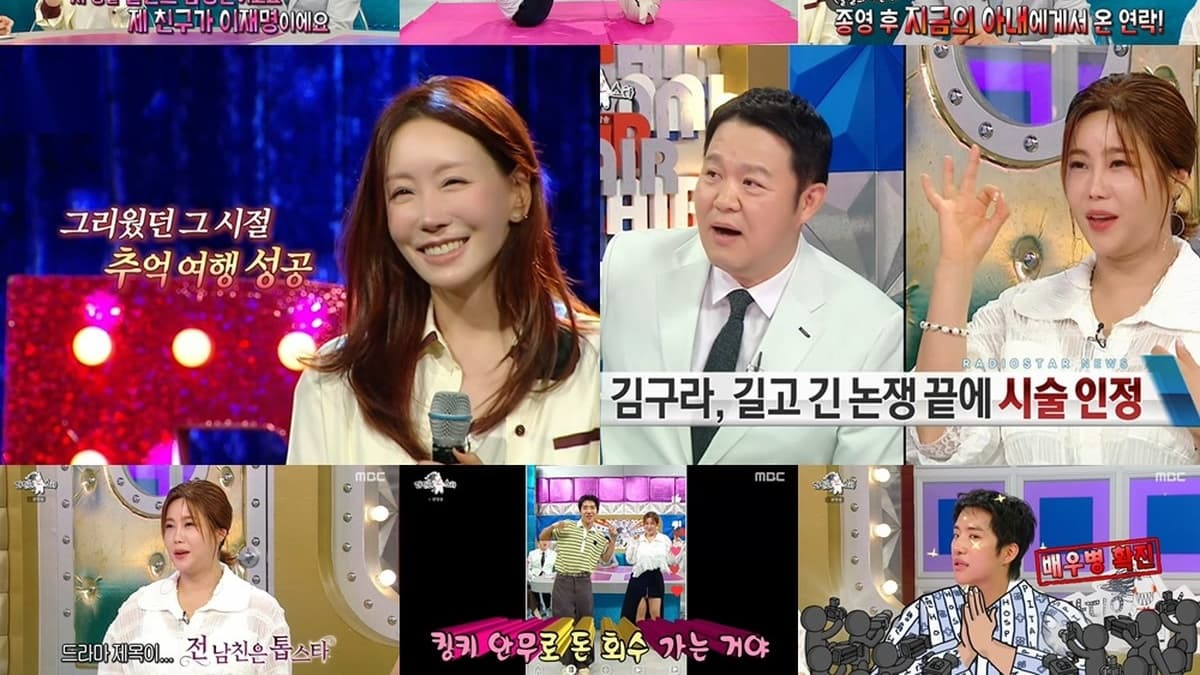
Solbi's new turn as a drama writer has given Korean entertainment fans one of the week's most search-friendly variety show moments: a celebrity reinvention story wrapped inside a confession about an ex-boyfriend, a pen name, a short-form drama hit, and a next project bold enough to make the Radio Star studio react in real time.
The singer and artist appeared on the June 17 episode of MBC's Radio Star, a "short-form lovers" special that also featured actress Kim Jung-eun, actor Lee Han-wi, and dancer-choreographer Kinky. The episode quickly spread through Korean entertainment searches because it delivered several compact, shareable hooks at once. Solbi revealed that she had written a short-form drama under the pen name Laura Jang. Kim Jung-eun turned a name-related misunderstanding into a laugh-out-loud restaurant story. The cast also generated a high-energy studio exchange around beauty procedures, performance, and the increasingly blurry line between television talk shows and short-form viral clips.
For Solbi, however, the key reveal was career expansion. She said she wrote a short drama titled My Ex-Boyfriend Is a Top Star, explaining that the story began after she woke from a vivid dream about a former boyfriend. The premise might sound like a variety-show punchline, but the project moved beyond casual storytelling. According to the broadcast discussion and Korean coverage that followed, the work was selected through a Korea Creative Content Agency-related process, released on a platform, and reportedly reached No. 1 in Japan on a global platform. That combination gave the segment its wider appeal: Solbi was not merely saying she had an idea. She was describing a completed creative credit.
Why Solbi's Laura Jang Reveal Hit Search Trends
Solbi has long occupied a difficult-to-categorize place in Korean entertainment. She debuted publicly as a singer, became a familiar variety personality, and then steadily built a second identity as a visual artist. That history matters because the Radio Star reveal did not arrive as a sudden rebrand. It played like the next chapter in a pattern: Solbi repeatedly moves into spaces where audiences may first react with surprise, then reassess her after the work exists.
The pen name made the story more interesting. By saying she used Laura Jang as a writer credit, Solbi separated the project from the immediate assumptions attached to her celebrity name. In Korea's variety ecosystem, where a famous person can be praised for trying something new but also dismissed as using name value, a pen name creates a different kind of narrative. It suggests that the script had to travel at least partly on its own premise, not only on Solbi's established public image.
The title, My Ex-Boyfriend Is a Top Star, also explains why the clip traveled. It is clean, instantly understandable, and built for short-form attention. It contains romantic curiosity, celebrity fantasy, and a lightly autobiographical tease without requiring viewers to know the full background. Solbi leaned into that tension on the show, saying the idea came from the emotional residue of a dream rather than a literal attempt to restart a past relationship. The detail gave fans enough mystery to discuss, while keeping the story inside a playful variety-show frame.
Her description of using AI as an assistant only for arranging the script also added a timely industry layer. Korean entertainment is currently negotiating how AI fits into writing rooms, editing, and content development. Solbi's framing was narrow: she presented herself as the originator and writer while describing AI as a tool for organization. That is exactly the kind of detail that turns a celebrity anecdote into a broader media-industry talking point, especially when the final work has already been produced and released.
Kim Jung-eun Added the Episode's Viral Variety Beat
Kim Jung-eun's segment gave the episode a second search engine. The actress joked about the difficulties created by sharing a name with North Korean leader Kim Jong-un when rendered similarly in Korean entertainment headlines and online search. She then added a story involving a close friend named Lee Jae-myung. When she tried to make a restaurant reservation by saying the reservation name was Kim Jung-eun and the guest was Lee Jae-myung, the restaurant reportedly thought it was a prank call and hung up. Kim Jung-eun said she had to call back and explain that she was the actress and that her friend really had that name.
The anecdote worked because it was simple, absurd, and specific. It also fit Kim Jung-eun's long-standing public image as a polished actress who can become disarmingly funny on variety programs. The episode allowed her to revisit her early career and variety history, including memories tied to entertainment programs before she became one of the most recognizable television faces of her generation. For younger viewers who may primarily know her through clips, the restaurant story provided an easy entry point. For older viewers, it was another reminder of how naturally she can carry a talk-show segment.
That pairing helped the episode feel unusually dense. Solbi's story had a creator-economy angle. Kim Jung-eun's story had an old-school variety rhythm. Together, they produced the kind of topic mix that Korean portal trends often reward: one item with emotional curiosity and one item with a clean punchline.
A Short-Form Moment Inside a Legacy Talk Show
The irony is that the episode itself was built around short-form culture. Radio Star is one of Korean television's most durable talk shows, but its current influence is often measured by how well segments travel after broadcast. A guest no longer needs a full hour of narrative dominance to own the conversation. One concise reveal, one quote, or one comic exchange can become the unit that spreads across portal articles, YouTube clips, social feeds, and search trends.
MBC's own post-broadcast coverage highlighted the episode's energetic exchanges, including Solbi and Kim Gu-ra's long-running comic tension over beauty procedures. That studio beat reportedly became one of the episode's highest-interest moments. But the reason Solbi's writer reveal stood out is that it connected the theme of short-form entertainment to an actual short-form drama credit. The guest was not only talking about short clips. She was describing how she had entered the format as a writer.
This is where Solbi's career arc becomes more than a single funny segment. Korean celebrities are increasingly expected to become multi-format creators: performers, YouTubers, painters, brand operators, producers, writers, and IP owners. Solbi has already spent years pushing against the idea that a celebrity must remain in the lane where the public first met them. Her Laura Jang credit gives that argument a new example. Whether viewers approach it with curiosity, skepticism, or admiration, the work exists as a concrete extension of her creative identity.
The reported Japan No. 1 result on a global platform is especially important as a Discover-friendly signal because it gives the story a measurable achievement. Without that number, the segment would be a celebrity saying she wrote something personal. With it, the story becomes a small cross-border content success: a Korean entertainer writing under a pen name, adapting a dream into a drama premise, and seeing the result connect with viewers outside Korea.
What Comes Next for Solbi as a Writer
Solbi did not stop at the completed project. On Radio Star, she teased another work, describing a next story that begins as a mature romance before shifting toward mystery. She floated the title My Husband's Love Counseling and even brought Kim Jung-eun into the studio fantasy by suggesting her as a possible lead. Kim Jung-eun's joking response about whether the role required exposure gave the segment another headline-ready exchange, but the larger point was Solbi's confidence in thinking beyond a one-off script.
That confidence may be what fans respond to most. The story contains celebrity gossip texture because of the ex-boyfriend premise, but it is not only gossip. It is also about a public figure testing authorship in a content market where short-form drama has become a serious growth category. These dramas reward clear titles, fast emotional hooks, and premises that can be understood in seconds. Solbi's instinct for a title like My Ex-Boyfriend Is a Top Star shows that she understands the format's attention economy.
For Radio Star, the episode is another example of why legacy variety still matters in the age of short clips. The show can gather entertainers from different generations, place them in a conversational setting, and produce moments that are immediately convertible into digital headlines. For Solbi, it offered a stage to reintroduce herself not as a singer who also paints, but as a creator now writing for a format built for mobile audiences. For Kim Jung-eun, it reminded viewers that one precise anecdote can be enough to dominate the next day's entertainment searches.
The Google Trends signal around the episode makes sense in that context. Fans were not searching only because of one shocking statement. They were searching because the broadcast packed several satisfying discovery gaps into a single episode: What did Solbi write? Who is Laura Jang? Was the ex-boyfriend really a top star? Why did Kim Jung-eun's restaurant reservation become a misunderstanding? In a crowded entertainment cycle, that is exactly the kind of layered curiosity that keeps a variety-show clip alive after the credits roll.
How do you feel about this article?
저작권자 © KEnterHub 무단전재 및 재배포 금지
Entertainment Journalist · KEnterHub
Entertainment journalist focused on Korean music, film, and the global K-Wave. Reports on industry trends, celebrity profiles, and the intersection of Korean pop culture and international audiences.
Comments
Please log in to comment