Son Chang-min's 20-Year Meme Was Never in the Script
 By Jang Hojin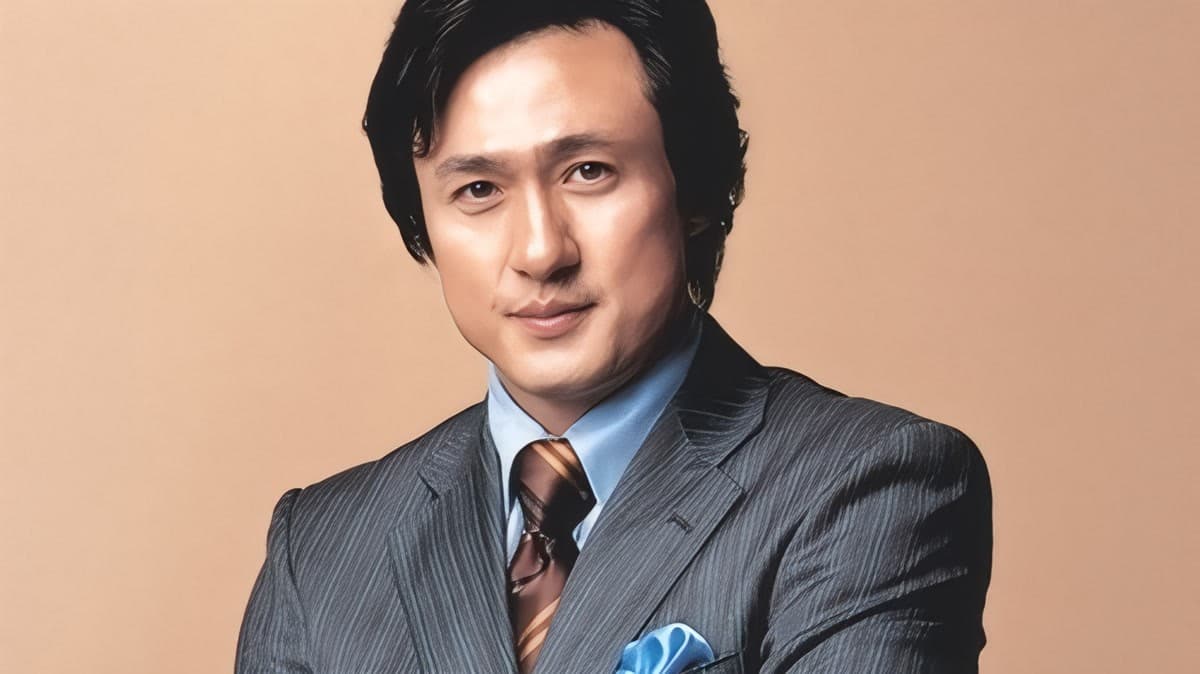
In 2006, Korean actor Son Chang-min appeared in the MBC historical drama Shin Don (신돈), a production that dramatized the life of a controversial Buddhist monk who held enormous influence over the Goryeo royal court in the 14th century. His portrayal included a distinctive, booming laugh — a laugh that was not in the original script. Twenty years later, that unplanned moment is still circulating online, and it recently landed him a commercial deal. He revealed the full story on MBN's talk show "Kim Joo-ha's Day and Night" (김주하의 데이앤나잇).
Son Chang-min, now 60, was appearing on the program for a rare variety show engagement — his first in approximately two decades. The episode became one of the week's most-discussed entertainment segments, partly because of what he said, and partly because hearing him say it at all felt like a surprise.
The Laugh Nobody Wrote
The moment that became a meme was not planned. Son Chang-min confirmed on the show that the signature laugh associated with his Shin Don character — a full-throated, theatrical expression of power and amusement — was never scripted. It emerged during filming as a spontaneous choice, an instinct about how the character would carry himself.
"I thought there would definitely be criticism," he said on air. "I deliberately went in a different direction from what people expected." The character he was playing, Son Chang-min explained, was conceived as the son of a slave in the Goryeo dynasty — someone whose background and psychology would be nothing like the refined, formal manner typical of Korean historical dramas. Rather than adopt the standard sageuk acting approach, he made choices that diverged sharply from the genre's conventions. The laugh was one of them.
The drama aired, the controversy he had anticipated did arrive, and then — as often happens with truly distinctive performances — something else happened. The laugh began circulating separately from the drama itself. Clipped, remixed, referenced in unrelated contexts, it took on a life of its own as what Koreans call a mim (밈) — an internet meme that spreads through repetition and recognition.
Fifteen Years Later, a Phone Call
Son Chang-min described the moment the meme translated into a concrete opportunity with visible amusement. "Shin Don had already ended, and fifteen years went by," he said. "Then my manager called and said I had to film a commercial." He paused for effect. "I thought it was a hidden camera. I genuinely thought someone was pranking me."
It was not a prank. The commercial used the character's laugh — or at least the persona built around it — as its hook. The meme had circulated long enough and widely enough that it had real market value, attached to an actor who had largely stepped away from the public spotlight in the intervening years.
For Son Chang-min, who has always described himself as someone who prefers to avoid excessive publicity, the trajectory of that moment illustrated something he found genuinely funny: that the performance he had been most nervous about, the one he expected to generate criticism, turned out to be the one that kept following him through his career in the most unexpected ways.
An Actor Who Chose His Roles Carefully
Son Chang-min's decision to take the role of Shin Don in the first place was itself an act of deliberate image recalibration. Before the drama, he was known primarily as a good-looking, polished leading man — what Korean audiences describe as an eomchin-a (엄친아), roughly meaning someone who seems to excel at everything without visible effort. He had played plenty of roles that fit that mold and felt it was time to break out of it.
Ironically, one of the reasons he had consistently avoided historical dramas before Shin Don was a seemingly small personal preference: he disliked wearing fake beards. "That was genuinely part of it," he said on the show, to laughter. "I kept turning down period pieces." When Shin Don came along and offered something different enough from the typical sageuk format, the beard became a concession worth making.
The character he ultimately created — brash, unpredictable, physically expressive in ways that formal historical drama tends to suppress — became one of the most memorable antagonist portrayals of its broadcast era. The Shin Don drama drew ratings above 20 percent at its peak, a figure that would represent a major success by modern Korean television standards, and considerably more impressive given how fragmented the viewership landscape has become since.
Twenty Years Away From Variety
Part of what made Son Chang-min's appearance on "Kim Joo-ha's Day and Night" notable was simply that it happened. He has maintained a profile in Korean film and drama over the years, but has largely avoided the variety show circuit that many actors use to stay visible between projects. This week's appearance, by his own description, was his first significant variety engagement in roughly two decades.
At 60, he arrived looking noticeably lean — a condition he credited to a diet regimen that would strike many viewers as severe. He said he limits himself to half a bowl of rice per meal at most and otherwise applies what he described, with self-aware humor, as an approach modeled on the restricted eating habits of younger female idol group members.
He also revealed, almost as an aside, that he still uses a 2G mobile phone — a detail that seemed to delight the show's hosts and drew the question of how he would respond if a smartphone company offered him an advertising deal. "That," he said, "would require some thinking." His deadpan delivery of the line drew the kind of reaction that reminded viewers why his return to variety had been worth the wait.
The Long Shelf Life of a Good Performance
Son Chang-min's Shin Don story is, at one level, simply an entertaining celebrity anecdote about a meme that got out of hand in the best possible way. But it also reflects something broader about how Korean television performances age. The digital circulation of clips, scenes, and moments from older productions has given certain performances a second life — and occasionally a third — that their original broadcast could not have anticipated.
For an actor who made a calculated creative risk twenty years ago and then watched it become something far larger than the drama it came from, the experience seems to have settled into something like quiet satisfaction. The laugh was never in the script. Everything that followed was not in the script either. And yet here it is, still landing.
"Kim Joo-ha's Day and Night" airs on MBN in South Korea.
How do you feel about this article?
저작권자 © KEnterHub 무단전재 및 재배포 금지
Entertainment Journalist · KEnterHub
Entertainment journalist specializing in K-Pop, K-Drama, and Korean celebrity news. Covers artist comebacks, drama premieres, award shows, and fan culture with in-depth reporting and analysis.
Comments
Please log in to comment