Soyeon Turns I'm gonna TOESA Into A Chart Strategy
The i-dle producer’s solo hit climbed from Melon’s 40s to a five-platform real-time sweep, proving that humor can be serious pop strategy.
 By Im Garam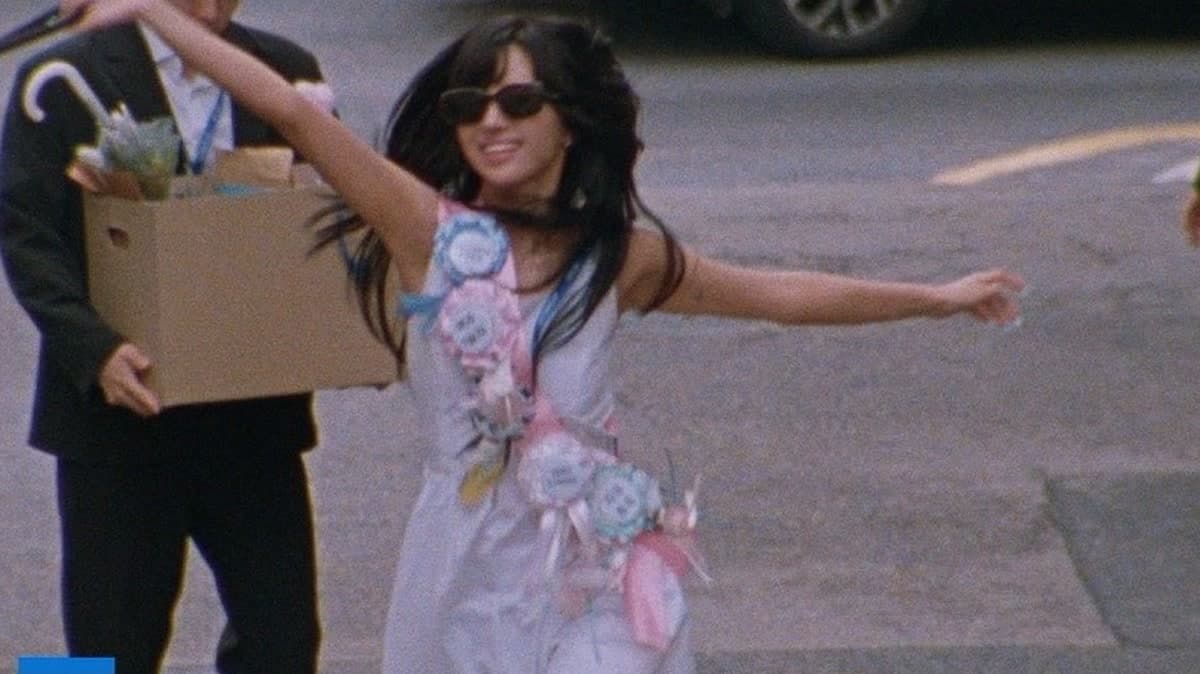
Jeon Soyeon has turned a workplace joke into a chart event.
The i-dle producer and soloist pushed "I'm gonna TOESA (Narr. KIAN84)" to No. 1 across Melon, Genie, VIBE, FLO and Bugs real-time charts at 8-9 a.m. KST on September 18, 2026, according to DongA, Kyunghyang Sports and bnt. That sweep matters because the song did not arrive as a conventional fan-only single. It grew from a comic, resignation-themed hook into a multi-platform signal that Soyeon's solo identity can travel beyond the group frame.
This review analyzes why the rise is important: Soyeon is using humor, authorship and everyday frustration to turn a solo comeback into a broader test of K-pop's domestic listening market. The numbers are not just trophies. They show how a song can move from meme-friendly recognition to daily-chart durability in less than two weeks.
Why The Song Broke Through
The immediate appeal of "I'm gonna TOESA" is simple, almost blunt. It gives listeners a line they can repeat before they have decided whether they love the whole song. In a market crowded with polished hooks, Soyeon's decision to frame resignation as a wink rather than a complaint gives the track a clearer social use: fans can quote it, workers can laugh with it, and short-form users can turn it into a tiny sketch.
That social function is the bridge from novelty to chart performance. Edaily reported that the song stood at No. 1 on Melon Top 100 at 8 a.m. KST on September 17, 2026, while also topping Melon Hot 100, Genie Top 200, VIBE Top 100 and FLO's all-age chart. Bugs was No. 2 at that point, which is useful context: the track was already strong, but it had not yet completed the domestic sweep.
By the next morning, the pattern had widened. DongA and Kyunghyang Sports reported that at 8-9 a.m. KST on September 18, the track reached No. 1 in real time on Melon, Genie, VIBE, FLO and Bugs. The difference between those two snapshots is the story. This was not a single-platform spike; it was a rolling climb across Korea's major listening surfaces.
The Data Behind The Momentum
The clearest time-series marker is Melon. Ilgan Sports, via Daum, reported that "I'm gonna TOESA" entered Melon Top 100 in the 40s after release before later reaching No. 1. Edaily then placed it at No. 1 on Melon Top 100 at 8 a.m. KST on September 17. One day later, DongA and Kyunghyang placed the broader real-time sweep across five services at No. 1. The move from a 40s entry point to a chart-leading position is important because it suggests repeat public listening rather than a single burst of fandom coordination.
The platform spread deepens that reading. On September 17 daily charts, DongA, Kyunghyang and bnt reported Genie and VIBE at No. 1, with Melon and Bugs at No. 2. On video, the music video returned to No. 1 on YouTube Korea's daily popular music video chart as of September 16, according to the same reports. Edaily also reported YouTube Music weekly popular songs at No. 4 and Profile Music at No. 2 as of September 15. Those are different user behaviors: streaming, video replay and profile personalization. When all three move together, the song becomes less like a comeback notice and more like a shared cultural phrase.
The international data is smaller but still revealing. Edaily reported Spotify South Korea daily chart No. 8 in its September 17 coverage; DongA, Kyunghyang and bnt reported No. 7 the following day. A Kpop Charts item surfaced in search results with a single-source figure of No. 7 and 52,086 Spotify South Korea streams around September 18, so that number should be treated cautiously, but it fits the direction of travel. The track was not only climbing Korean legacy platforms; it was crossing into global-platform listening inside Korea.
Line and bar comparison showing Melon Top 100 movement from the 40s after release to No. 1 on September 17, plus five Korean real-time platforms at No. 1 on September 18. "I'm gonna TOESA" Chart Lift 1 10 20 30 40s Release Melon 40s Sep. 17 Melon No. 1 Sep. 18 5 services No. 1 40s No. 1 No. 1 x5 Hanteo first week: about 75,000 Windy benchmark: roughly half, per Newsen
The album-side data points in the same direction, though with less precision. A Newsen report carried in Naver search results said What a Wonderful Life recorded about 75,000 first-week Hanteo sales as of September 14, roughly double Soyeon's first mini album Windy. That comparison should not be overplayed as a market record. Its value is more personal: it shows that the audience for Soyeon as a solo album artist has expanded alongside the song's public-chart lift.
What Soyeon Is Really Testing
But chart movement alone does not explain why this comeback feels larger than a scoreboard. Soyeon's advantage is authorship. As i-dle's producer figure, she already carries a public image as someone who designs concepts rather than simply performs them. "I'm gonna TOESA" extends that image by making the concept legible before the chorus even finishes.
The song's reference points also help. Reports noted that it plays with the memory of Ex's 2005 college-song-festival winner "Please Take Care of Me," connecting a 2000s employment anthem with a 2026 resignation fantasy. That bridge matters because it lets different age groups recognize the joke from different angles. Younger listeners get the meme. Older listeners hear the callback. Office workers get the release.
There is a risk in that clarity. A song built on a catchphrase can burn quickly if the joke outpaces the music. Soyeon avoids part of that trap by making the performance knowingly theatrical: KIAN84's narration, the challenge clips and the office-life imagery all frame exaggeration as the point. The song does not ask to be read as a solemn labor anthem. It wins because it understands how pop can turn irritation into ritual.
That is why the chart spread is meaningful. On September 15, Edaily had the song at No. 2 on Profile Music and No. 4 on YouTube Music weekly popular songs. On September 16, DongA and Kyunghyang had the MV back at No. 1 on YouTube Korea's daily popular music video chart. On September 17 and 18, the domestic audio platforms followed. The sequence moves from identity display to video replay to audio consumption, which is exactly the kind of ladder a viral K-pop single needs if it wants to last beyond its first joke.
Impact And Reaction
The reaction has also been unusually easy to map. Challenge participation from Ex's Lee Sang-mi, Jaurim's Kim Yuna, KIAN84, RESCENE's Minami and BTOB's Yook Sung-jae gave the song a cross-generational cast, according to DongA and Kyunghyang. That matters more than a long list of names might suggest. Each participant pulls the song away from a narrow idol-fandom lane and toward a broader entertainment conversation.
Edaily reported that the album exceeded 750,000 yuan in QQ Music digital album sales and held No. 1 on the platform's weekly digital album bestseller chart. That figure is not directly comparable to Korean streaming ranks, but it shows that Soyeon's personal brand is not confined to a domestic joke. The Korean hook travels because fans abroad already read Soyeon as a creator with a distinct tone.
The result is a comeback that feels both local and exportable. Locally, it uses Korean office language and a recognizable cultural callback. Internationally, it sells the clarity of Soyeon's persona: sharp, funny, self-directed and slightly confrontational. That combination is hard to manufacture after release. It has to be embedded in the song's design from the beginning.
Future Outlook
The next test is durability. A No. 1 real-time sweep on September 18 is a strong headline, but the more valuable question is whether "I'm gonna TOESA" can hold daily-chart ground after the first challenge wave fades. The signs are encouraging because the song has already shown a measurable climb: Melon Top 100 in the 40s after release, No. 1 on September 17, then a five-platform real-time sweep on September 18.
If Soyeon keeps converting that attention through live stages and short-form participation, this comeback may become more than a successful solo single. It could sharpen the market's view of her as a rare idol-producer whose humor is also strategy. For K-pop, that is the useful lesson: sometimes the most commercial idea is not the biggest concept, but the one listeners can immediately use in their own lives.
How do you feel about this article?
저작권자 © KEnterHub 무단전재 및 재배포 금지
Music Charts & Data Analyst · KEnterHub
Music data analyst turned journalist. Im Garam covers K-pop through the numbers — chart performance, album sales, streaming milestones and touring economics — and writes the deep-dive reviews and industry analyses that put those numbers in context.
Comments
Please log in to comment