Ten Years of TWICE: How K-Pop's Most Durable Girl Group Survived Every Generational Shift
 By Jang Hojin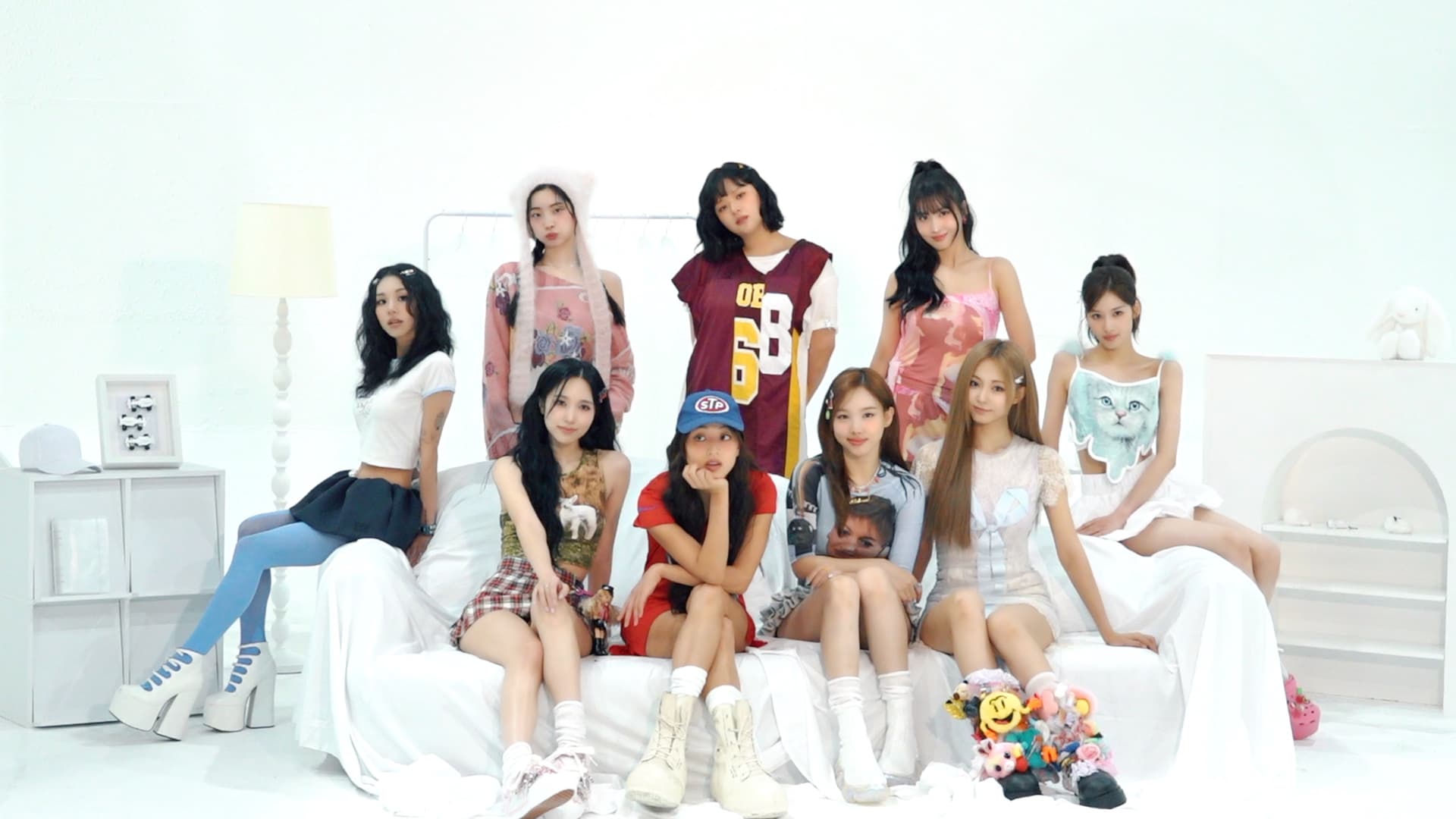
Five months from now, TWICE will celebrate their tenth anniversary. The group that debuted on October 22, 2015 — nine members selected from the brutal visibility of Mnet's "Sixteen" survival program — will reach a milestone that almost no K-pop act achieves with their full lineup intact, their commercial relevance maintained, and their fanbase still actively growing. In an industry measured in months, TWICE's decade is extraordinary on every axis.
The halfway point of 2025 finds the group in a characteristically active state. Nayeon, who released her second solo mini album "NA" in 2023, has remained one of JYP Entertainment's most visible individual artists. Jihyo's solo debut "ZONE" (2023) established her as a genuine commercial force outside the group context. Momo, Sana, and Mina continue to maintain dual-market careers that bridge their Korean and Japanese fanbases. The full group's activity, balanced against individual solo timelines, reflects a sophisticated management strategy that TWICE has refined across a decade of navigating these tensions.
What makes the upcoming anniversary worth analyzing now — five months before the date — is not just the milestone itself but the industry context that gives it meaning. The K-pop landscape in October 2025 will look profoundly different from the one TWICE entered in October 2015. Understanding how they have navigated that transformation is, in many ways, a guide to how durability works in this industry.
The Transition That Should Have Broken Them
The most dangerous period for any K-pop group is the generational transition: the moment when the acts that defined their era are superseded by a new cohort with fresher aesthetics, higher production values, and the novelty advantage that always comes with emergence. For TWICE, that transition began in earnest around 2020-2021, when the 4th generation started asserting itself through groups like aespa, IVE, and eventually LE SSERAFIM.
Many industry observers expected TWICE to fade into the managed-decline pattern that characterized the 2nd gen groups they had once superseded. Instead, they adapted. "Formula of Love: O+T=<3" (2021) demonstrated a willingness to engage with more experimental sonic territory. "Between 1&2" (2022) produced "Talk That Talk" and "Scientist," tracks that competed directly with 4th gen aesthetics without abandoning the approachable warmth that had defined the group's brand. The mini album sold over 1.5 million copies in its first week.
The Japan Factor as Long-Term Insurance
One of the structural advantages that TWICE possesses over most of their 4th generation competitors is a Japanese market presence that was built during a period when few other groups were paying sustained attention to it. Their Japanese debut in 2017 — backed by Warner Music Japan with dedicated Japanese-language singles — preceded the broader industry recognition that Japan required strategic investment, not just exploitation of Korean success.
The result is a dual-market infrastructure that has functioned as financial insurance during periods when the Korean domestic market's attention has shifted. TWICE's Japanese releases — "TWICE JAPAN Best 2017-2022" charted at number one on Oricon — have generated revenue streams independent of whatever competitive pressure the Korean market generates. Three of their nine members (Momo, Sana, Mina) are Japanese nationals, which has provided cultural authenticity that resonates with Japanese audiences in ways that purely Korean acts often cannot replicate.
As of May 2025, with their 10th anniversary five months away, TWICE is preparing what is expected to be a major anniversary campaign — the K-pop industry's standard framework for marking a decade involves retrospective releases, special concerts, and renewed media attention. For a group of TWICE's scale, this means a global event. Capacity for their anniversary concerts, expected to be announced later in the year, is already a subject of active speculation among their fanbase.
What a Decade Means in K-Pop
The structural reality of K-pop's idol system — seven-year contracts, generational renewal cycles, the constant industry pressure toward novelty — means that very few groups reach ten years. Among those that have, the path varies considerably: some maintain their full lineup; others operate as reduced or rotating rosters; others primarily in the concert and nostalgia circuit rather than active chart competition.
TWICE's path has been distinguished by a refusal to accept managed decline. Their 2022-2023 performance during what should have been their most vulnerable period — surrounded by 4th gen acts at peak cultural heat — demonstrated something that the industry had not universally expected: that a 3rd gen group, with the right adaptation, could remain commercially competitive at the highest tier. Whether that competitiveness sustains through the anniversary and beyond is the question that the second half of 2025 will begin to answer.
What seems certain is that October 22, 2025 will be met with the kind of global fanbase mobilization that very few entertainment acts outside of K-pop can generate. A decade of TWICE means a decade of ONCE — the fandom that has grown, aged, and remained loyal in numbers that continue to surprise analysts who expected the fan-aging process to produce attrition. It hasn't. If anything, longevity appears to have deepened the attachment. The anniversary campaign will be a test of that depth.
How do you feel about this article?
저작권자 © KEnterHub 무단전재 및 재배포 금지
Entertainment Journalist · KEnterHub
Entertainment journalist specializing in K-Pop, K-Drama, and Korean celebrity news. Covers artist comebacks, drama premieres, award shows, and fan culture with in-depth reporting and analysis.
Comments
Please log in to comment