The 43x Surge Behind Chairman Kang's Buzz
 By Jang Hojin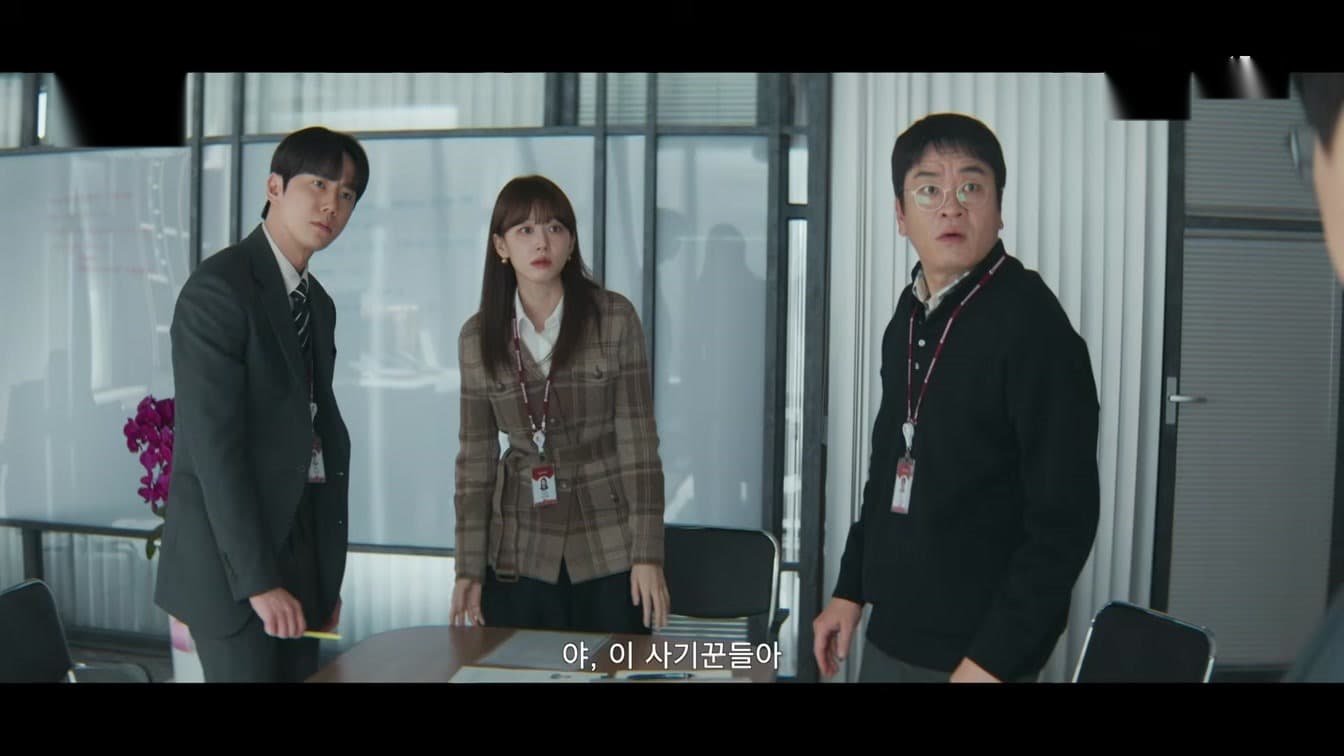
JTBC's New Recruit Chairman Kang has turned a weekend drama twist into a wider K-content signal: Korean viewers are not only searching for the show, they are moving back to the original story in striking numbers. According to local reports citing Naver Webtoon, the webtoon tied to the drama saw domestic views jump by about 43 times in the two weeks after the drama's release compared with the two weeks before its official teaser video was unveiled.
That is the kind of number that explains why the keyword behind the drama surfaced through Google Trends Korea. A plot about a corporate chairman's soul entering the body of a young employee already had a built-in hook, but the newest wave of attention suggests something bigger than a simple broadcast bump. Viewers are treating the drama as an entry point into a larger story world, then using the original webtoon and web novel to fill in character motives, succession-war details, and possible turns that the television version has not fully revealed yet.
The result is a familiar but powerful K-drama cycle: a televised adaptation creates urgency, the original IP becomes searchable again, and fans begin comparing versions in real time. For New Recruit Chairman Kang, that cycle is moving especially fast because the show is hitting several Discover-friendly signals at once: a measurable 43-fold surge, a family power struggle that keeps changing shape, and cast-driven scenes that give viewers clear moments to debate after each episode.
A 43-Fold Jump Shows The Adaptation Is Driving Viewers Back To The Source
The core data point is simple and eye-catching. Naver Webtoon said the webtoon based on the Naver Series web novel of the same name recorded roughly 43 times more domestic views after the drama release than it did in the comparison period before the official teaser. For a drama adaptation, that kind of lift matters because it shows that viewers are not passively watching; they are actively seeking out the source material.
That behavior has become one of the strongest signs of a modern Korean hit. A webtoon or web novel gives a drama an existing premise, a fandom that already knows the characters, and a built-in library of story clues. Once the drama starts trending, new viewers can immediately go backward into the original IP rather than waiting a week for the next episode. In this case, the search interest around the keyword "Kang Chairman" appears to reflect that same loop: fans want to know what the drama is adapting, what it may change, and why the original story is suddenly being discussed everywhere.
The broader market context also makes the surge more meaningful. Korean producers have increasingly leaned on webtoon and web novel adaptations because the stories have already been tested with readers. Recent industry coverage has pointed to the scale of the Korean web story economy, with web novel and webtoon markets together discussed as a multitrillion-won sector. A single drama cannot explain that entire shift, but New Recruit Chairman Kang is another clear example of why studios keep looking to online story platforms for dramas with ready-made hooks.
The show's premise is easy to pitch in one sentence: Choi Sung Group chairman Kang Yong-ho, played by Son Hyun-joo, becomes connected to the body of new employee Hwang Jun-hyun, played by Lee Jun-young, setting off a battle over corporate control, family loyalty, and revenge. That high-concept setup gives the adaptation a strong first impression, while the workplace and succession-war elements give it enough structure to sustain weekly cliffhangers.
Early ratings helped reinforce the momentum. Local entertainment reports noted that the drama climbed from 5.2 percent nationwide for episode two to 6.7 percent for episode three and 8.2 percent for episode four, with a minute-by-minute peak of 8.8 percent. Later reports around the recent episodes also pointed to the drama crossing the 8 percent range and drawing attention for its intense power plays. Those numbers create the ideal environment for an original webtoon to benefit: the drama is visible enough to create curiosity, and the story is twist-heavy enough to make viewers look for more information.
Episode 8 Added New Fuel To The Succession War
The newest attention around the drama is not coming from the webtoon surge alone. Episode 8, which aired on June 21, sharpened the show's central conflict by putting multiple characters into situations where family ties and survival strategy collided. The episode's major threads included Kang Bang-geul, played by Lee Joo-myoung, seeking a private meeting with Kang Jae-sung, played by Jin Goo, while the fight over Choi Sung Group's future became even more unstable.
Several Korean outlets highlighted the detention-center meeting between Bang-geul and Jae-sung before the broadcast. In the drama's story, Jae-sung had been taken into custody after allegations involving his sister Kang Jae-kyung, played by Jeon Hye-jin. Bang-geul's visit was framed as a possible turning point because the siblings had not shared an easy relationship. Jae-sung had long dismissed his half-sister, while Bang-geul had been working alongside Hwang Jun-hyun to block his plans inside Choi Sung Group.
That setup gives the scene a strong emotional hook. Bang-geul is not simply visiting a relative in trouble; she is entering a room with someone who has underestimated her and who may still be important to the family's larger power struggle. The episode uses that tension to keep viewers asking whether her decision is an act of compassion, strategy, or both. For a drama built on corporate warfare, those emotional uncertainties are what keep the story from feeling like a boardroom puzzle.
At the same time, Jae-kyung's side of the plot pushed the conflict into darker territory. Reports on the June 21 episode described her submitting a USB drive during a police investigation and presenting internal audit materials tied to alleged slush-fund activity at Choi Sung Materials. Within the drama, that move places Jae-sung under greater pressure and makes Jae-kyung look increasingly willing to sacrifice family bonds to advance her own claim to power.
The episode also deepened the workplace stakes. Another report described Hwang Jun-hyun, Kang Bang-geul, and Park Bong-gi, played by Lee Sung-wook, being assigned to handle restructuring at Choi Sung Materials. The plan reportedly involved cutting 20 percent of staff within a month, which immediately created moral conflict inside the team. Bong-gi resisted the role, Bang-geul questioned why ordinary employees should pay for the mistakes of executives, and Jun-hyun was forced to weigh a painful corporate decision against the larger fight with Jae-kyung.
Why The Drama Is Finding A Wider Audience Now
The reason New Recruit Chairman Kang is breaking out at this point is not just that it has shocking scenes. Many weekend dramas have loud confrontations. What makes this one searchable is the combination of a fantasy body-swap premise, a revenge-driven corporate game, and an adaptation trail that viewers can follow across platforms. Every new plot turn can send fans back to the webtoon to look for clues, then back to the drama to see how the television writers are reshaping the source.
That comparison culture is especially strong for webtoon-based dramas. Some viewers want to know whether a character's betrayal was already in the original version. Others want to understand whether a relationship will soften, whether a villain will be redeemed, or whether the drama is preparing a different ending. The 43-fold webtoon rise suggests that New Recruit Chairman Kang is not simply benefiting from casual curiosity; it is producing the kind of question-driven fandom that keeps a title alive between broadcasts.
The casting also helps. Lee Jun-young's Hwang Jun-hyun sits at the center of the story's most unusual device, because he must carry the tension of a young employee entangled with the authority and regrets of a chairman. Lee Joo-myoung's Kang Bang-geul gives the succession war a more emotional perspective, especially as her character moves from being underestimated to becoming a possible new variable in the family's future. Jeon Hye-jin and Jin Goo add the sharper sibling conflict, while Son Hyun-joo's Kang Yong-ho remains the gravitational force behind the entire setup.
For international K-drama fans, the show's appeal is also easy to understand. It mixes familiar ingredients: family inheritance battles, office politics, secret strategies, revenge, and a supernatural twist that changes who holds power in every conversation. But the webtoon surge adds another layer. It tells overseas readers and viewers that this is not only a local broadcast title; it is part of a wider Korean IP ecosystem where a drama can revive a story, expand its audience, and turn a search keyword into a measurable content event.
The next question is whether the drama can keep that momentum beyond the initial surge. A 43-fold lift is impressive, but sustained attention will depend on whether the show continues to give viewers new reasons to search after each episode. Episode 8 appears to have done exactly that by tying Bang-geul's choices, Jae-kyung's escalation, Jae-sung's downfall, and Jun-hyun's moral dilemma into one tightening storyline.
If the drama keeps converting weekly twists into source-material curiosity, New Recruit Chairman Kang could become one of the clearer examples of how Korean television and webtoon platforms now feed each other. The keyword may have started with a trending drama, but the stronger story is the audience behavior behind it: viewers watched, searched, clicked back into the original, and turned one adaptation into a much larger conversation.
How do you feel about this article?
저작권자 © KEnterHub 무단전재 및 재배포 금지
Entertainment Journalist · KEnterHub
Entertainment journalist specializing in K-Pop, K-Drama, and Korean celebrity news. Covers artist comebacks, drama premieres, award shows, and fan culture with in-depth reporting and analysis.
Comments
Please log in to comment