The Album Bubble Has Burst: How K-pop Is Reinventing Itself for the Experience Age
From 93.3 million albums sold to nine of the world's top ten bestsellers — how K-pop's domestic contraction is masking a global transformation toward concerts, streaming, and the experience economy
 By Jang Hojin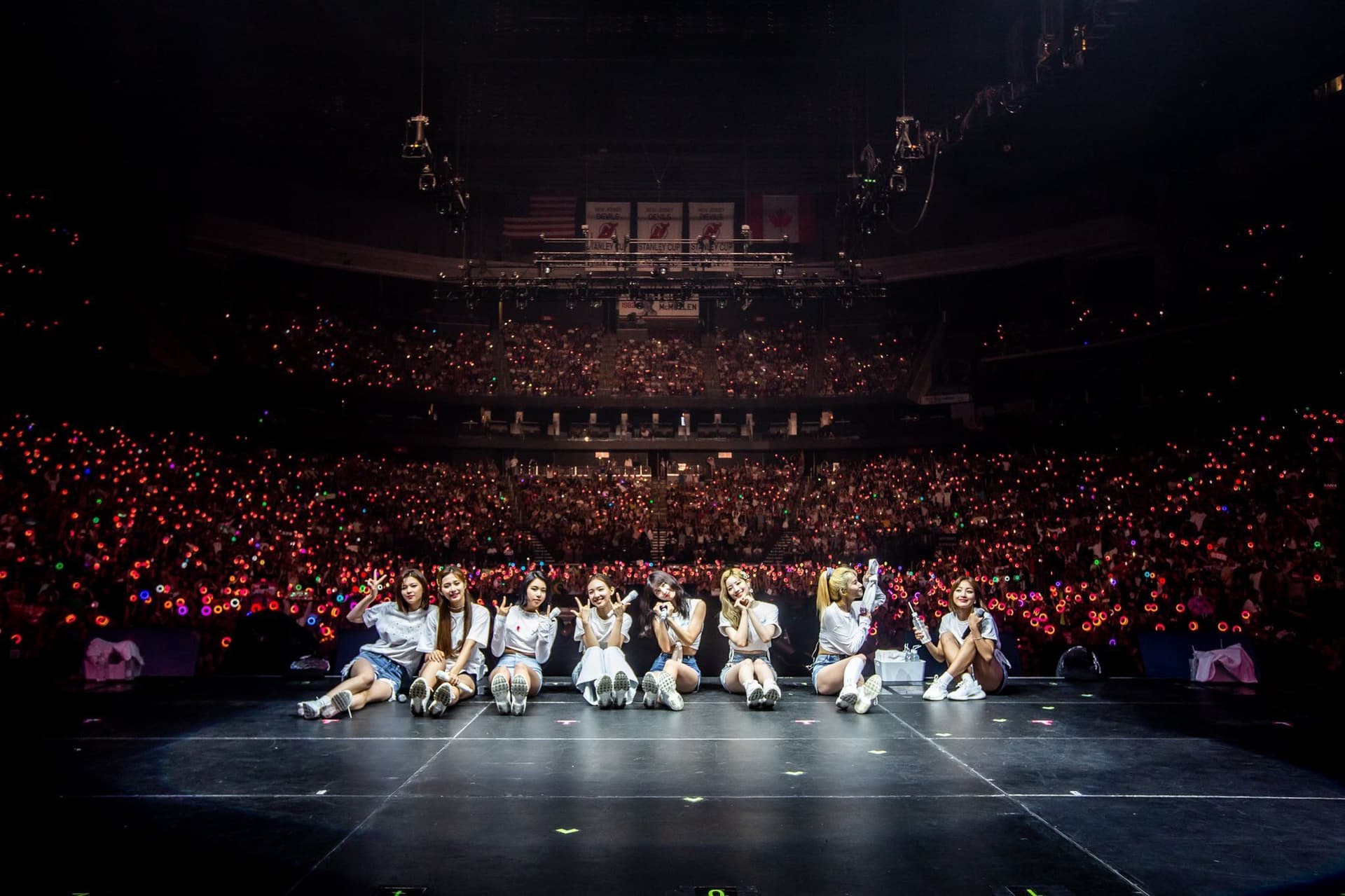
For years, the K-pop industry measured its health in one currency: physical album sales. Labels competed to outsell each other. Fans bulk-bought to push their favorites to the top of the Circle Chart. Analysts cited album shipment figures as proof that the Korean Wave was unstoppable. Then came 2024, and the bubble burst — for the first time in a decade.
According to Circle Chart's year-end data, K-pop physical album sales fell to approximately 93.3 million units in 2024, down from 115.7 million in 2023 — the only year in history the market crossed the 100 million threshold. The 19.5% decline was the first contraction since 2014, ending nine consecutive years of uninterrupted growth. It sent shockwaves through an industry that had spent the better part of a decade treating album volume as its primary health indicator.
But here is the paradox that makes 2024 one of K-pop's most analytically rich chapters: while domestic album sales were cratering, Korean artists simultaneously occupied nine of the top ten spots on the IFPI's Global Album Sales Chart. The industry was contracting at home and conquering the world at the same time. Understanding that contradiction is the key to understanding where K-pop is actually going.
The Numbers Behind the Decline
The 2024 decline did not arrive without warning. Circle Chart data shows a trajectory that, in hindsight, looks like a classic speculative cycle. From roughly 29 million units in 2019, K-pop album sales surged to 50 million in 2020, then to 71 million in 2021, 97 million in 2022, and peaked at 115.7 million in 2023. Each of those years posted growth rates that defied broader entertainment industry norms.
The granular data is even more revealing. In 2024, only 20 albums sold over one million copies, compared to 33 the year before. The number of domestic acts achieving over three million annual album sales fell from 11 in 2023 to just seven. SEVENTEEN — who led all artists in 2024 sales — moved approximately 8.9 million copies, a significant achievement by any standard. But in 2023, they had sold 16 million. The group's own year-over-year decline of 7.1 million copies encapsulates the scale of contraction the market absorbed in a single year.
Male artists bore the brunt of the downturn, with their segment contracting by approximately 20 million copies (-23.8%), while female artists experienced a comparatively modest decline of around 1.7 million copies (-6.1%). The gender imbalance reflects the heavier reliance on fansign-driven bulk purchasing in the male artist segment — a dynamic that will be explored in full below.
The International Collapse Behind the Numbers
The domestic Circle Chart figures tell only part of the story. The international dimension of the 2024 decline was, in some ways, even more dramatic. In 2023, overseas buyers contributed to 53% of first-month sales for the top-selling album in the market. By 2024, that figure had collapsed to just 9% — a staggering withdrawal of international fan spending from physical album purchasing.
The Korea Customs Service recorded K-pop album export value at USD $291.8 million in 2024, a year-over-year increase of just 0.55% — essentially flat, after years of double-digit export growth. The causes were structural. International fans who previously absorbed large quantities of Korean physical albums faced shipping costs that had risen sharply, with a standard album priced at approximately $13 USD now requiring $20 or more just for basic shipping — often doubling or tripling the effective cost. The economic calculus of bulk purchasing, already strained, simply stopped making sense for millions of overseas buyers.
This international retreat, combined with the domestic fatigue documented below, produced the 19.5% headline figure. But it also obscured a critical counterpoint: on the IFPI's Global Album Sales Chart for 2024, nine of the top ten best-selling albums worldwide were by K-pop artists. Only Taylor Swift's *The Tortured Poets Department* prevented a complete Korean sweep. ENHYPEN's *ROMANCE: UNTOLD* and SEVENTEEN's *SPILL THE FEELS* both sold 3.4 million copies globally; Stray Kids' *ATE* moved 2.9 million. K-pop was declining domestically while remaining the most powerful force in global physical music sales.
The Fansign Machine: How the System Created Its Own Undoing
To understand why the volume bubble formed and why it burst, you need to understand the fansign event system — arguably the single most consequential mechanism in K-pop's modern commercial architecture.
Fansign events are intimate artist-fan meetings — in person or via video call — allocated through a lottery system in which album purchases serve as entries. The more copies a fan buys, the greater their statistical chances of being selected. In practice, this meant fans regularly purchasing dozens or even more than 100 copies of the same album to secure a slot. Labels amplified this by releasing multiple physical "versions" of each album with different photocard sets, creating a collector logic that made each copy feel distinct even when the music inside was identical.
The system was brilliantly effective at inflating volume. It was also, by design, unsustainable. Several forces converged to unwind it in 2024:
- BTS and BLACKPINK absence: These two groups had historically anchored the upper range of the sales curve. With BTS fully on military hiatus and BLACKPINK members pursuing solo projects without a group comeback, the ceiling dropped dramatically. No fourth-generation act has yet proven capable of generating equivalent bulk-purchase demand.
- Industry scandals: The high-profile, extended public dispute between HYBE and its ADOR label — including legal action and public statements from NewJeans — created a "feeling of fatigue" noted in a December 2024 Korea Creative Content Agency report. Fan trust, a prerequisite for bulk purchasing, eroded.
- Fansign scaling back: Facing logistical constraints and artist health concerns, labels quietly scaled back the frequency and accessibility of fansign events. The incentive structure that had driven multi-copy purchasing weakened at its source.
- Album quality deterioration: Fan communities documented a pattern of declining physical quality as labels maximized version count. NCT Wish's 2024 album *Steady* was packaged as a star-shaped keychain "smart album" that allowed music access digitally — a format closer to merchandise than to a traditional album. The reframing of albums as collectible goods, rather than music vehicles, accelerated fan disillusionment.
- Environmental and sustainability backlash: Social media coverage of unsealed albums — their photocards extracted and the discs discarded — generated significant negative press, prompting some fans to publicly commit to reducing bulk purchases on ethical grounds.
The result was not a collapse of fan dedication, but a reallocation of fan spending. The budget that had been flowing into album purchasing shifted — toward concerts, toward streaming, toward fan platform subscriptions, and toward merchandise purchased at live events.
Why the Stock Market Got It Wrong
When 2024 album sales data began filtering into financial markets in early 2025, the reaction was swift and punishing. HYBE shares fell sharply before recovering on stronger-than-expected concert revenue disclosures. The episode illustrated a fundamental misread: investors who had indexed "K-pop health" to album unit sales were measuring the wrong variable.
HYBE's full-year 2024 results told a different story. The company recorded revenues of KRW 2.2545 trillion (approximately USD $1.654 billion) — a record high, and the third consecutive year above the $1 billion threshold. Despite an 11.3% decline in album sales, concert revenue rose 25.6% year-over-year to KRW 450.87 billion (~$330.7 million). HYBE artists held 147 concerts and 25 fan meetings during the year — a record level of live activity. In Q4 alone, concert revenue more than doubled year-over-year to reach KRW 188.9 billion.
Merchandise and licensing revenue, much of it driven by concert tour sales, climbed 29.1% to KRW 420 billion (~$293.4 million) — the highest figure HYBE has ever recorded. The structural shift was unmistakable in the revenue composition: the live performance and merchandise segments absorbed and exceeded the revenue lost from album sales.
Across the Big Four, the pattern was consistent. SM Entertainment saw concert revenue climb 58%. YG Entertainment posted a 275% year-over-year jump in concert revenue, its most dramatic percentage swing in recent memory. For JYP Entertainment — home of Stray Kids, TWICE, and ITZY — streaming represented just 5% of Q2 2024 revenue, while merchandise accounted for 31% and concerts 29%. The agencies that built their models on album manufacturing are rapidly reorienting around live entertainment as their primary revenue engine.
The Record Tours That Rewrote K-pop Economics
No single data point illustrates the live pivot more powerfully than Stray Kids' *dominATE* world tour. Running from August 2024 through July 2025, the tour grossed an estimated $260 million across 54 shows, with attendance of over 2.15 million and a 99.99% sell-through rate. It became the highest-grossing K-pop concert tour of all time — and the biggest tour by any male artist in terms of K-pop benchmarks.
The regional breakdown revealed how thoroughly K-pop's live market had globalized. In Latin America — a region that had previously seen limited K-pop touring investment — eight shows generated $41.1 million from 361,000 tickets, the largest K-pop tour leg ever staged in the region. In North America, 13 shows sold 491,000 tickets for $76.2 million, the highest-grossing and best-selling North American leg any K-pop act has achieved. Individual Mexico City stadium performances generated $14.1 million from 110,000 tickets alone.
VIP packages for premium experiences — soundcheck access, post-show meetings, front-row positioning — reached $3,000 or more per ticket in some markets, illustrating that the fans reallocating budget from album purchasing were channeling it into higher-value live experiences, not abandoning spending altogether.
The industry-wide touring boom was reflected in Billboard's global Boxscore rankings. Five K-pop acts secured spots in the all-genre Top 50 in 2025 — up from three in 2023 and two in 2022. Collectively, K-pop acts generated $228 million while selling 1.6 million tickets from 78 reported shows, a 79% increase over 2024's already impressive live revenue total.
Streaming Fills the Gap — and Then Some
While physical sales contracted, digital streaming continued its relentless expansion. According to Spotify, K-pop streaming grew by 470 times globally between 2014 and 2024 — a figure that strains credibility until you consider that the genre was genuinely niche outside Korea at the start of that period. Compared to 2018 alone, global K-pop streams grew 362%, with the United States up 182% and Southeast Asia up 423%.
The top-line streaming performers in 2024 reinforced that the genre's audience had never been larger. BTS, despite operating on military hiatus with no new group content, claimed the title of Global Top K-Pop Artist on Spotify Wrapped for the seventh consecutive year. Individual member tracks dominated: Jimin's "Who" topped the Global Top K-Pop Songs chart and joined Spotify's Billions Club; Jungkook's "Seven (feat. Latto)" crossed two billion streams. ROSÉ's "APT." collaboration with Bruno Mars became one of the breakout global crossover moments of the year.
Among emerging acts, ILLIT drew 10 million monthly Spotify listeners globally, Le Sserafim and NewJeans both surpassed the one billion stream mark for the year, and BABYMONSTER reached 7.5 million monthly listeners within months of debut. The streaming data told a story of deepening global penetration at every tier of the market — established acts maintaining extraordinary catalog strength while new groups built meaningful audiences without relying on physical sales volume to measure their relevance.
For the industry's economics, streaming's compounding nature matters. Unlike album sales, which spike at release and fade, streaming generates revenue across the full catalog indefinitely. An act that builds strong streaming habits during its peak years creates a recurring revenue floor that persists through hiatuses, military service, and lineup changes. BTS's streaming dominance during their military absence demonstrated precisely this dynamic — the catalog earning while the artists rest.
The Superfan Platform Economy: Weverse and the Subscription Layer
Perhaps the least-discussed but most structurally significant development in K-pop's 2024 revenue story was the maturation of fan platform monetization. HYBE's Weverse platform hit 150 million cumulative global downloads in 2024, with a 19% user growth rate and approximately 10 million monthly active users across 245 countries and regions.
What makes the Weverse numbers significant is not the scale alone but the monetization architecture. The platform sells digital fan club memberships priced at 30,000 won (~$24) annually, offering early ticket access, exclusive content, and direct messaging from artists. In December 2024, Weverse launched additional tiered subscription products at $2 to $4 per month, targeting the "superfan" segment willing to pay for premium access and intimacy. Goldman Sachs estimated in 2024 that the superfan monetization sector across the global music industry could generate an additional $4.3 billion in annual revenue once platforms reach maturity.
For K-pop, with its uniquely intense parasocial fan-artist relationships, the opportunity is proportionally larger than in most music genres. Weverse streamed 5,787 live broadcasts in 2024, accumulating 11.25 million viewers and 426 million total views. Artists sent 698,000 direct messages; fans replied with 96.36 million. Jung Kook's December broadcast alone generated 23 million real-time viewers. The platform sold 20.6 million merchandise items (+13% YoY), many of them linked to fan community activity rather than specific album releases.
The platform model is not without friction. Weverse's announcement that it would retain between 30% and 60% of revenues from the new membership tiers sparked pushback from partner labels and fan communities, highlighting the tension between HYBE's platform ambitions and the interests of the broader ecosystem. But the direction of travel is clear: fan relationship monetization through digital subscriptions is becoming a core revenue layer, one that operates independently of the album release cycle and generates income 365 days a year.
How Did K-pop Reach This Inflection Point?
Understanding 2024 requires understanding what the industry optimized for in the five years prior. The era from 2019 to 2023 was shaped by several converging pressures that are now releasing.
The COVID-19 pandemic eliminated touring revenue for two years (2020-2021), making album sales the primary monetization lever. Labels that might have otherwise diversified doubled down on physical releases. The album-as-collectible model intensified precisely because it was the only game in town. The BTS phenomenon had created a template — massive group, massive fandom, massive album sales — that every label tried to replicate simultaneously. The 2021-2023 wave of fourth-generation debuts (aespa, IVE, Le Sserafim, NewJeans, NMIXX, Kep1er, and dozens more) flooded the market with new acts competing for a finite pool of collector spending.
Then the fansign system created perverse incentives that inflated sales beyond what genuine listener demand would have produced. When labels began scaling back fansign events, the structural demand support evaporated. The recorded 2024 sales figures reflect, in part, what K-pop album demand looks like without bulk-purchase incentive structures propping them up — closer, arguably, to the genuine listening-based demand that should have been the baseline all along.
The Paradox: Domestic Decline, Global Dominance
The most striking aspect of K-pop's 2024 position is the apparent contradiction between its domestic contraction and its global strength. Nine of the ten best-selling albums on the IFPI's worldwide chart were Korean. SEVENTEEN and Stray Kids ranked 3rd and 5th respectively on the IFPI Global Artist Chart. BTS topped Spotify's global K-pop chart for the seventh year running despite producing no new group music. K-pop streaming grew nearly 5x over the decade.
This paradox resolves when you understand that domestic album sales had been artificially inflated by the fansign system to a degree that international sales had not — and that the collapse in domestic volume represents a correction toward genuine demand rather than a collapse in genuine popularity. The underlying fanbase is larger, more global, and more diverse than the album sales charts ever showed. It was just channeling its energy through a purchasing mechanism that was, ultimately, more about lottery access than music appreciation.
The reallocation of that energy — toward streaming, live events, digital subscriptions, and experience-based merchandise — is creating a K-pop economy that is less susceptible to the volatility of any single release cycle and more reflective of how global fans actually want to engage with the genre they love.
What K-pop's Transformation Looks Like in Practice
The emerging K-pop business model looks less like a media-manufacturing company and more like a multi-dimensional entertainment ecosystem. Labels are investing in:
- Concert infrastructure at scale: HYBE holding 147 shows in a single year; SM's 30th anniversary SMTOWN Live global series; YG preparing a full BLACKPINK comeback tour; JYP formalizing its partnership with Live Nation to access North America's largest concert promotion infrastructure
- IP diversification beyond music: Webtoons, films, gaming integrations (BTS mobile games, BLACKPINK brand collaborations), and branded physical experiences like the BTS pop-up museum in Seoul extending artist universes beyond the release cycle
- Global artist localization: JYP's VCHA (a K-pop trained American girl group via partnership with Republic Records), SM recruiting international trainees, YG preparing multi-national debut lineups from Korea, Japan, and Thailand — reducing the market concentration risk of purely Korean act-focused rosters
- Superfan subscription architecture: Weverse, Bubble, and platform-proprietary fan clubs building recurring revenue streams that compound as fanbases grow, generating income independent of album release schedules
- Direct-to-fan merchandise: Bypassing traditional retail channels to increase margin capture on the enormous merchandise appetite the live environment generates — Weverse Shop alone moved 20.6 million items in 2024
BTS's phased military service arc — Jin's return in June 2024 drawing extraordinary public response, followed by the gradual return of other members through 2025 — has itself become a masterclass in maintaining fan engagement across years-long content gaps. Industry estimates for the full 2025 BTS comeback tour range from $700 million to $1.87 billion in direct economic impact for South Korea. When that reunion reaches its commercial peak, it will not primarily be measured in album units. It will be measured in stadium fill rates, streaming records, and Weverse subscription growth.
The album bubble has burst, and the correction was painful for those whose analytical models depended on infinite volume growth. But what is emerging from that correction is a K-pop industry that has been forced to ask — and answer — harder questions about what fans actually value. The answer, increasingly, is not another version of the same album in a different cover. It is the irreplaceable experience of being in the same room as the artist they love, the comfort of a direct message at 2 AM, the pride of a chart number that reflects genuine global streaming demand. That is a much stronger foundation to build a multi-billion dollar creative industry on — and 2024 may ultimately be remembered not as the year K-pop declined, but as the year it finally grew up.
How do you feel about this article?
저작권자 © KEnterHub 무단전재 및 재배포 금지
Entertainment Journalist · KEnterHub
Entertainment journalist specializing in K-Pop, K-Drama, and Korean celebrity news. Covers artist comebacks, drama premieres, award shows, and fan culture with in-depth reporting and analysis.
Comments
Please log in to comment