The Big Four Built 'Korean Coachella' — and 2026 Shows Exactly Why
From Taemin's Coachella record to Jennie's Lollapalooza headline slot, K-pop's 2026 festival season marks a structural shift a decade in the making
 By Jang Hojin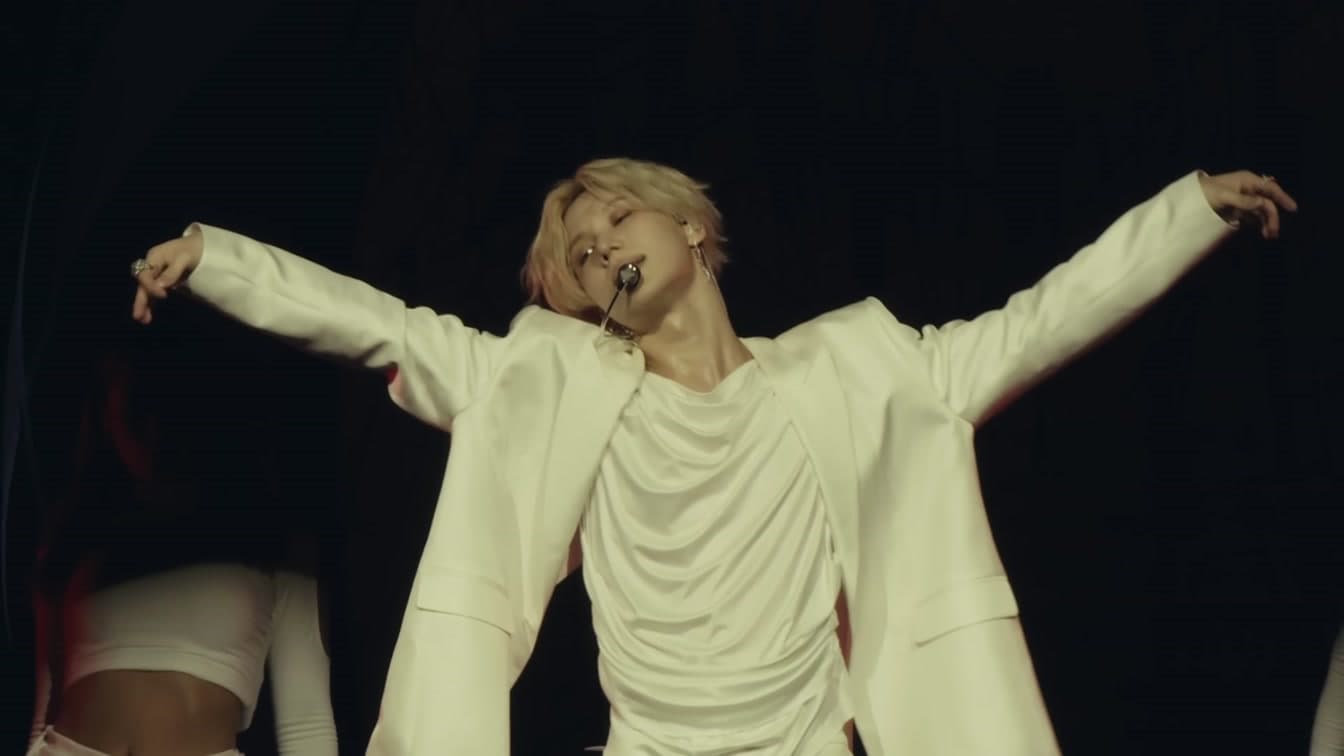
The week of April 16, 2026, added multiple entries to K-pop's global record books at once. In California, BIGBANG — performing as a full group for the first time in nine years — shared the Coachella lineup with SHINee's Taemin, who made history as the first Korean male solo artist to perform at the festival. In July, Jennie from BLACKPINK will headline Lollapalooza Chicago as the first Korean female solo artist at the top of that festival's bill. And on April 16, all four of Korea's major entertainment companies jointly filed for regulatory approval to form a joint venture for Fanomenon — a global K-pop festival the music press is already calling the "Korean Coachella."
These are not separate news items. They are different chapters of the same story: K-pop's transformation from festival guest act to a permanent fixture of the global live-music economy — and, as of this week, a festival builder in its own right.
A Decade of Festival History, Compressed
K-pop first appeared at Coachella in 2016, when Epik High played the Sahara Tent to a crowd that largely discovered them that weekend. It was a beginning rather than a breakthrough. Streaming was restructuring global music consumption, and international audiences were encountering Korean music through algorithms rather than traditional cultural gatekeepers. One act. One tent. One footnote in the festival program.
The milestones came gradually, then all at once. BLACKPINK played Coachella in 2019, returned to headline in 2023 — the first K-pop group to hold the top slot at any major Western festival. At Lollapalooza, TXT and j-hope appeared in 2022, j-hope becoming the first Korean solo headliner in Chicago. By 2025, five separate K-pop acts appeared at Lollapalooza in a single edition, a figure that would have been implausible even three years earlier.
The chart makes the trajectory unmistakable. What began with one act at one festival in 2016 has produced a 2026 lineup with seven Korean acts scheduled across Coachella and Lollapalooza alone — not counting Summer Sonic, where TWS performs in August, or Waterbomb, where RIIZE and KISS OF LIFE headline this summer. The pace is not linear. It compounds. And 2026 represents not just the peak of that curve but, given Fanomenon's timeline, something closer to an inflection point.
What the 2026 Lineup Actually Signals
The composition of the 2026 Coachella K-pop lineup is worth reading closely, because it is not homogeneous. BIGBANG brought two decades of history and a global fanbase that remembers stadium performances before streaming existed — their 2026 Coachella set marked their first full-group activity since the 2022 single "Still Life" and first group performance in nine years. Taemin arrived with a six-album solo discography and a performance reputation built across two decades with SHINee and a solo career that earned him comparisons to Michael Jackson in Korean pop criticism. KATSEYE — produced jointly by HYBE and Geffen Records — represents the newest model: a global girl group engineered from the outset for Western festival circuits.
These three acts occupy different positions in K-pop's global story: legacy, established artistry, and new-model globalism. Coachella putting all three on its bill in the same year reflects programming that sees K-pop as a category containing multitudes, not a single-flavor offering.
At Lollapalooza, Jennie's headliner designation carries specific weight beyond her name recognition. Her solo career has been built partly through Western cultural cross-pollination — fashion campaigns, international collaborations, brand partnerships that place her in mainstream visibility outside core K-pop fandom. A headliner position — not a mid-bill slot, not a sub-stage — reflects the festival's assessment that she can draw a general-market crowd. That distinction matters for what it says about how international promoters now classify Korean solo artists who have built a crossover presence.
Fanomenon and What Comes After Festival Appearances
The most consequential development of this period is not any individual performance. On April 16, HYBE, SM Entertainment, JYP Entertainment, and YG Entertainment simultaneously filed with Korea's Fair Trade Commission for approval to form a joint venture for Fanomenon. The name fuses "fan" and "phenomenon." J.Y. Park, who publicly championed the project, serves as co-chair of South Korea's Presidential Committee on Popular Culture Exchange — a direct connection between the festival ambition and national cultural export strategy.
Fanomenon is planned to debut in Korea in December 2027, followed by global city tours from 2028. The combined rosters of the four agencies — collectively including BTS, BLACKPINK, aespa, Stray Kids, TWICE, SEVENTEEN, ILLIT, and BABYMONSTER — represent a talent pool that no existing festival could currently assemble on its own. The fact that competing agencies co-signed a single JV filing is notable by any standard. Rival entertainment companies rarely build infrastructure together at this scale.
Music Business Worldwide framed it as an ambition to rival Coachella. Billboard reported it as a structural shift in how Korean entertainment approaches global events. Those framings are not wrong — but they may undersell the ambition. Coachella is a destination. Fanomenon, if it works, is designed to become one.
What the Numbers and the Filings Together Mean
Taken individually, any single 2026 festival milestone is impressive. Taemin at Coachella becomes a trivia question. Jennie headlining Lollapalooza becomes a record. But taken together, alongside the Fanomenon JV filing, they point toward a K-pop industry that has moved from proving its international relevance to institutionalizing it.
The next questions are structural. Can Fanomenon attract non-Korean acts and thereby function as a genuine international festival rather than a K-pop showcase aimed at an already-converted audience? Can four competing agencies sustain coordination across what will inevitably be competing interests at the scale of a recurring global event? How will the festival's programming balance legacy acts — who bring historical credibility — with newer groups who represent the active commercial momentum?
All of those questions will take years to answer. But a decade ago, Epik High played a tent at Coachella and the internet called it a milestone worth noting. In 2026, Korea's four biggest entertainment companies filed jointly to build the next Coachella. That gap — from milestone to blueprint — is the real story of K-pop's first decade on the global festival circuit.
How do you feel about this article?
저작권자 © KEnterHub 무단전재 및 재배포 금지
Entertainment Journalist · KEnterHub
Entertainment journalist specializing in K-Pop, K-Drama, and Korean celebrity news. Covers artist comebacks, drama premieres, award shows, and fan culture with in-depth reporting and analysis.
Comments
Please log in to comment