The Hug Lee Jun-young Never Forgot
A You Quiz reunion with Yoo Jae-suk turned into a moving career reflection.
 By Park Chulwon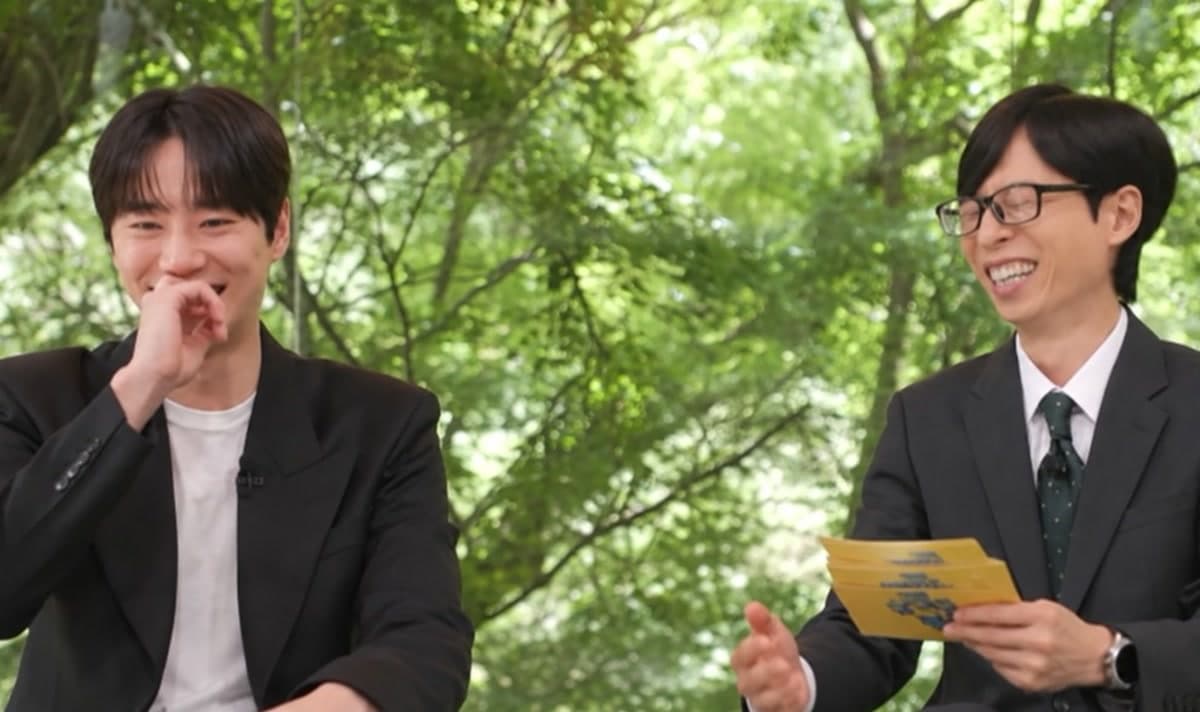
The moment that pushed Lee Jun-young back into Korea's real-time search conversation was not a dramatic announcement. It was a remembered hug. On the July 8 broadcast of tvN's You Quiz on the Block, the actor and singer sat across from Yoo Jae-suk and explained why a brief meeting from years ago had remained with him through debt, part-time work, difficult auditions, and the long process of being accepted as an actor.
That story gave the episode the emotional shape fans responded to. Lee was appearing shortly before beginning active-duty military service on July 21, 2026, but the broadcast did not play like a simple farewell. It became a career reflection centered on gratitude: a young performer once unsure whether he could keep going had remembered the warmth of a senior entertainer, then returned years later as a recognized actor able to say thank you in person.
For Google Trends KR, the appeal was immediate. The keyword was not driven only by schedule information or casting news. It was driven by a human detail that viewers could repeat: Lee Jun-young had carried Yoo Jae-suk's kindness with him for nearly a decade, and chose You Quiz because he wanted to meet someone he was genuinely grateful to before stepping away from regular public activity.
The Yoo Jae-suk memory that framed the interview
Several Korean reports around the broadcast focused on Lee's account of meeting Yoo when he was much younger and less secure in his career. Lee described Yoo greeting him warmly and giving him comfort at a time when he needed it. In the way the story was retold across entertainment coverage, the important part was not a grand speech. It was the simplicity of the gesture: Yoo saw a nervous young performer, treated him kindly, and left him with the feeling that they would meet again.
That memory changed the tone of the You Quiz appearance. Lee said he had limited his schedules ahead of service, but wanted to appear on a program connected to Yoo. The comment made the booking feel intentional rather than routine. It also turned Yoo from a famous host into a figure inside Lee's own career story, someone whose brief encouragement became more meaningful because of what Lee endured afterward.
Viewers often respond strongly to these small entertainment-industry stories because they reveal the private emotional economy behind public success. Awards, ratings, and casting headlines are easy to count. A remembered kindness is harder to measure, but it can explain why an artist keeps pushing through uncertainty. Lee's delivery on You Quiz suggested that the memory had not been polished into a convenient anecdote. It sounded like something he had held onto before he knew whether his second act would work.
The reunion also showed why Yoo's presence still carries unusual weight in Korean variety television. He did not need to become the center of the story. The power came from Lee's realization that a passing act of warmth from an established senior had stayed with him long after Yoo may have forgotten the details. That imbalance made the scene feel sincere: what was ordinary kindness for one person became a stabilizing memory for another.
The hidden cost behind an idol debut
Lee's path to that chair was not smooth. On the broadcast, he revisited the financial hardship he faced after debuting as a member of U-KISS in 2014. Korean coverage noted that he spoke about debt and about working night shifts at a convenience store while trying to keep his circumstances quiet. One reported detail, the moment a manager encountered him during that period, captured how painful the secrecy had become.
The story complicates the polished image of an idol debut. To outside viewers, debuting can look like arrival: music shows, styling, choreography, and a public name. Lee's account showed a different reality. A debut can also mean unstable income, pressure, and the private embarrassment of not being able to match the image the public sees. His decision to speak about that period on national television gave fans a clearer picture of the years before his current recognition.
After U-KISS, Lee continued to search for a more durable footing. He later drew attention through KBS's idol reboot program The Unit and promoted with the project group UNB, a chapter that helped reintroduce him to viewers. But the larger transformation came through acting, where he had to face a different kind of skepticism. Idol actors are often asked to prove they are not taking space from trained performers; Lee's interview suggested he understood that pressure sharply.
Korean reports from the episode also highlighted his memories of hearing discouraging comments as he moved into acting. Rather than presenting those moments as a grievance list, Lee framed them as part of the discipline that shaped him. The through-line was effort. He wanted not to damage a production, not to be seen as a weak link, and not to let his background define the ceiling of his work.
That is why the convenience-store story matters beyond its emotional punch. It makes his current standing legible. The actor now discussed for intense screen roles was once balancing survival work with public ambition. The person smiling beside Yoo Jae-suk was not asking viewers for pity. He was showing them the distance between the public version of a career and the private strain that often supports it.
How acting changed the conversation around him
The episode also touched on Lee's screen image, especially the way his darker roles have made viewers react. Korean entertainment stories about the broadcast noted that his family, including his mother, had strong reactions to performances where he played morally unsettling characters. The humor in that exchange came from the gap between Lee's off-screen demeanor and the sharpness of the characters audiences have recently associated with him.
For an actor who began as an idol, that kind of reaction is valuable. It means the audience is responding to the performance first. If a villain role makes even close family members talk about how convincing it felt, then the old label has started to loosen. Lee can be discussed not only as a former idol member or a variety-show guest, but as a performer whose choices create real viewer response.
His recent work has helped build that perception. Entertainment previews before the You Quiz episode pointed to his widening acting profile and to the attention around current drama roles. Some reports emphasized that he has been receiving strong reactions for roles that ask him to shift tone quickly, including performances that contrast charm with menace. On You Quiz, that professional development sat beside the more vulnerable memories, making the interview feel rounded rather than purely sentimental.
The contrast is what made the broadcast travel. Lee did not simply say he had suffered, and he did not simply celebrate his success. He connected the two. The debt, the night work, Yoo's kindness, the acting doubts, and the family reaction to his villain image all became pieces of one story about an entertainer who had to keep reintroducing himself until the work began speaking louder than the assumptions around him.
Why fans treated it as more than a farewell
Military service gave the interview urgency, but it was not the only reason fans cared. Lee's July 21 enlistment date added a clear timeline, yet the emotional force came from what he chose to say before that date arrived. Instead of using the moment only to reassure fans, he used it to look backward with unusual specificity. That made the broadcast feel like a chapter marker rather than a standard goodbye.
The Discover value of the story is strong for the same reason. It has a recognizable star, a beloved national MC, a visual broadcast moment, a pre-service timeline, and a behind-the-scenes revelation. More importantly, it has a simple emotional promise: viewers can understand something about Lee Jun-young that they may not have known from drama clips alone.
For longtime fans, the interview validated years of watching him move between music, survival-program exposure, and acting work. For newer viewers, it supplied a compact introduction to why his rise has meaning. He is not just another actor with a busy schedule before service. He is someone whose current confidence was built over years when confidence was difficult to maintain.
That may be why the Yoo Jae-suk memory became the center of the trend. In a media cycle crowded with announcements, the idea that one kind senior moment could remain important for so long feels unusually direct. It gives the audience an image that is easy to hold: Lee Jun-young, once unsure and struggling, sitting across from the person whose warmth helped him endure, now able to say that the promise to meet again had come true.
When Lee returns to acting after service, this interview will likely remain part of how fans discuss this stage of his career. It captured him at a threshold, but not as a finished success story. It showed an artist still processing the road behind him, still aware of the people who helped him, and still careful about the responsibility of being seen. That is why the You Quiz moment hit harder than a farewell headline. It gave viewers a reason to root for the next chapter before it has even begun.
How do you feel about this article?
저작권자 © KEnterHub 무단전재 및 재배포 금지
Entertainment Journalist · KEnterHub
Entertainment journalist focused on Korean music, film, and the global K-Wave. Reports on industry trends, celebrity profiles, and the intersection of Korean pop culture and international audiences.
Comments
Please log in to comment