The K-pop Fandom That Waited 10 Years for an Official Name
How I.O.I's 'Angdungie' reveal explains why Produce 101 created K-pop's most intensely loyal fan bonds
 By Jang Hojin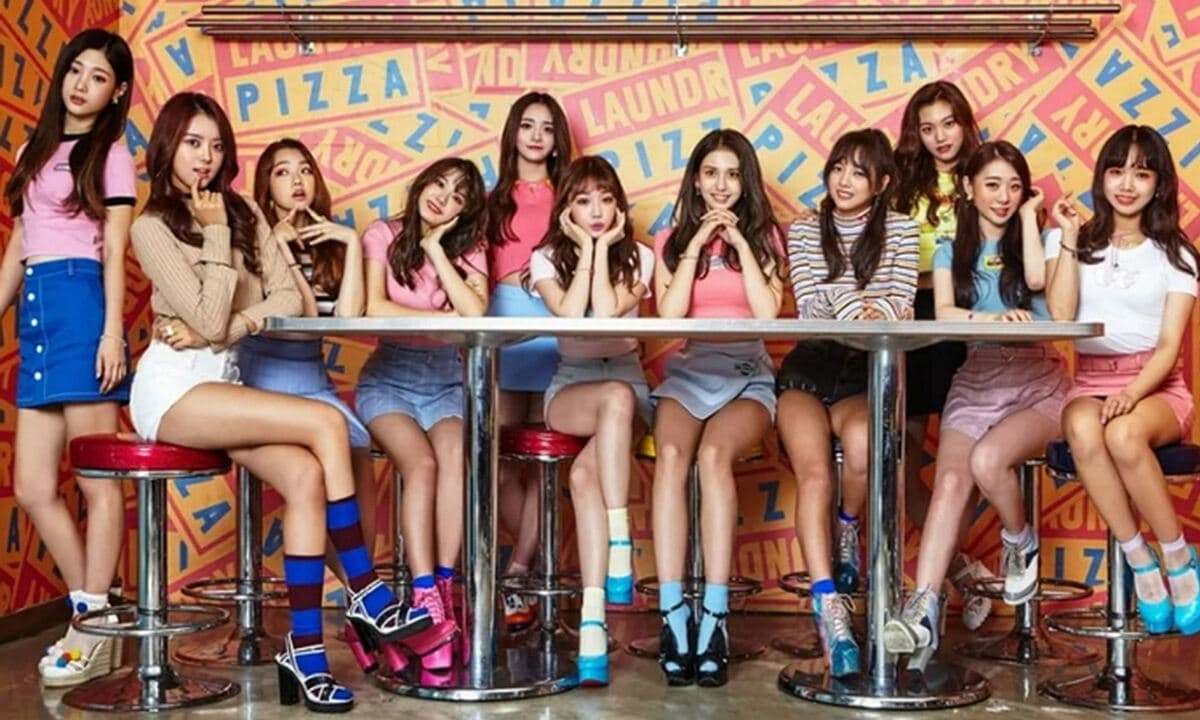
On April 13, 2026, I.O.I did something that most active K-pop groups accomplish within their first year: they gave their fans an official name. The name is "Angdungie." It sounds simple — almost casual, rooted in a term the group used to address fans during their original run. But the fact that it took a decade to become official, and that thousands of fans erupted with emotion the moment it was announced, says everything about what makes I.O.I one of K-pop's most unusual stories.
Nine years and 73 days after disbandment, I.O.I is preparing to return for a 10th anniversary concert tour, a new album, and now, for the first time, a formal identity for the people who never stopped waiting. The announcement didn't just name a fandom. It closed a loop that had been open for a generation.
Born to Be Brief: The Produce 101 Blueprint
I.O.I was born from a format designed to be temporary. Mnet's Produce 101, which premiered in January 2016, was the first K-pop survival show to select an entire group by public vote — 101 trainees from 46 entertainment companies competing for 11 spots. The concept was deliberately bittersweet: the group formed would promote together for exactly one year, then return their members to original agencies. No extensions. No exceptions.
The formula worked beyond anyone's expectations. The Season 1 finale drew over 10 million votes — equivalent to roughly one-fifth of South Korea's entire population. I.O.I debuted on May 4, 2016, with debut single "Dream Girls" peaking at No. 8 on the Gaon Digital Chart. Then came "Very Very Very," written by JYP Entertainment founder Park Jin-young, which detonated on impact: No. 1 on the Gaon Digital Chart with 266,203 downloads in its first week and over 423,000 total. Their second mini-album Miss Me? sold 93,000 physical copies in 2016 alone, one of the strongest debut-year showings for a girl group that year.
All of it happened in nine months. On January 29, 2017, I.O.I disbanded — exactly on schedule. No drama. No tearful last-minute extension plea. Just the ending the format had always promised.
The Paradox of the Enforced Goodbye
Here is the central tension of I.O.I's legacy: a group that existed for nine months built a fanbase that persisted for ten years. That is not an accident. It is the direct product of what Produce 101 did to the fan-idol relationship.
In conventional K-pop, fans grow attached to groups over years of accumulated content, concerts, and comebacks. The bond deepens gradually. With Produce 101, that process was inverted. Fans voted their members in, which meant every single person in I.O.I existed because of specific fan choices. The investment was immediate and deeply personal before the group had even debuted.
Then came the clock. Knowing the end date transformed every I.O.I performance into something tinged with urgency. Every comeback was potentially the last. That urgency didn't evaporate when the group disbanded — it calcified. The fans who voted in 2016 didn't just lose a group they loved. They lost something they had helped create. And that kind of loss tends not to resolve quietly.
The numbers tell part of this story. Of I.O.I's original eleven members, at least nine have sustained significant careers over the decade since disbandment — Kim Chungha becoming one of K-pop's defining solo artists of the late 2010s, Jeon Somi building a high-profile career under YG subsidiary The Black Label, Kim Sejung successfully transitioning into acting alongside music. Produce 101 didn't just launch a project group. It functioned as an industry-wide talent showcase, and the fans who followed those members carried a collective memory of where they had come from together.
Angdungie and the Weight of a Name
In K-pop, fandom names carry specific weight. They formalize the relationship between an artist and their supporters, creating a shared identity that persists across albums, hiatuses, and comebacks. Groups like BTS (ARMY), SEVENTEEN (Carats), and IVE (DIVE) announced their fandom names during their active debut phases. For I.O.I, which disbanded before any such announcement was made official, the absence of a name became its own kind of marker: a relationship that existed without the formal vocabulary to describe it.
"Angdungie" — derived from a term I.O.I used to address fans during their original run — changes that. Its announcement drew immediate responses from fans who described the moment as unexpectedly emotional. "Guys, this is a historic day — after 10 years, we finally have a fandom name," wrote one fan on Twitter/X. "Fandom name that actually makes sense! Thank you for this, I.O.I," read another. The reaction wasn't simply excitement. It was relief — the relief of something long-deferred finally arriving.
The timing is not coincidental. I.O.I is not alone in 2026. Wanna One, formed through Produce 101 Season 2 in 2017, is also returning — for a reunion reality show. Their simultaneous returns represent something broader than individual group nostalgia. They signal a K-pop industry willing to treat the Produce 101 era as a permanent, meaningful chapter in its history rather than a footnote. CJ ENM, the company that produced Produce 101, has publicly outlined its 2026 entertainment roadmap around legacy IP, with both reunions as centerpieces of a strategy that bets on nostalgia as a genuine commercial and cultural force.
What Comes Next: The LOOP Tour and Beyond
Nine members — Im Na-young, Kim Chungha, Kim Sejung, Jung Chaeyeon, Kim Sohye, Yoo Yeonjeong, Choi Yoojung, Kim Doyeon, and Jeon Somi — will take the stage at Seoul's Jamsil Indoor Stadium over three consecutive nights (May 29–31), followed by Bangkok on June 6 and Hong Kong on June 20–21. Zhou Jieqiong and Kang Mina are absent due to scheduling conflicts, a note the group has handled with transparency. A new 10th anniversary album is in production for a May release, giving Angdungie the formal debut activities the fandom technically never had.
The tour title, LOOP, is carefully chosen. It signals not just return but continuity — the idea that what appeared to end in January 2017 was paused rather than finished, and that the story connects forward to now rather than simply looking backward to then. For a group whose entire identity was built around an ending that everyone knew was coming, naming their reunion after a loop is a quiet piece of poetry.
What the Angdungie announcement ultimately reveals about K-pop is this: some groups are defined by how long they last, and some are defined by what they make people feel in the time they have. I.O.I had nine months. They left behind a fandom that carried the name for ten years before it was officially given to them. That isn't a gap in the story. That is the story.
How do you feel about this article?
저작권자 © KEnterHub 무단전재 및 재배포 금지
Entertainment Journalist · KEnterHub
Entertainment journalist specializing in K-Pop, K-Drama, and Korean celebrity news. Covers artist comebacks, drama premieres, award shows, and fan culture with in-depth reporting and analysis.
Comments
Please log in to comment